
Sort by
155 products
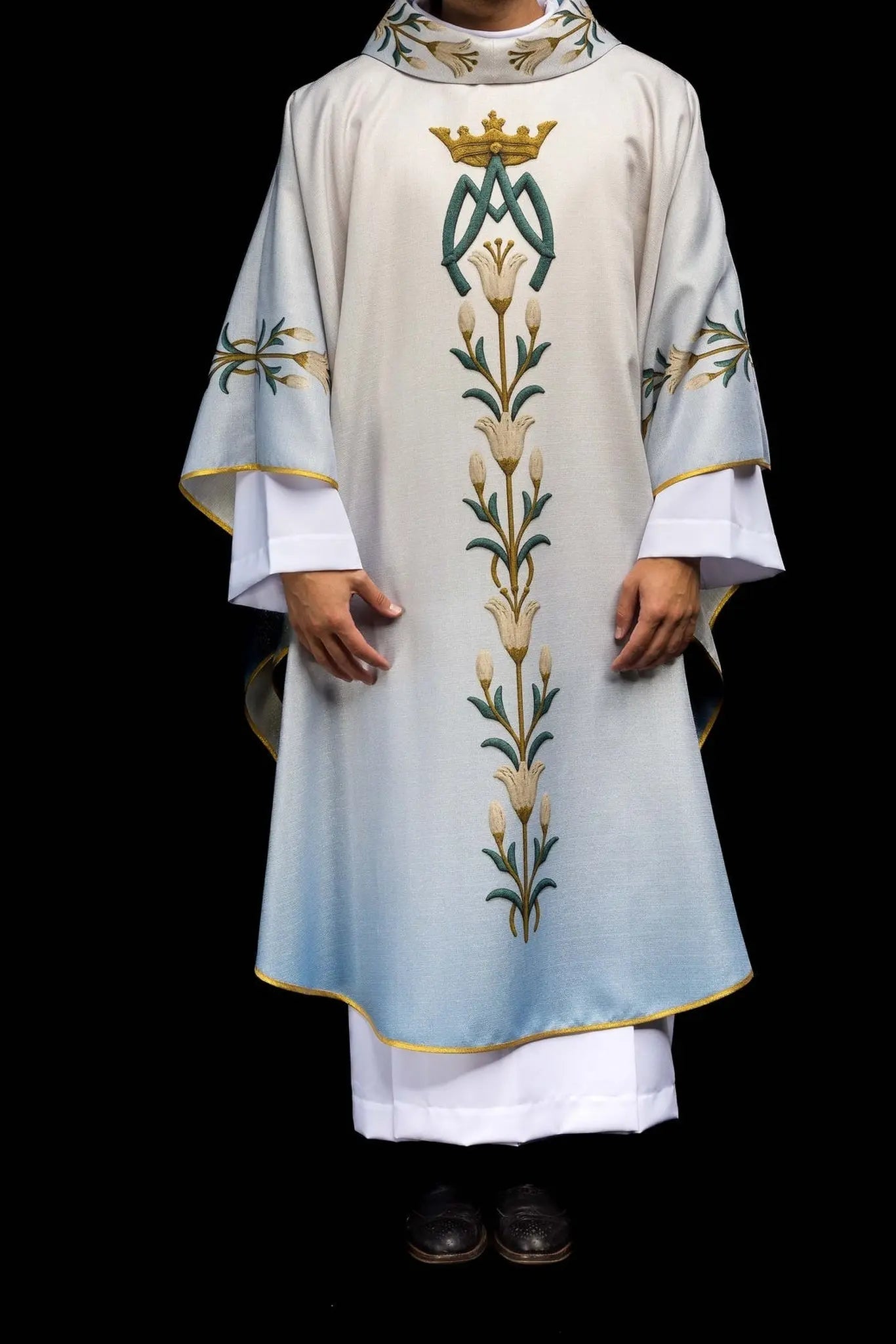
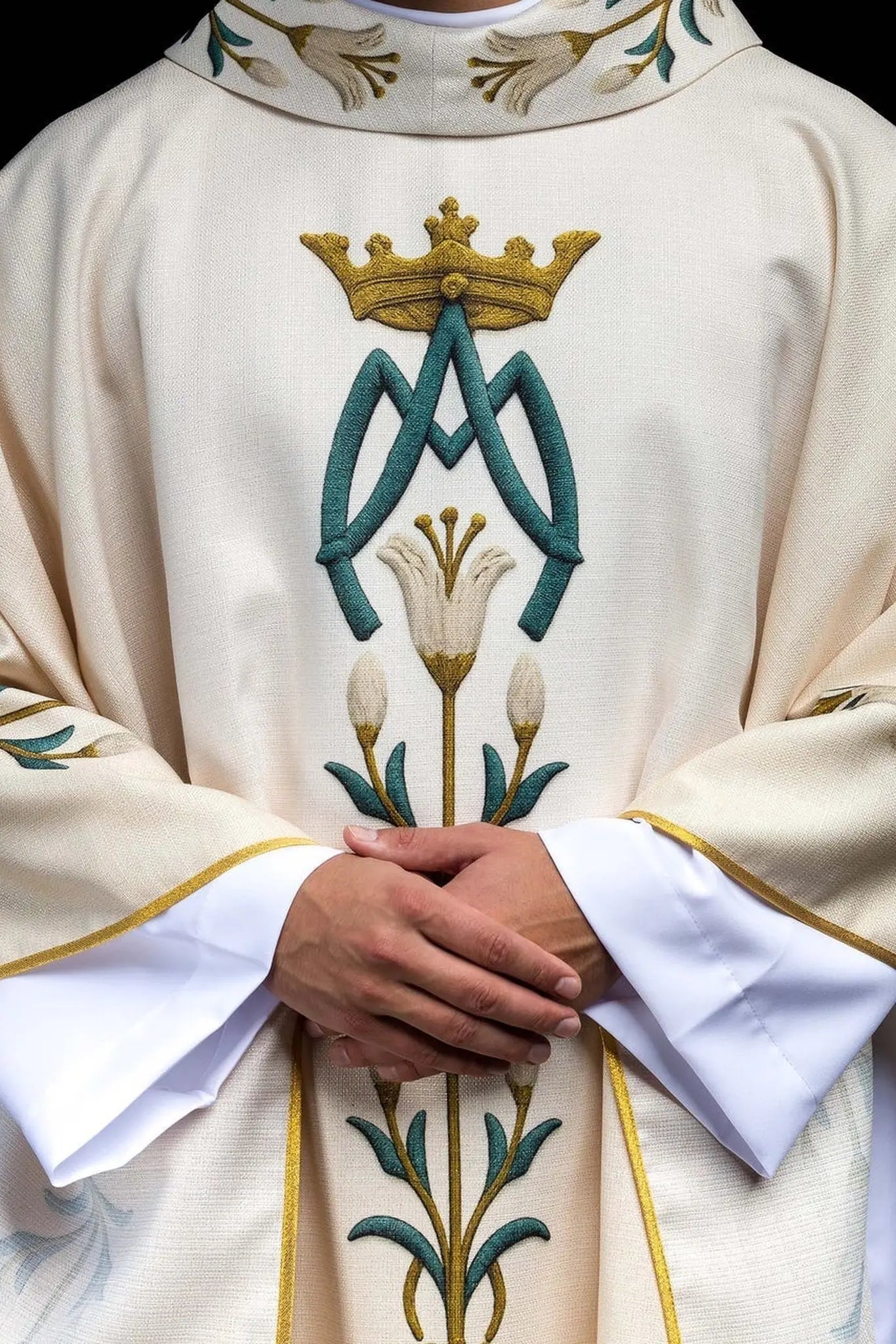
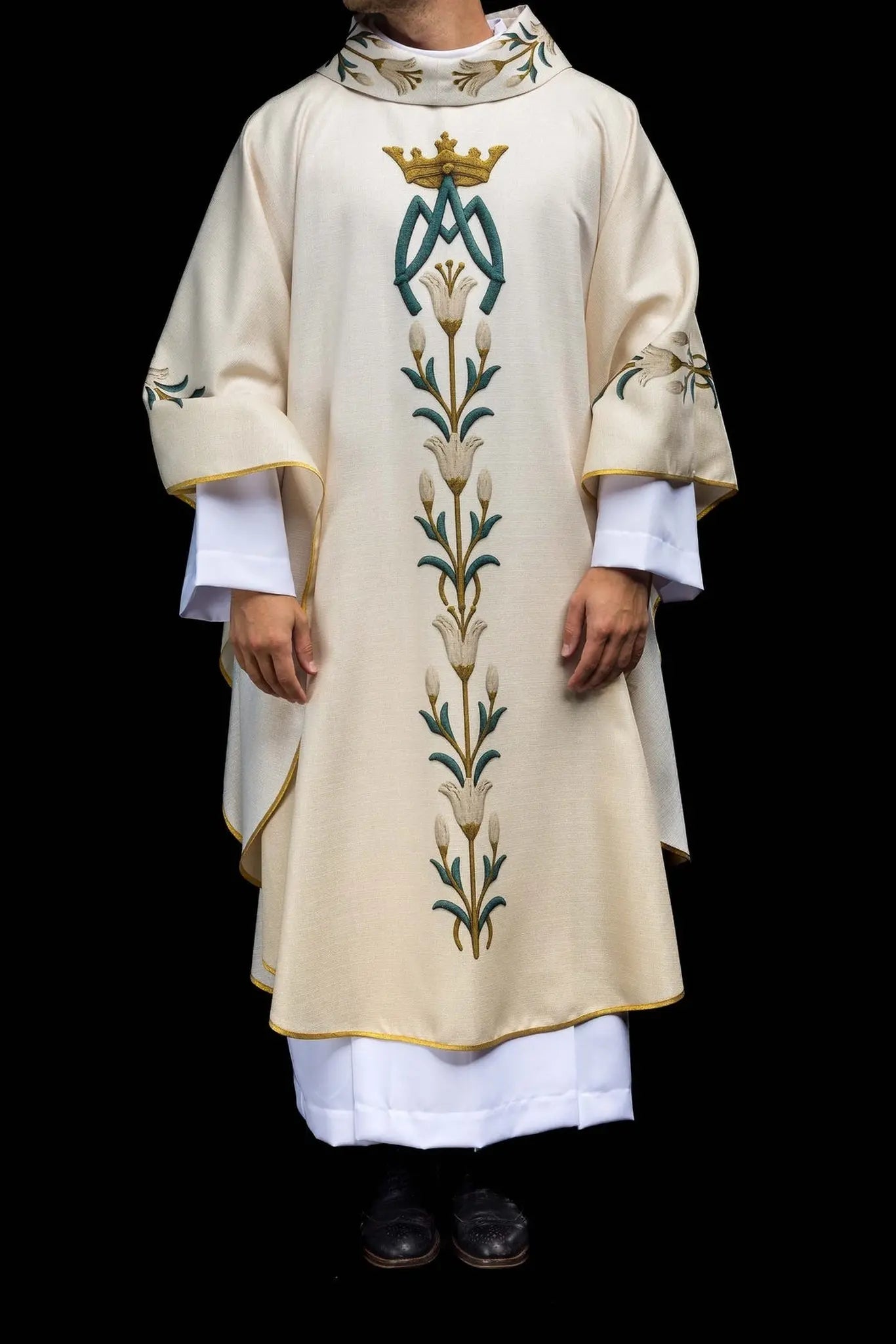
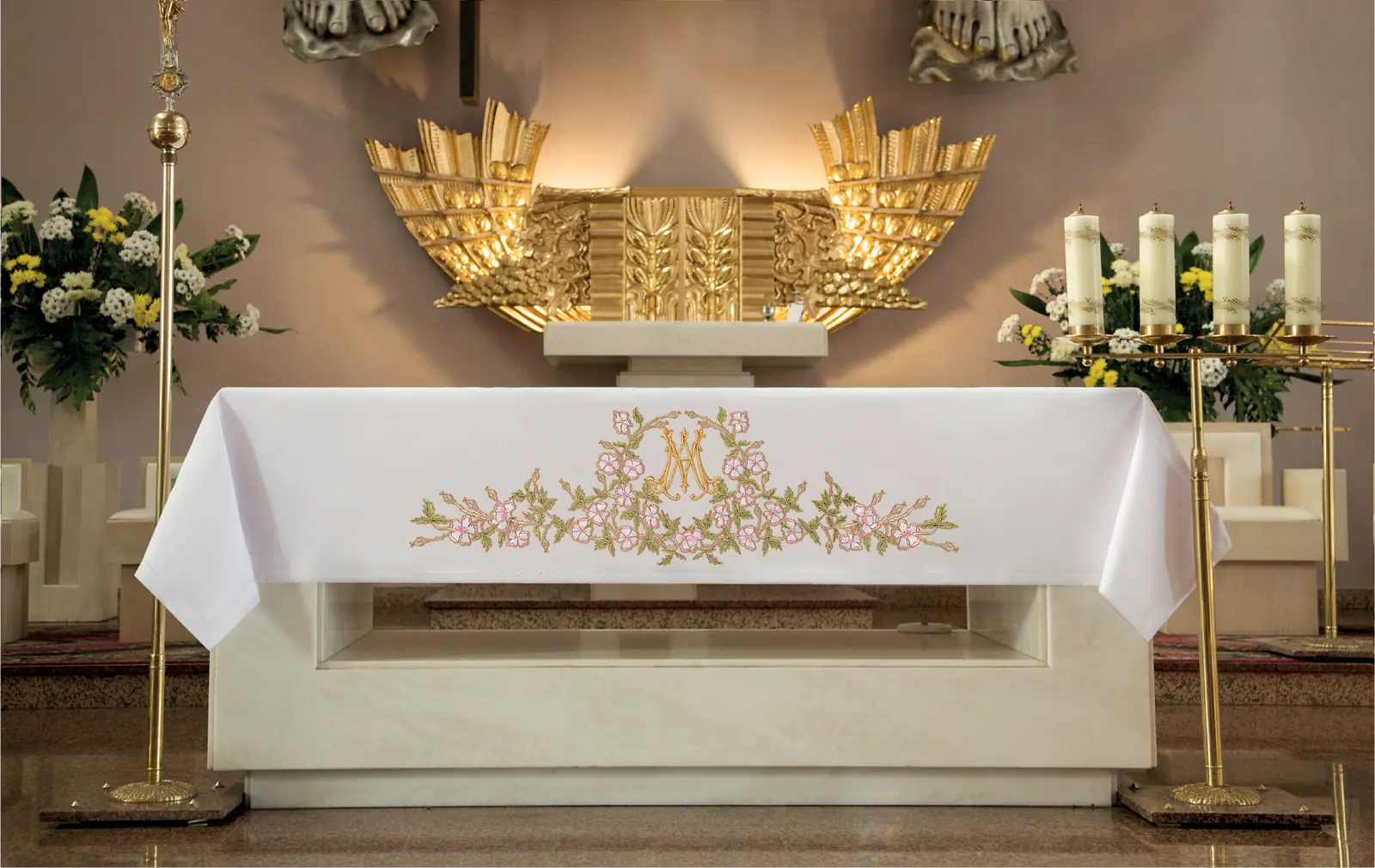
Blessed Virgin Mary Liturgical Vestments and Altar Linens
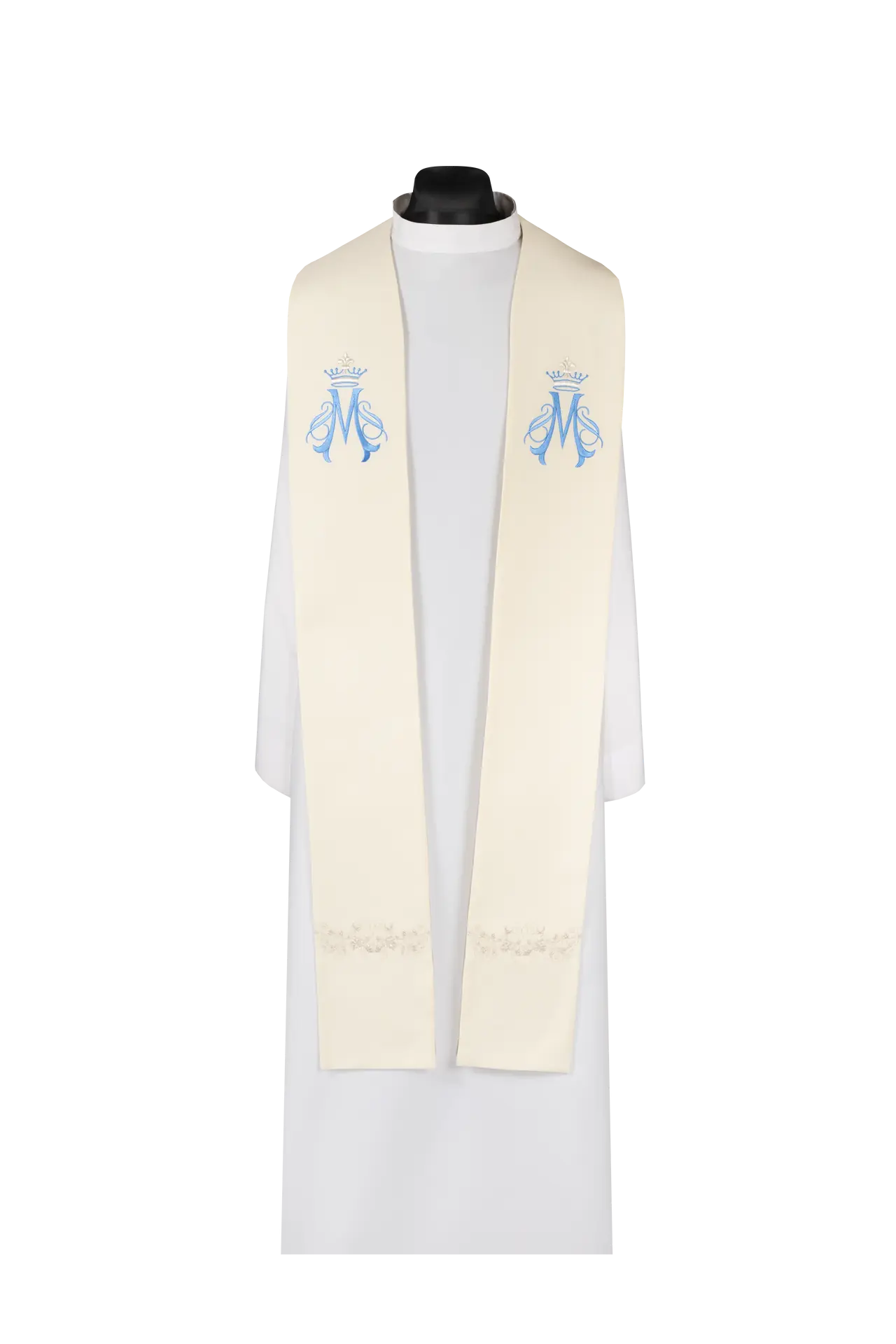
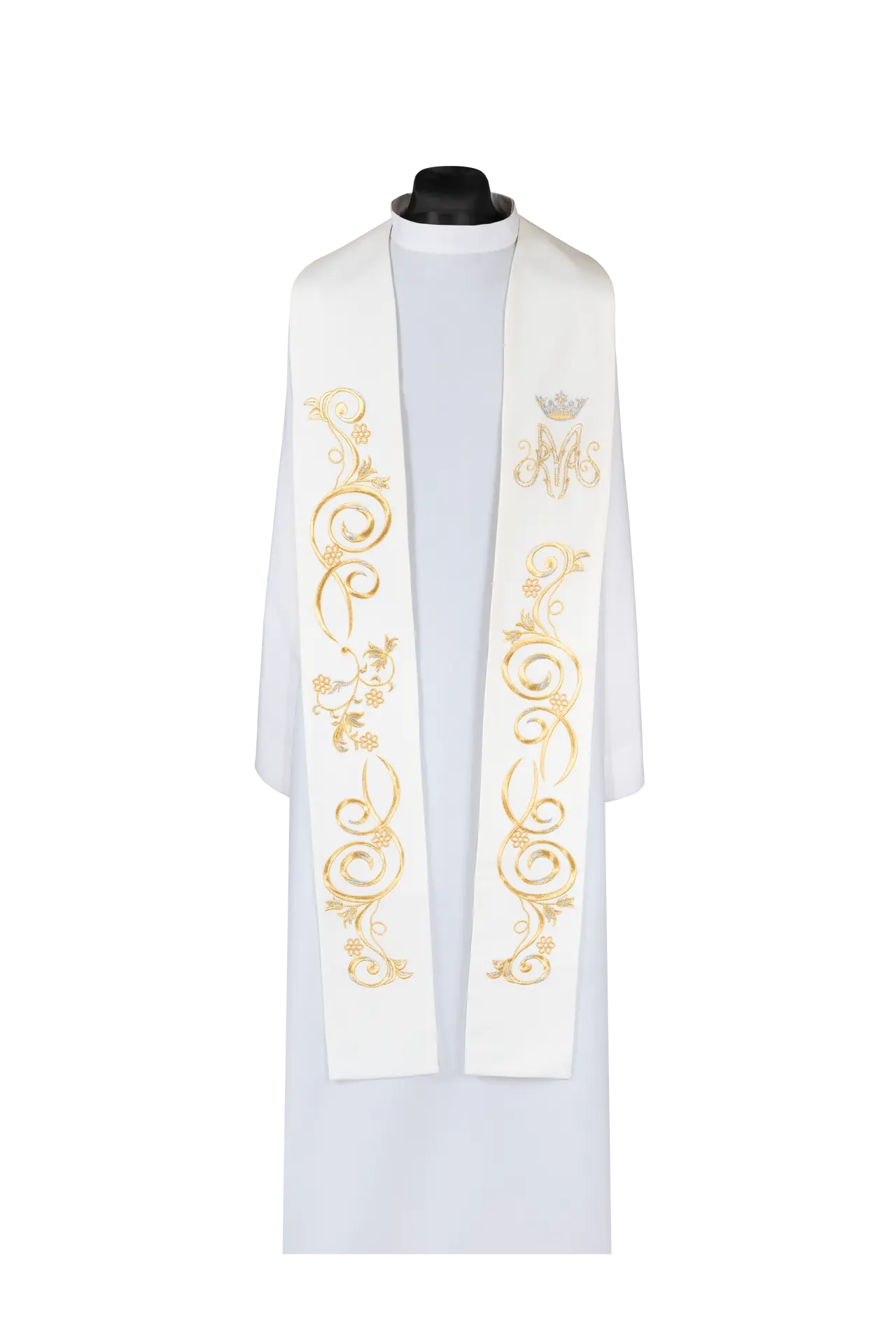
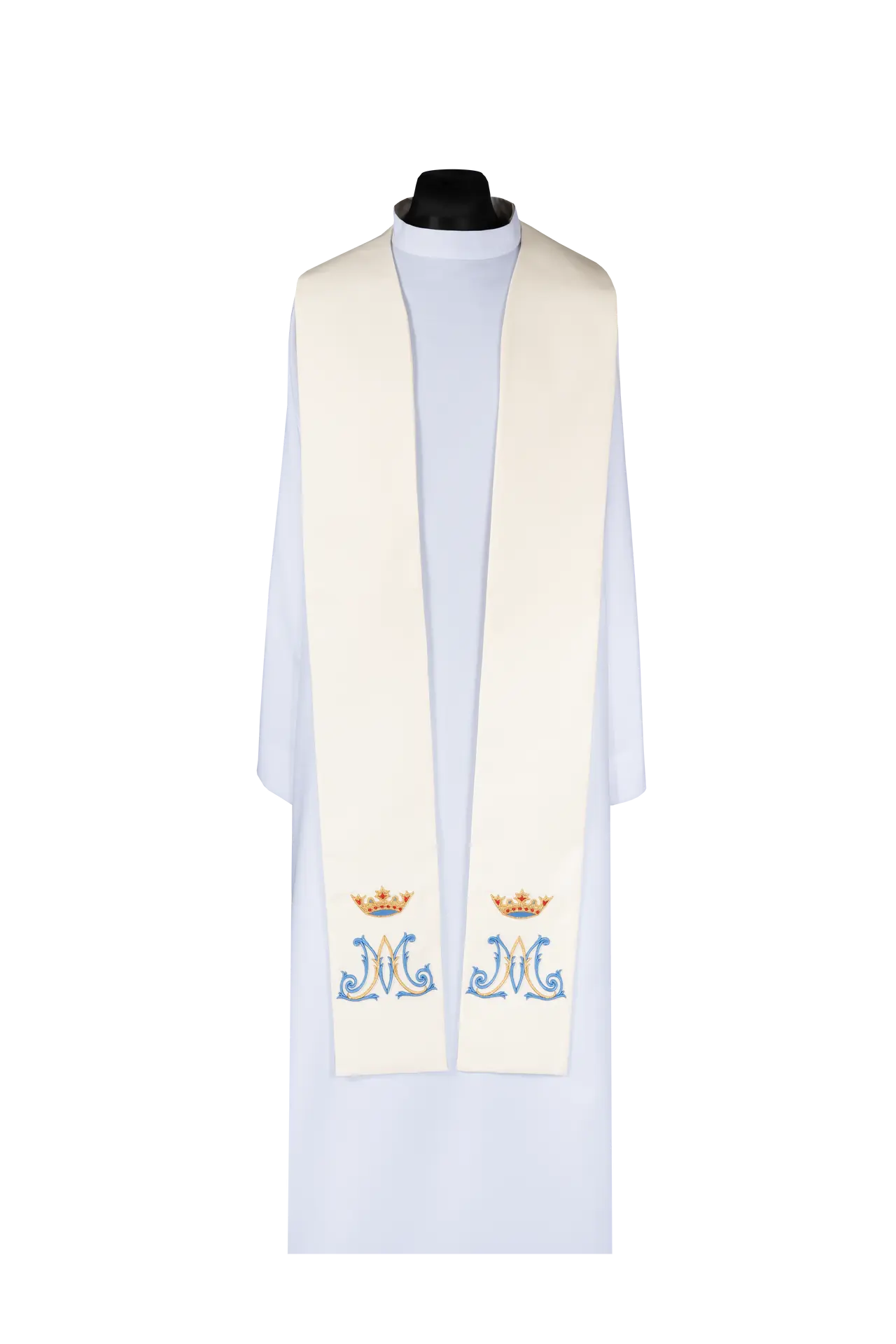
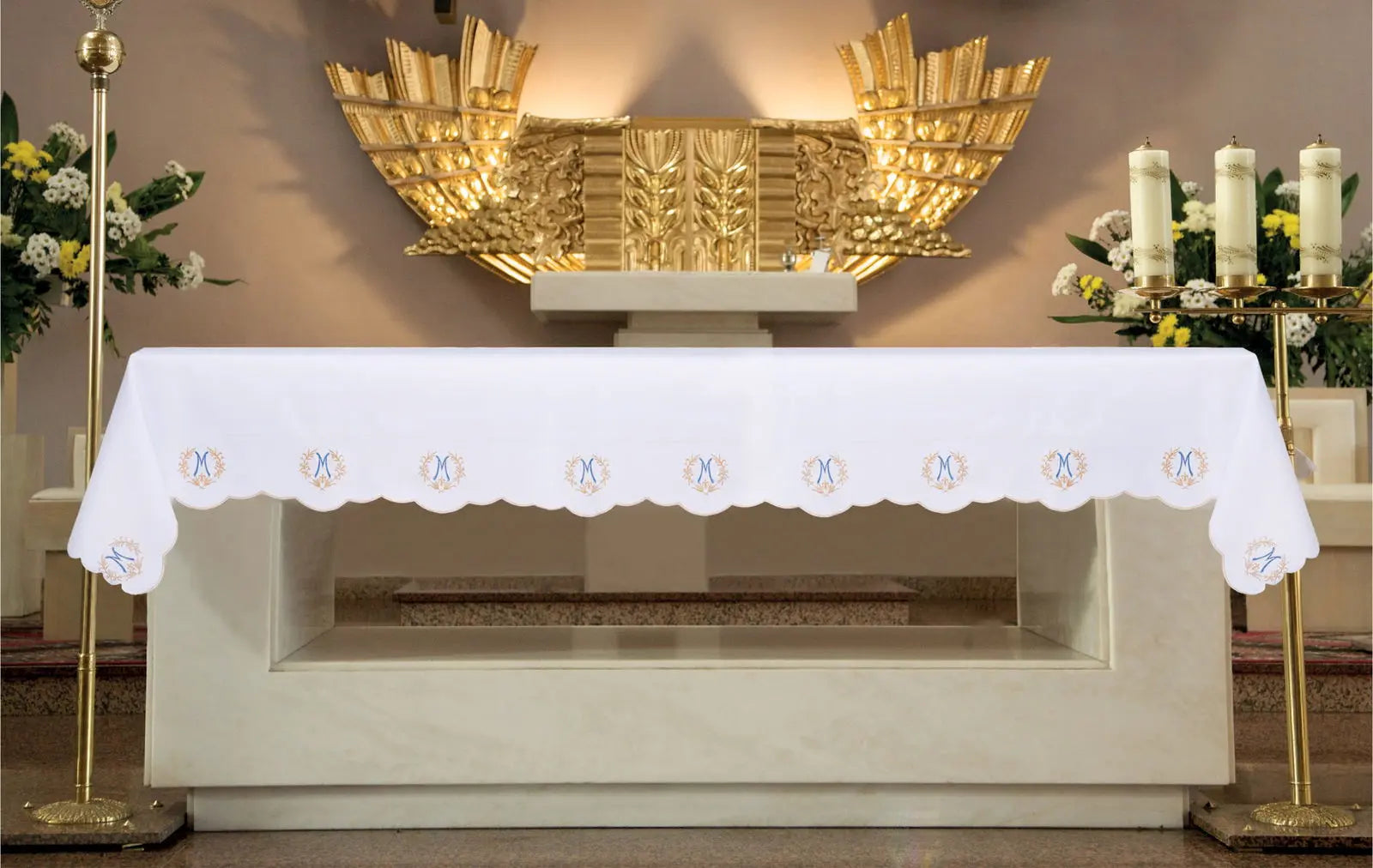
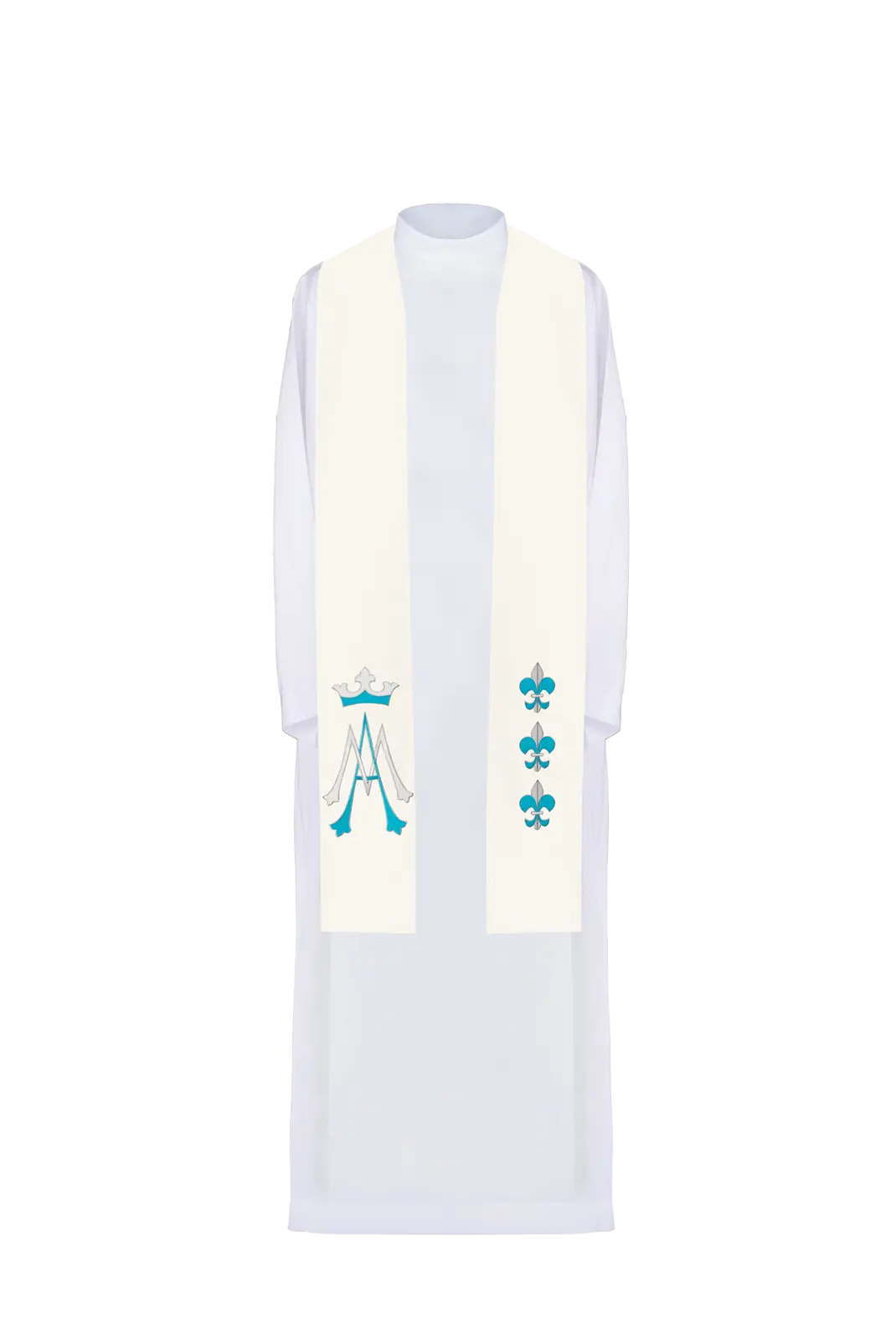
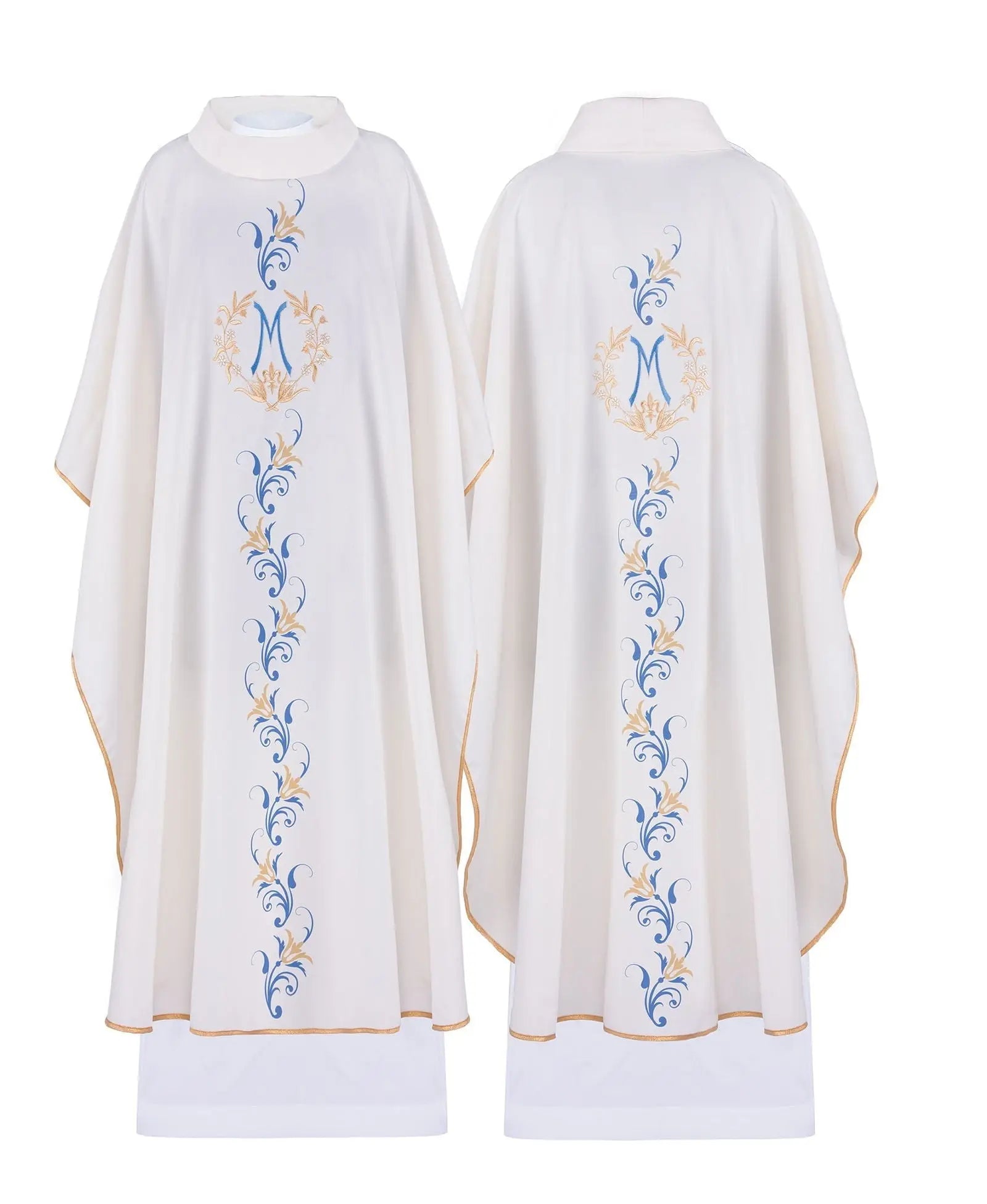
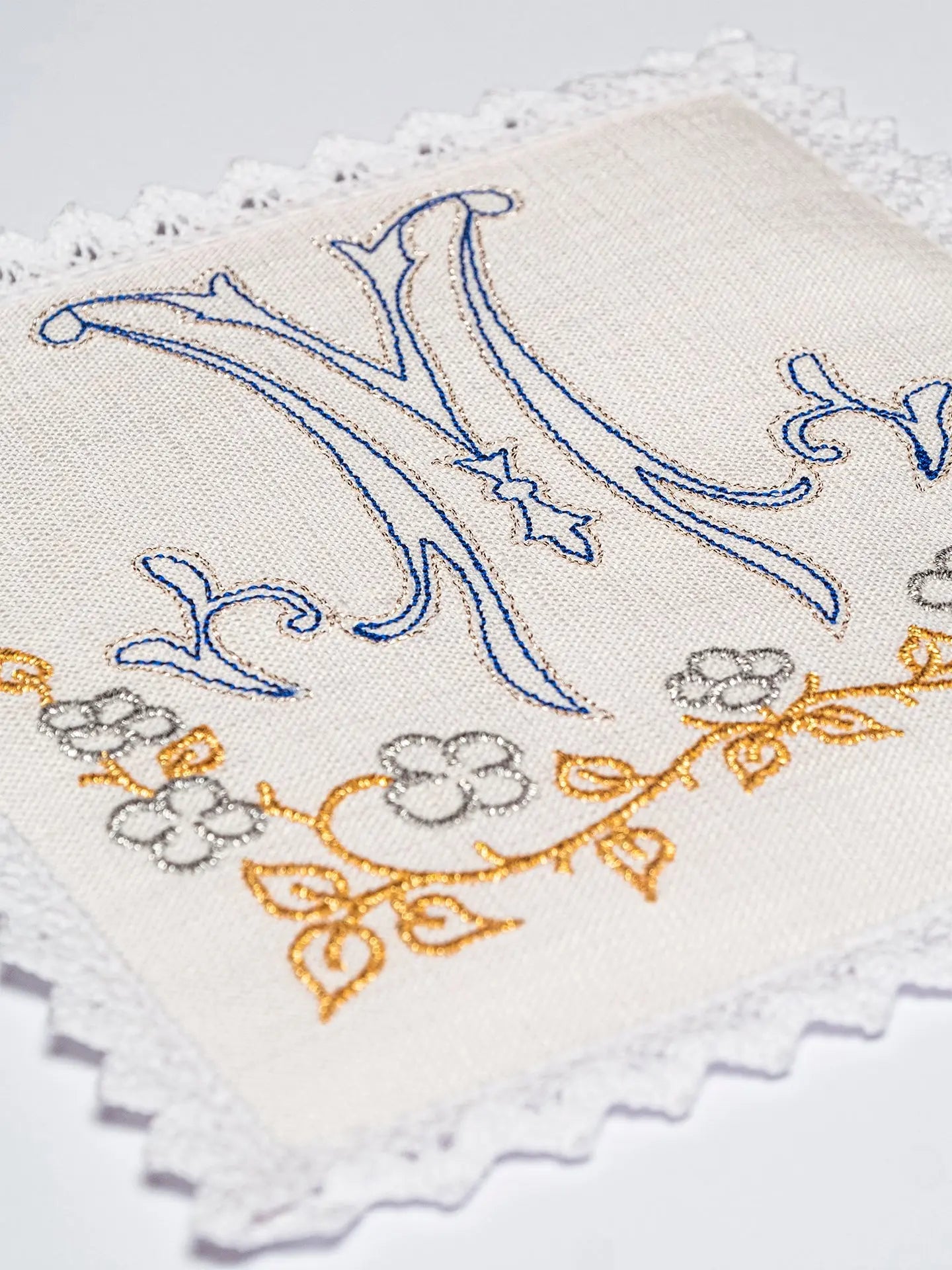
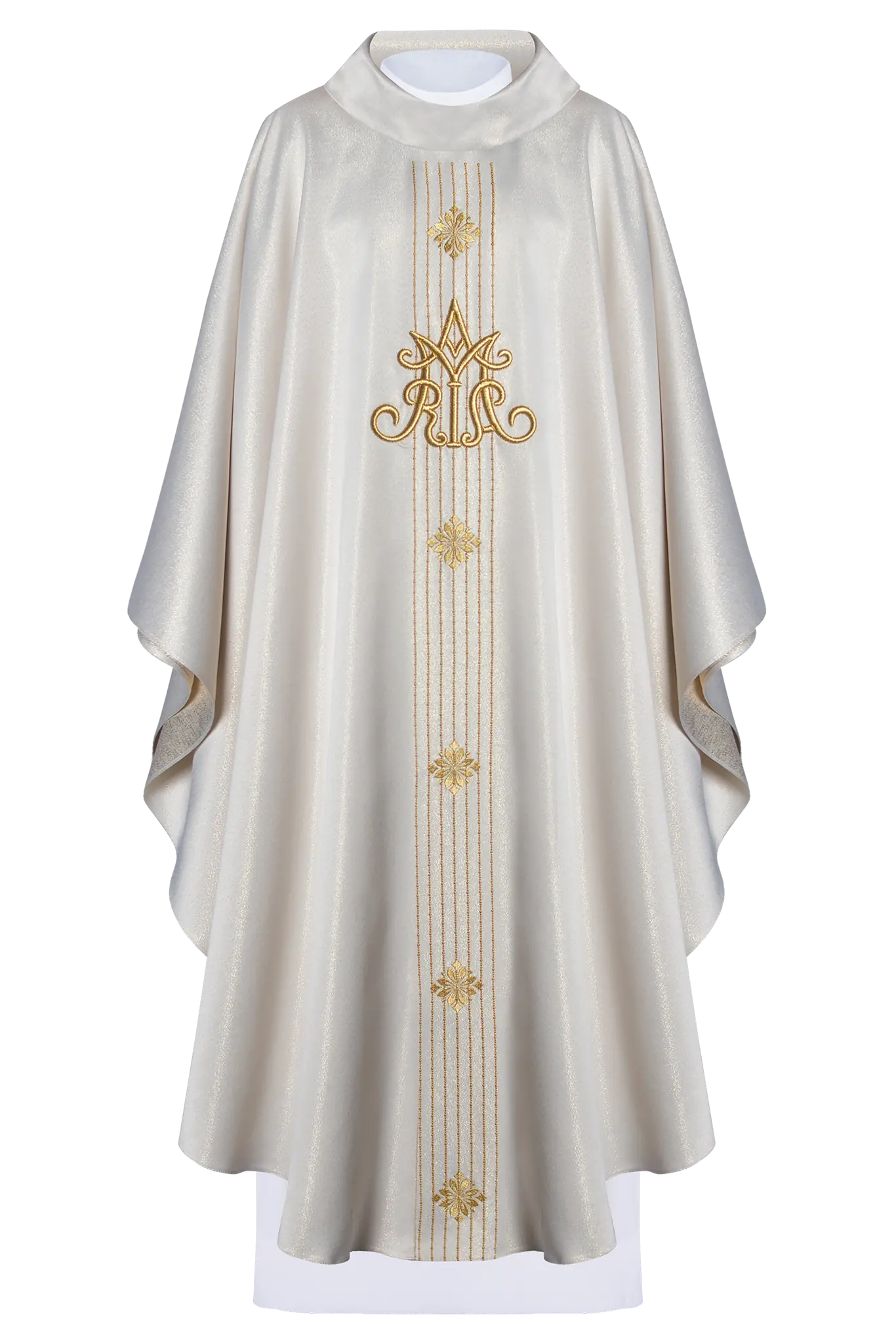
The Blessed Virgin Mary collection gathers liturgical vestments and church textiles prepared for Marian celebrations, votive Masses, parish devotions and solemn occasions connected with the Mother of God. This selection includes Marian chasubles, priest stoles and altar cloths, with designs that use traditional symbols associated with Mary: lilies, roses, stars, Marian monograms, images of Our Lady and embroidery in white, ecru, blue and gold tones. The collection is intended for priests, parishes, sanctuaries, religious communities and chapels that need vestments and altar textiles suited to feasts of the Blessed Virgin Mary as well as to regular devotional use throughout the liturgical year.
Marian vestments are chosen not simply for decoration, but for the way sacred art supports prayer. A chasuble with a Marian emblem, a stole with a delicate embroidered motif or an altar cloth with a Marian accent can help the whole celebration express reverence toward Christ and honor the special place of His Mother in the life of the Church. Many designs in this category are appropriate for Masses celebrated on Marian feast days, while more restrained embroidery can also be used for parish novenas, first Saturdays, pilgrim groups, shrine celebrations and local Marian devotions.
What belongs in this Marian collection
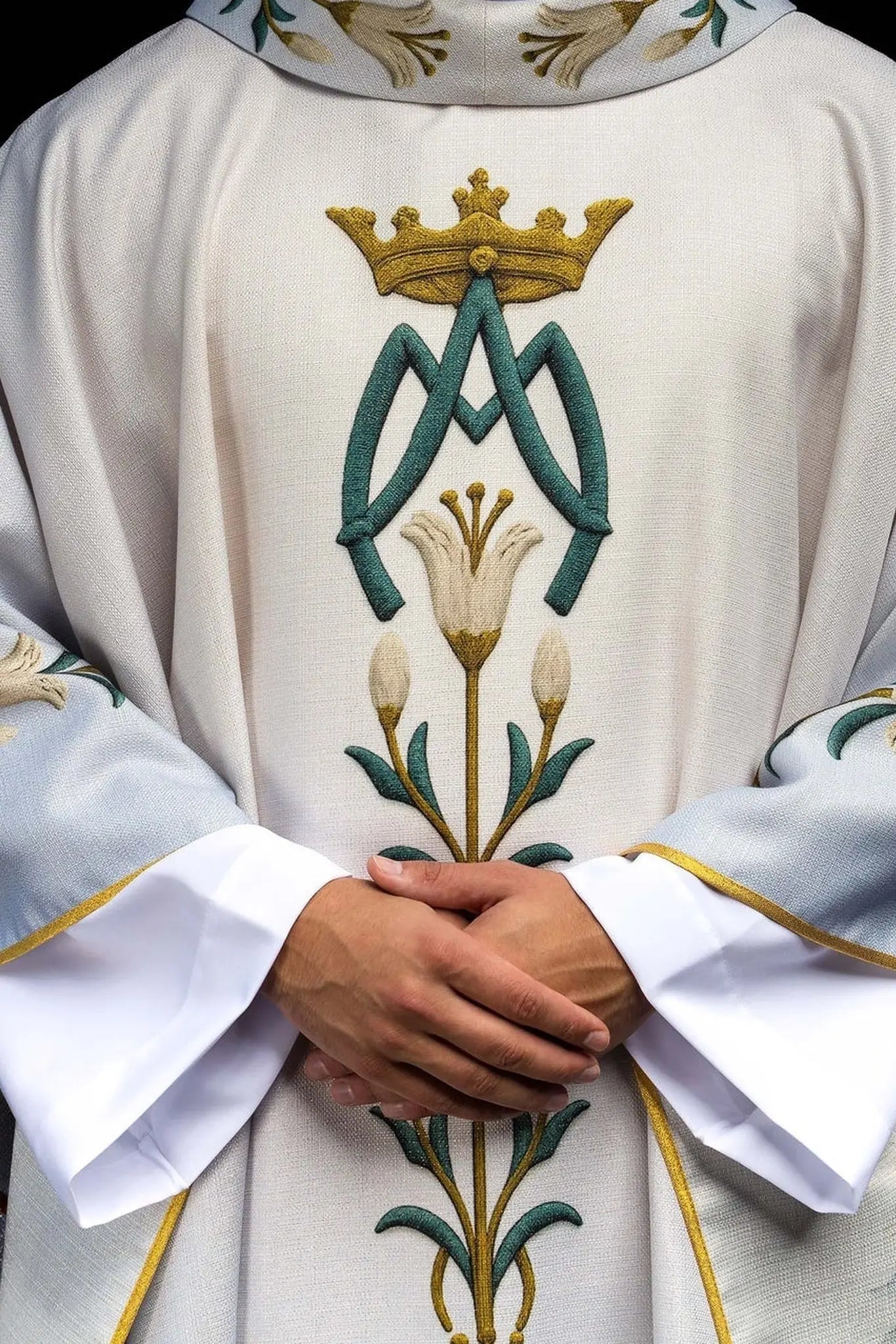
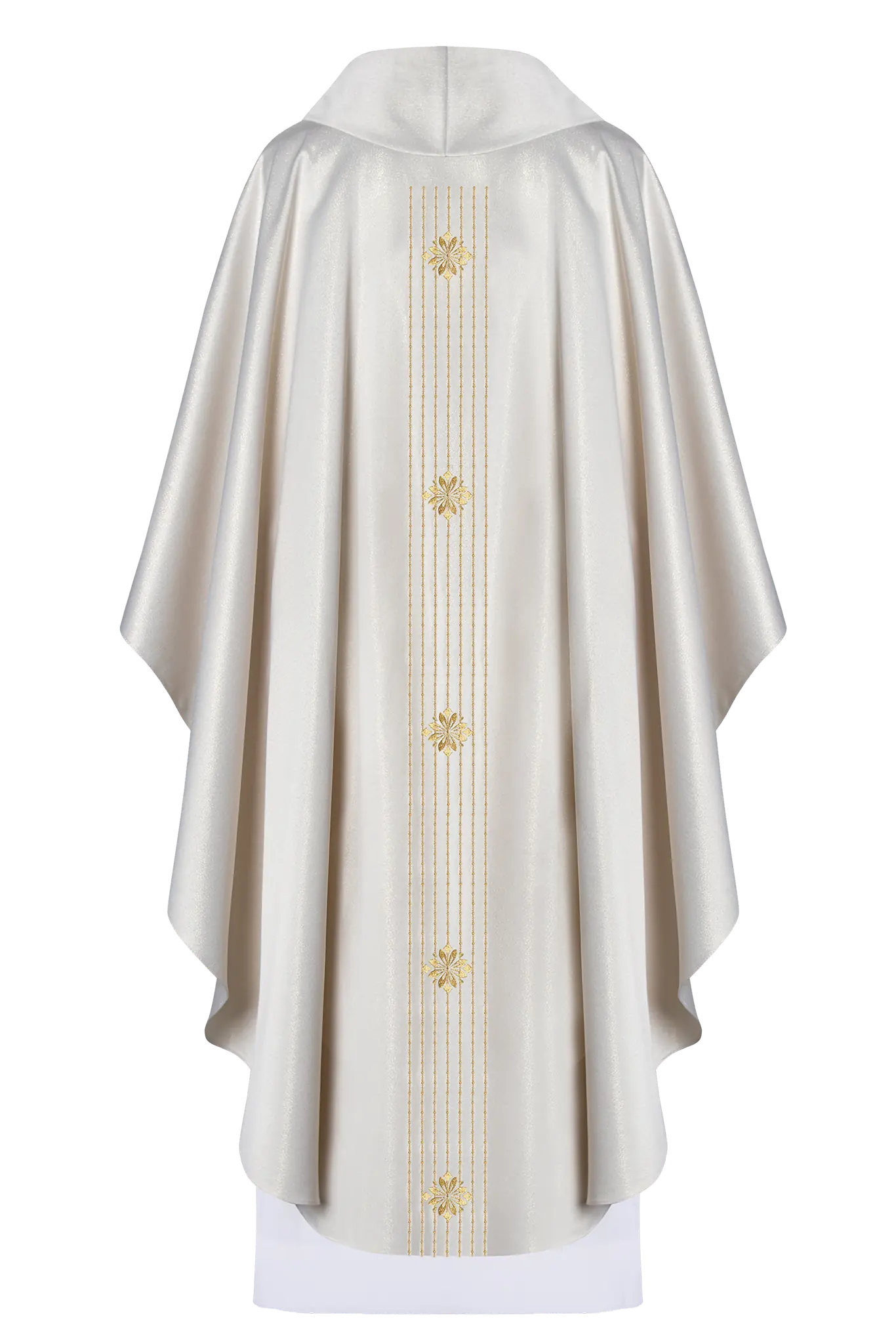
This collection focuses on liturgical items connected with the Blessed Virgin Mary. The visible assortment includes chasubles, stoles and altar cloths, and the style of the category is closely related to Marian Chasubles, Marian Stoles and Marian church textiles. The central item for the celebration of Mass is the chasuble, worn by a priest or bishop over the alb and stole. Marian chasubles often feature embroidered or printed images of Our Lady, the Marian monogram, lilies, roses, stars or decorative orphreys inspired by Marian iconography.
Stoles in the Blessed Virgin Mary theme are useful when a full Marian Mass set is not required, or when a priest needs a vestment for blessings, devotions, confession, processions or other pastoral moments connected with Marian prayer. Altar cloths and related textiles help complete the visual language of the sanctuary. When chosen with care, the vestment, stole and altar textile can create a coherent setting without overwhelming the liturgy.
Liturgical occasions for Blessed Virgin Mary vestments
Vestments from this collection are suitable for many celebrations dedicated to Mary. They may be used for the Solemnity of Mary, the Holy Mother of God, the Annunciation, the Visitation, the Immaculate Conception, the Assumption, Our Lady of Lourdes, Our Lady of Fatima, Our Lady of the Rosary, Our Lady of Mount Carmel and other local or diocesan Marian observances. They are also fitting for votive Masses of the Blessed Virgin Mary, shrine celebrations, parish patronal feasts, pilgrimages, May devotions and October rosary services.
White and ecru are especially common for Marian celebrations because they express purity, joy, solemnity and light. Gold details can emphasize festal character, especially for major solemnities or parish celebrations with a more ceremonial setting. Blue is widely associated with Marian imagery and devotion; however, local liturgical norms may differ, so parishes should follow the guidance of their diocese when selecting colors for the celebration of Mass. When a specific season has its own color, this collection can still provide Marian symbols that harmonize with the liturgical context.
Marian symbolism in embroidery and sacred imagery
The embroidery used in Marian vestments has a catechetical and devotional role. A lily is commonly associated with purity and the Immaculate Conception. A rose recalls Marian titles such as Mystical Rose and may also point toward the rosary and the love of the Mother of God. A star can refer to Stella Maris, Mary as Star of the Sea, a guide for the faithful on the way to Christ. The Marian monogram and crowned letter forms communicate a direct dedication to the Blessed Virgin Mary while remaining visually clean and suitable for many churches.
Some chasubles include images connected with specific Marian devotions, such as Our Lady of Lourdes, Our Lady of Fatima, the Immaculate Conception or Our Lady of the Scapular. These designs are especially useful when a parish celebrates a particular devotion, has a Marian side altar, belongs to a community with a Marian patronage or wants to prepare a vestment for a feast that is important to local spirituality. Other designs use symbolic embroidery rather than a full image, which makes them versatile for many feasts and simpler liturgical settings.
How to choose a Marian chasuble, stole or altar cloth
When selecting a Marian vestment, first consider the liturgical occasion. A solemnity or major parish celebration may call for a richer chasuble with a stronger central motif, wider embroidery or gold accents. A votive Mass, weekday Marian memorial or recurring devotion may be better served by a lighter, more restrained design. The right choice should support the sacred action and fit the character of the church rather than compete with it.
The next point is the type of item needed. A priest celebrating Mass will need a chasuble, and many parishes prefer to coordinate it with a stole in a similar Marian theme. For pastoral use outside Mass, a stole may be the most practical purchase. For the sanctuary, an altar cloth or related textile can bring Marian symbolism to the altar area in a more subtle way. For a wider vestment search beyond this theme, the broader Liturgical Vestments collection is useful, while the main Chasubles category helps compare cuts, colors and designs across the full vestment range.
Color and cut also matter. Ecru and white Marian chasubles are widely used for feasts and solemn celebrations. Gold elements can suit a more festive church interior or a sanctuary with warm decorative details. A Gothic-style chasuble offers a flowing silhouette and comfortable drape, while a Roman-style chasuble gives a more structured traditional appearance. The choice depends on the celebrant, the parish tradition and the desired visual balance with the altar, ambo and surrounding church textiles.
Coordinating this collection with adjacent liturgical collections
The Blessed Virgin Mary collection belongs to the broader rhythm of the liturgical year. During Advent, Marian themes are especially present in the expectation of the Nativity and in celebrations such as the Immaculate Conception, so parishes may also review the Advent collection for seasonal vestments. For Christmas celebrations that include Marian devotion around the Nativity, the Christmas collection may provide complementary white, gold and festive designs.
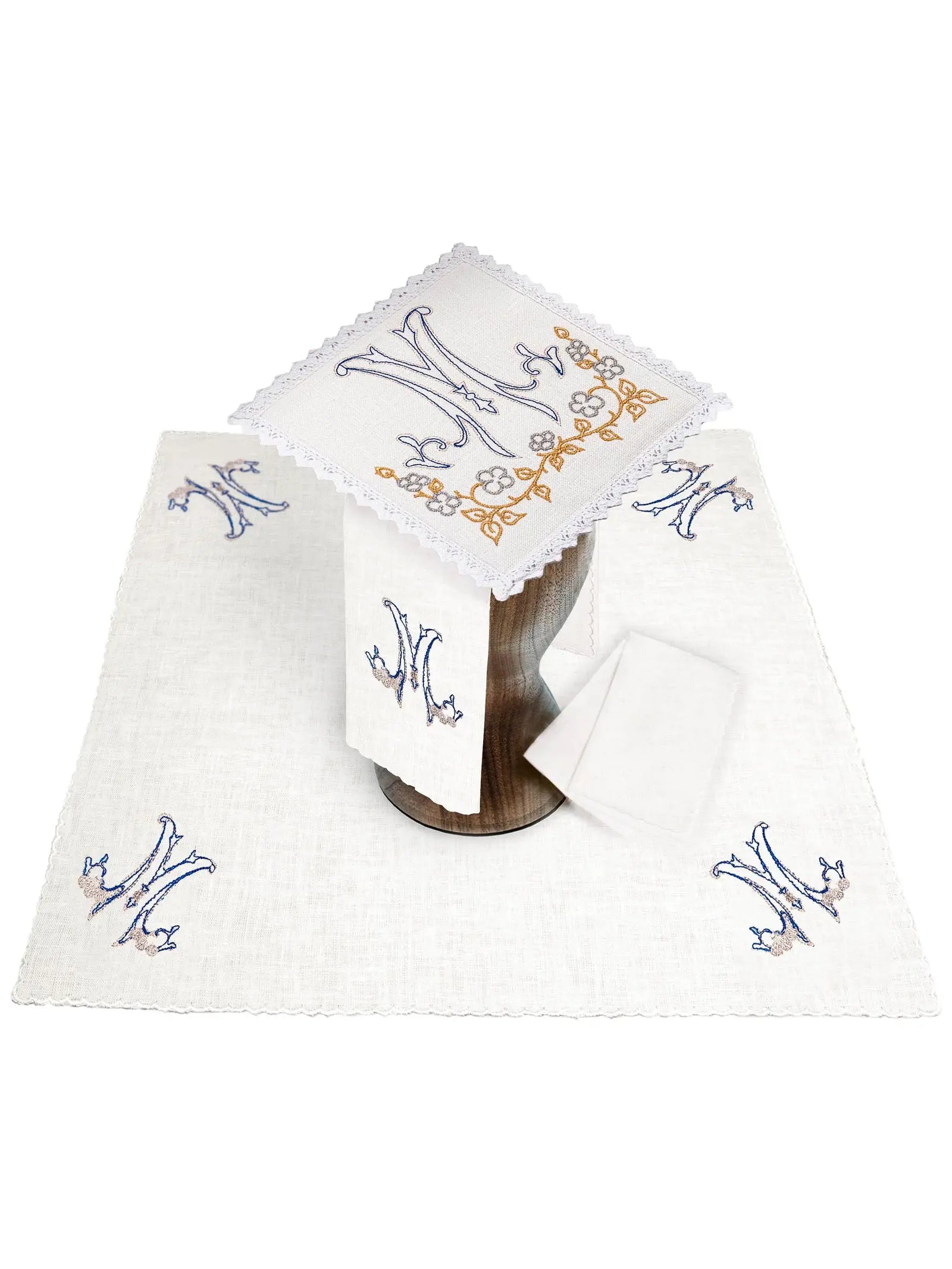
For communities that need color-specific vestments, related categories can help complete the sacristy. The Ecru Chasubles collection is especially relevant because many Marian designs use ecru as a base color. Altar settings can be completed through Altar Cloths, and parishes preparing a coordinated Marian Mass set may also consider Chalice's Set Marian for the chalice linen elements used at the altar.
Craftsmanship, materials and liturgical dignity
Marian vestments need to be beautiful, but they also need to serve the practical requirements of worship. A chasuble should fall well over the alb, allow comfortable movement at the altar and remain dignified from the entrance procession through the final blessing. Embroidery should be clear enough to be read from a normal distance, yet integrated into the whole garment so that the vestment remains harmonious. Stoles should be proportioned for pastoral use and finished in a way that supports regular handling.
The source collection emphasizes careful craftsmanship, refined fabrics and precise embroidery. In this revised collection description, that same intention is kept while the focus is broadened to match the actual Blessed Virgin Mary collection: not only chasubles, but also Marian stoles and altar cloths. Fabrics such as durable liturgical textiles, smooth woven materials and embroidered panels are valued for their drape, stability and ability to carry sacred motifs. The best Marian designs combine devotional clarity with restraint, so they can be used repeatedly without becoming overly seasonal or limited to one date.
Care and storage of Marian liturgical textiles
Vestments and altar textiles with embroidery should be handled with care. Chasubles should be hung on wide vestment hangers when possible, away from direct sunlight and excessive humidity. Stoles should be stored flat or hung without sharp folds. Altar cloths should be folded along existing lines and protected from moisture, wax residue and rough surfaces. Embroidered sections should not be pressed directly with high heat.
For cleaning, always follow the care guidance supplied with the particular item. Many embroidered vestments are best cleaned professionally, especially when they include decorative threads, printed sacred images or structured orphreys. Regular sacristy care also includes checking closures, linings and embroidery after major celebrations, particularly when a vestment is used in processions, pilgrimages or crowded feast-day liturgies. Proper storage preserves both the appearance and the dignity of items dedicated to Marian worship.
Frequently Asked Questions (FAQ)
Which items are included in the Blessed Virgin Mary collection?
This collection includes Marian liturgical items such as chasubles, stoles and altar cloths. The exact selection is centered on vestments and textiles decorated with Marian symbols, images of Our Lady, floral motifs, monograms and colors traditionally associated with the Blessed Virgin Mary.
When can a priest wear a Marian chasuble?
A Marian chasuble may be used for Marian solemnities, feasts, memorials, votive Masses of the Blessed Virgin Mary and local celebrations connected with Our Lady. It is especially fitting for occasions such as the Immaculate Conception, the Assumption, Our Lady of Lourdes, Our Lady of Fatima and parish Marian devotions, while always respecting the liturgical norms of the diocese.
Are Marian vestments always blue?
No. Blue is strongly associated with Marian devotion in sacred art, but white and ecru are very common for Marian Masses because they express joy, purity and festal solemnity. Gold embroidery may be added for a richer celebration. The appropriate liturgical color should be selected according to the feast, local custom and diocesan guidance.
How do I choose between a Marian image and a Marian symbol?
A vestment with a specific image of Our Lady is well suited to a named devotion or feast, such as Lourdes, Fatima or the Immaculate Conception. A symbolic design with lilies, roses, stars or a Marian monogram is more flexible and can be used across many Marian celebrations throughout the year.
Can I coordinate a Marian chasuble with altar textiles?
Yes. A Marian chasuble can be paired with a stole and altar cloth in a similar color family or with matching embroidery themes. The goal is visual harmony in the sanctuary: the altar, vestment and other textiles should support the celebration without distracting from the liturgy.
Is this collection only for major Marian feasts?
No. Richer designs are excellent for solemn parish celebrations, but simpler Marian embroidery can also be used for weekday memorials, votive Masses, May devotions, rosary services, pilgrimages and pastoral events where devotion to the Blessed Virgin Mary is central.