
Sort by
54 products
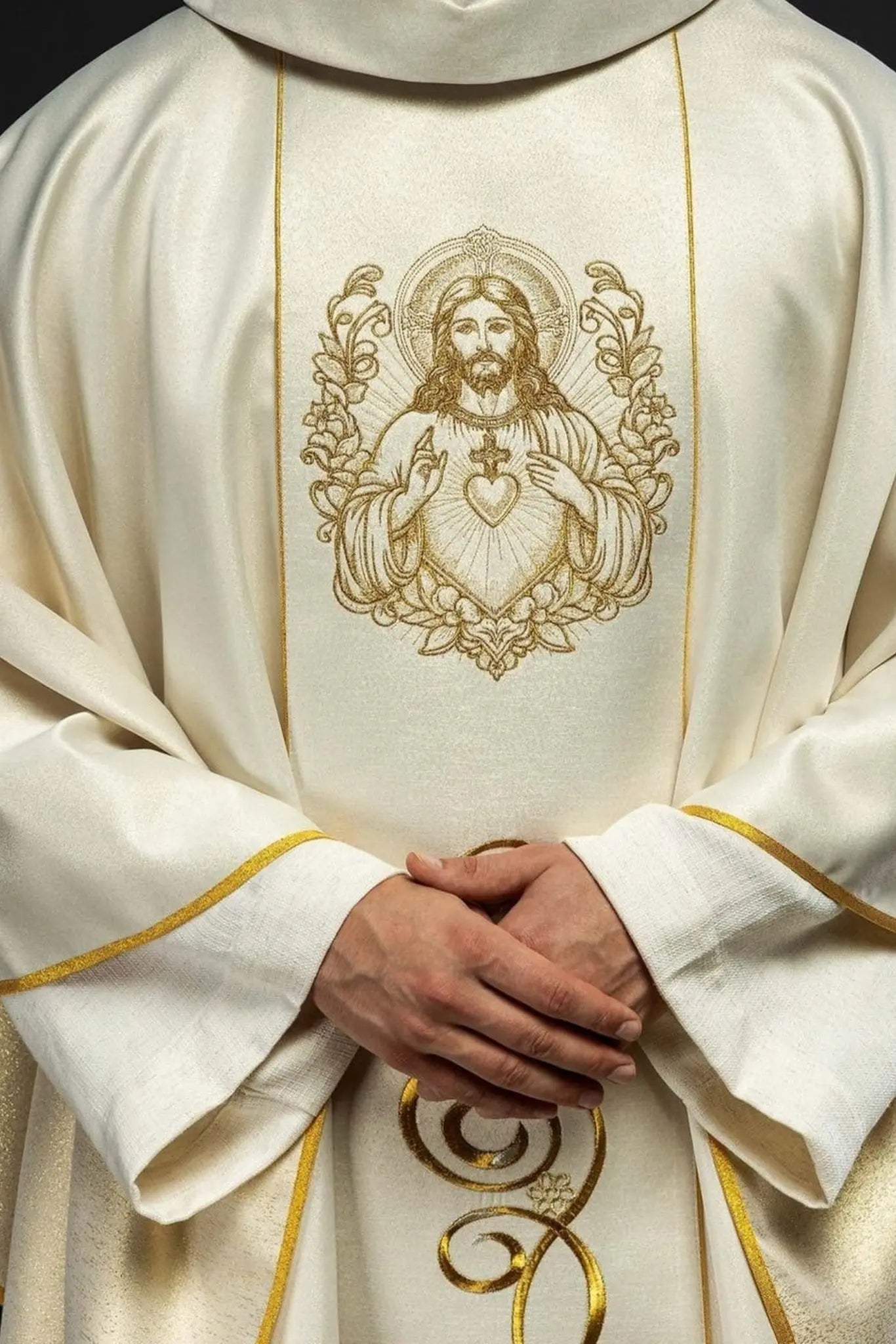
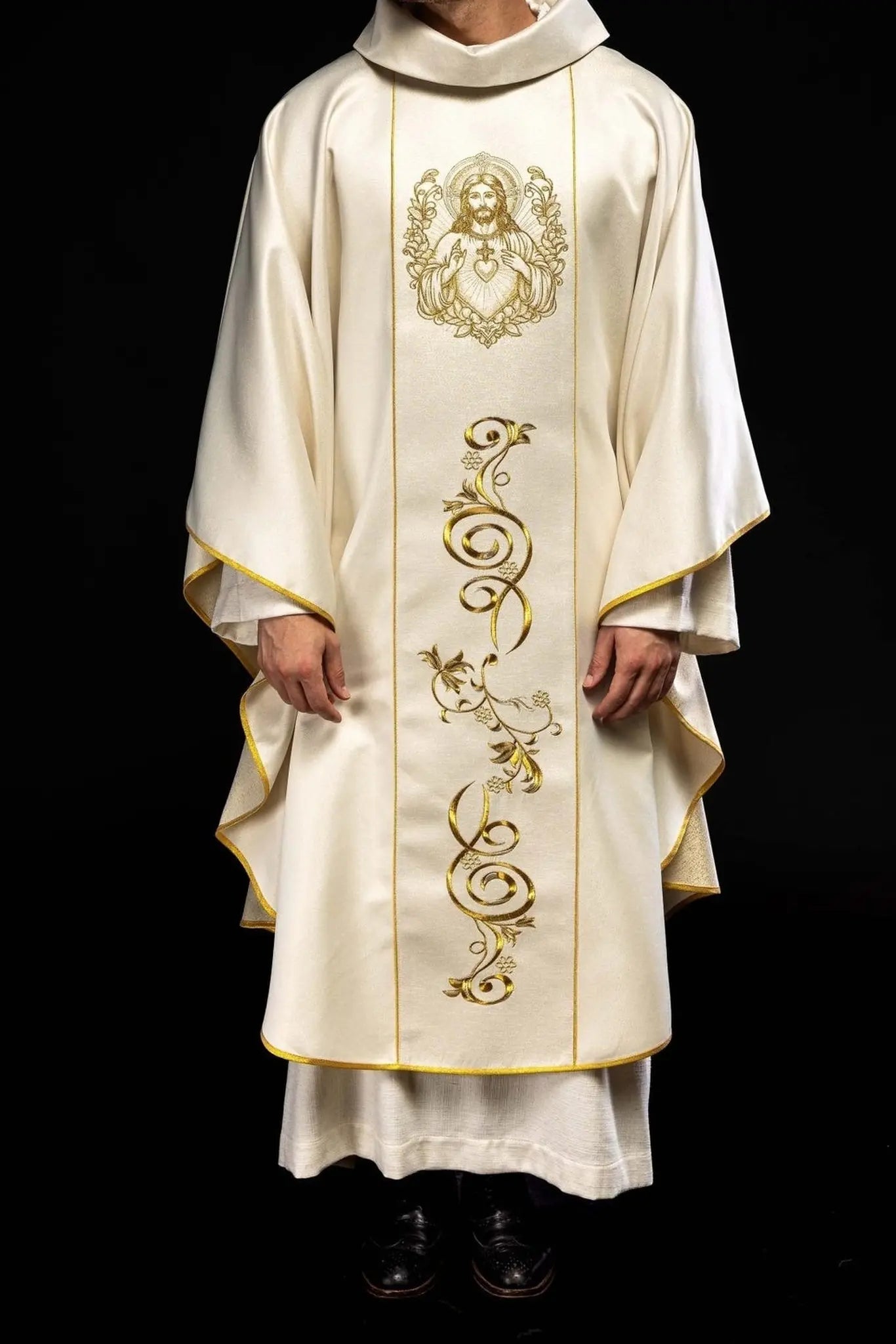
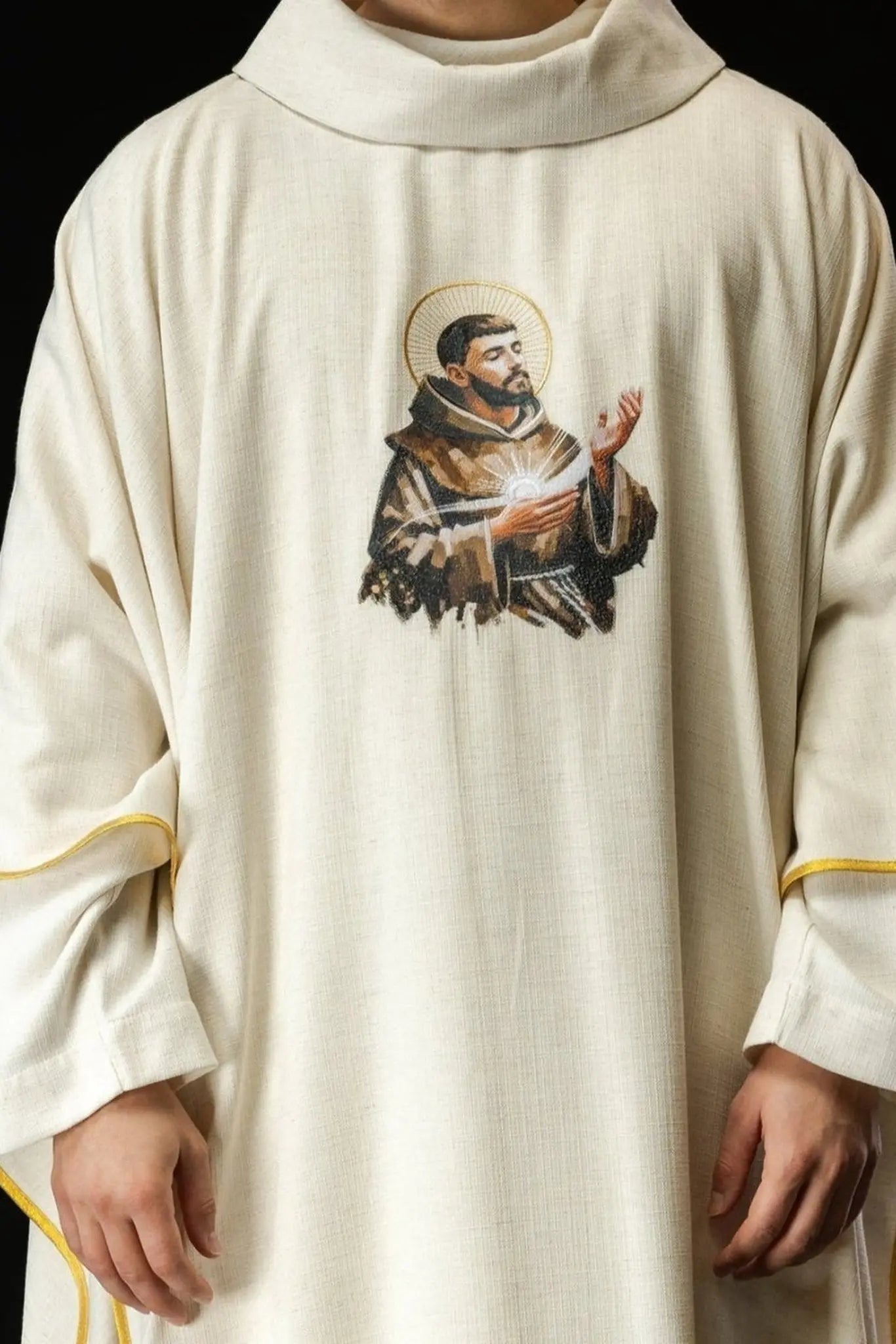
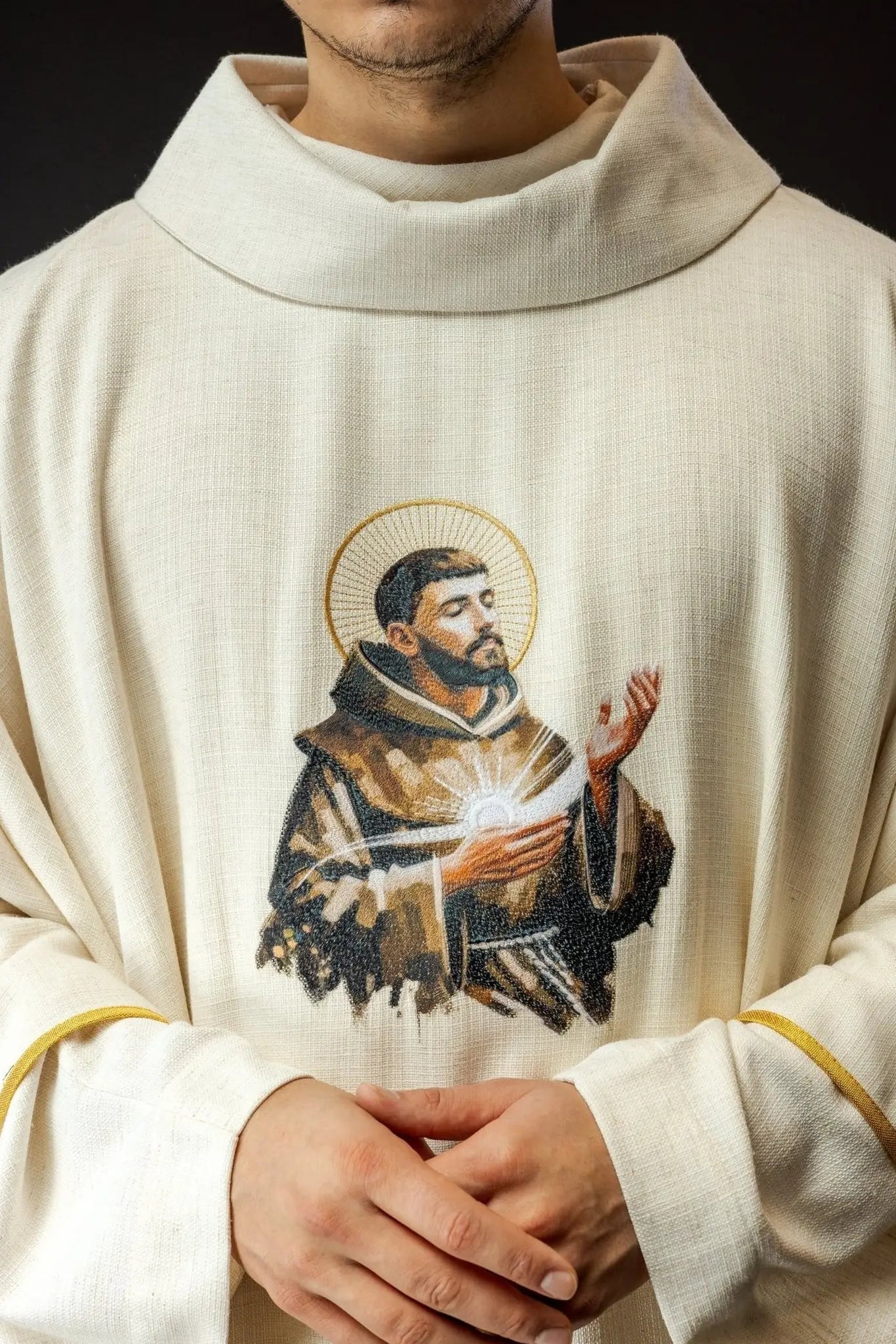
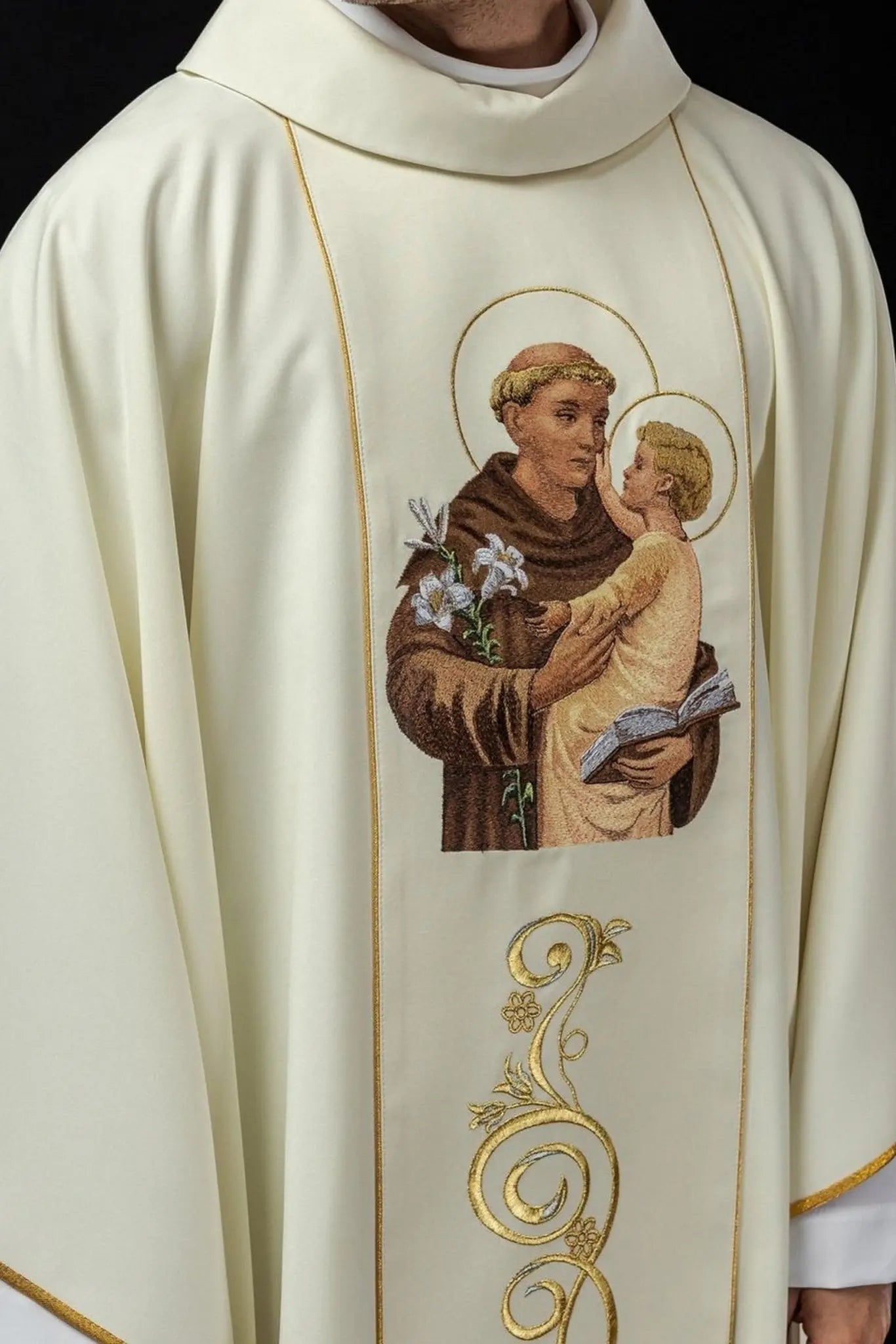
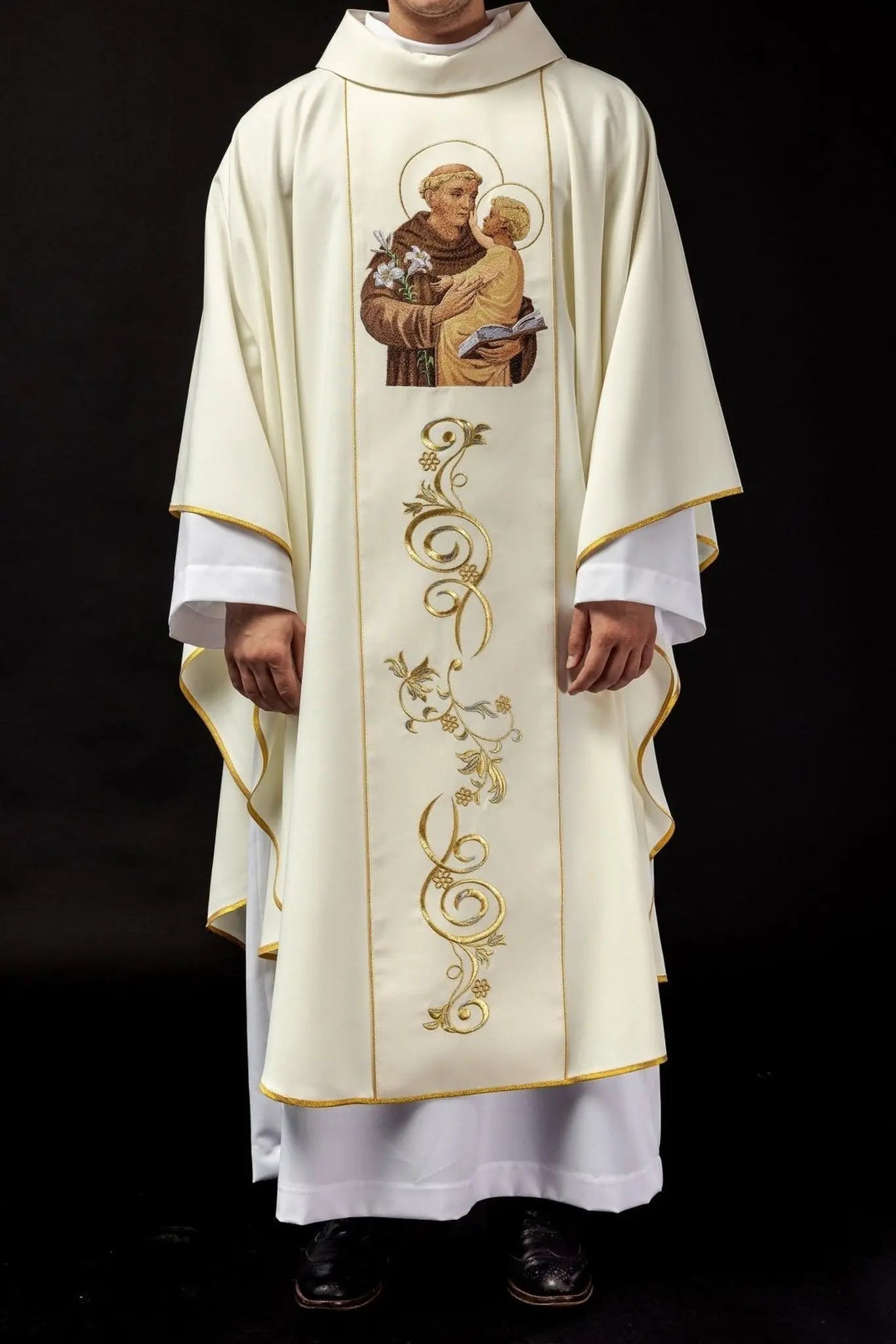
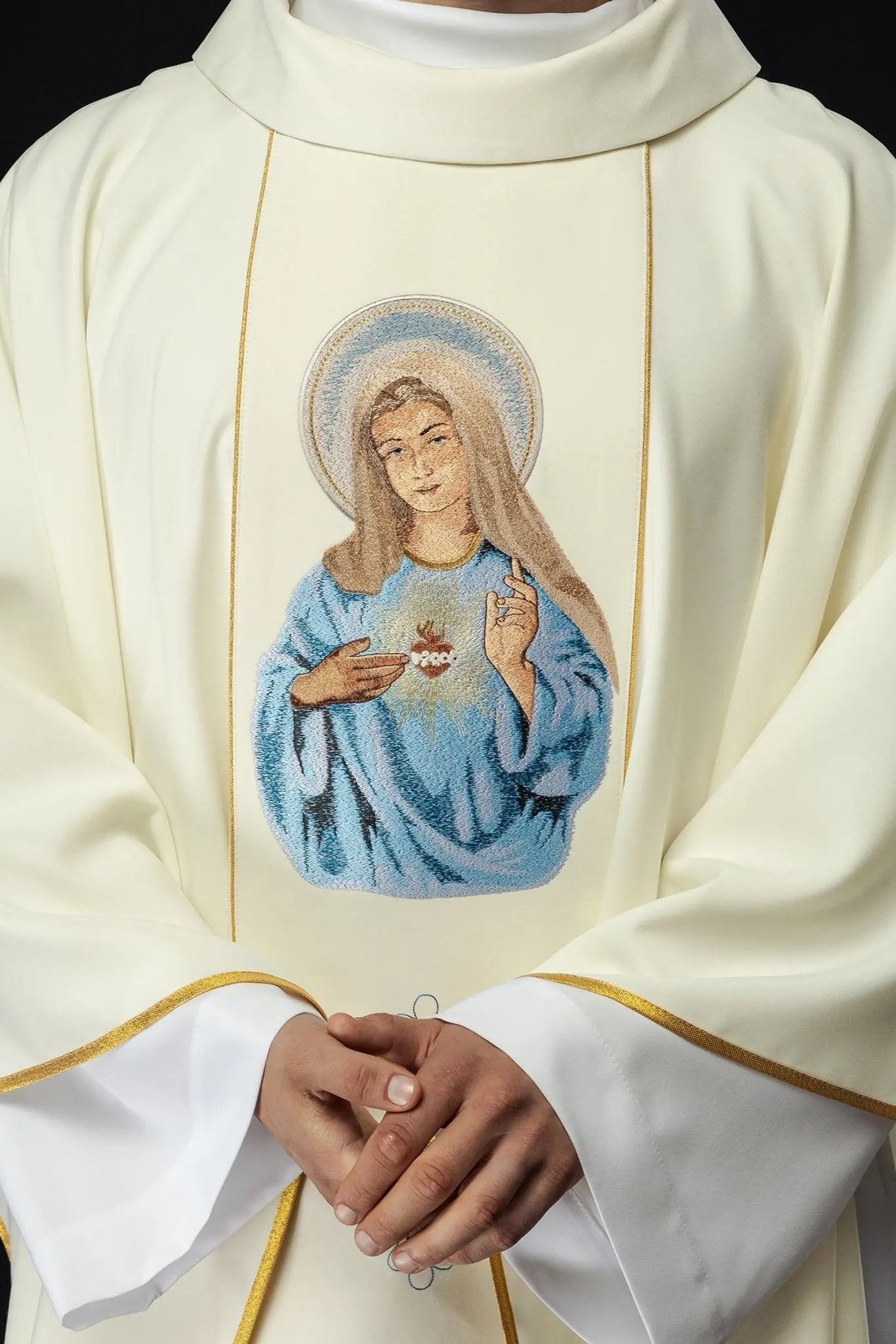
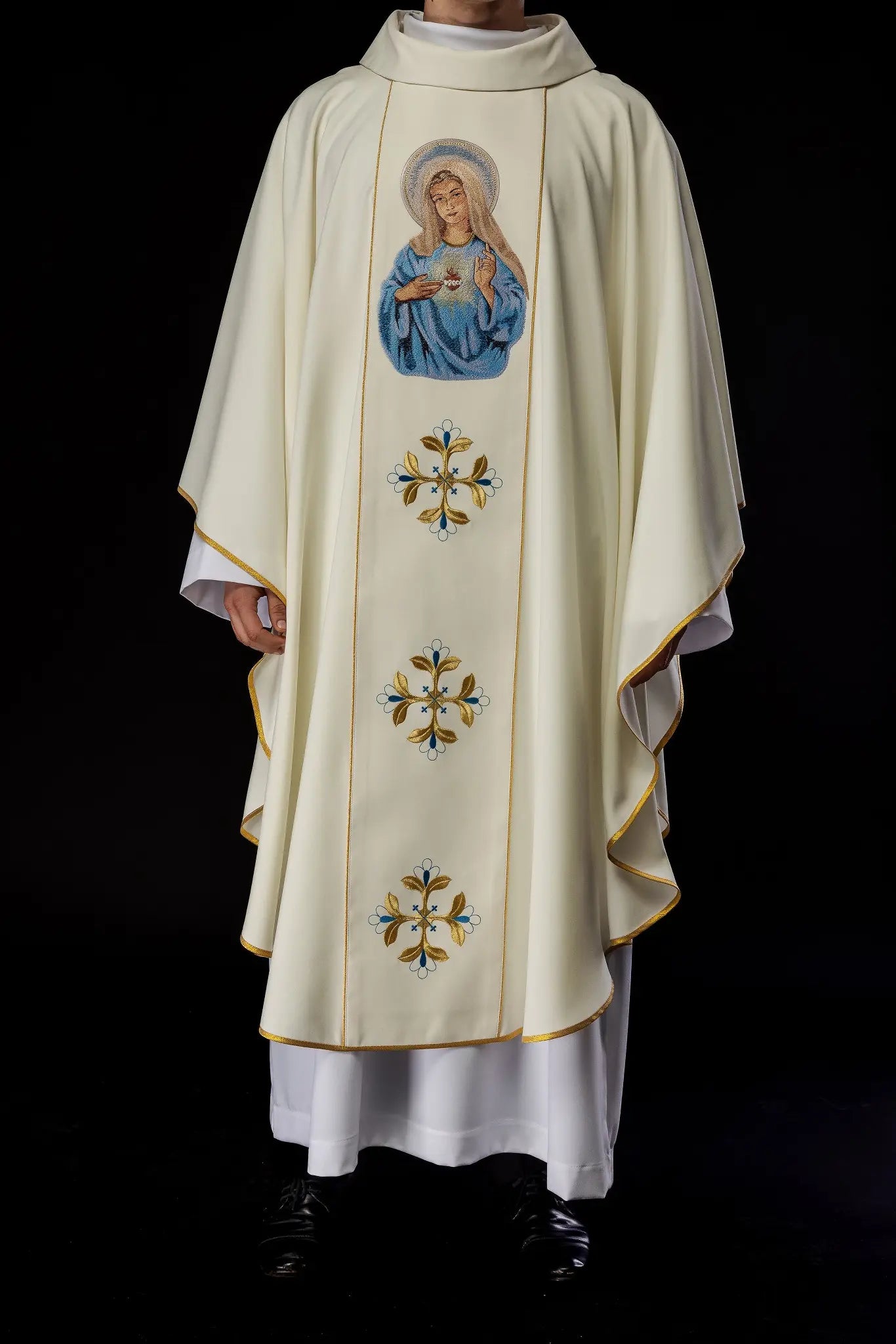
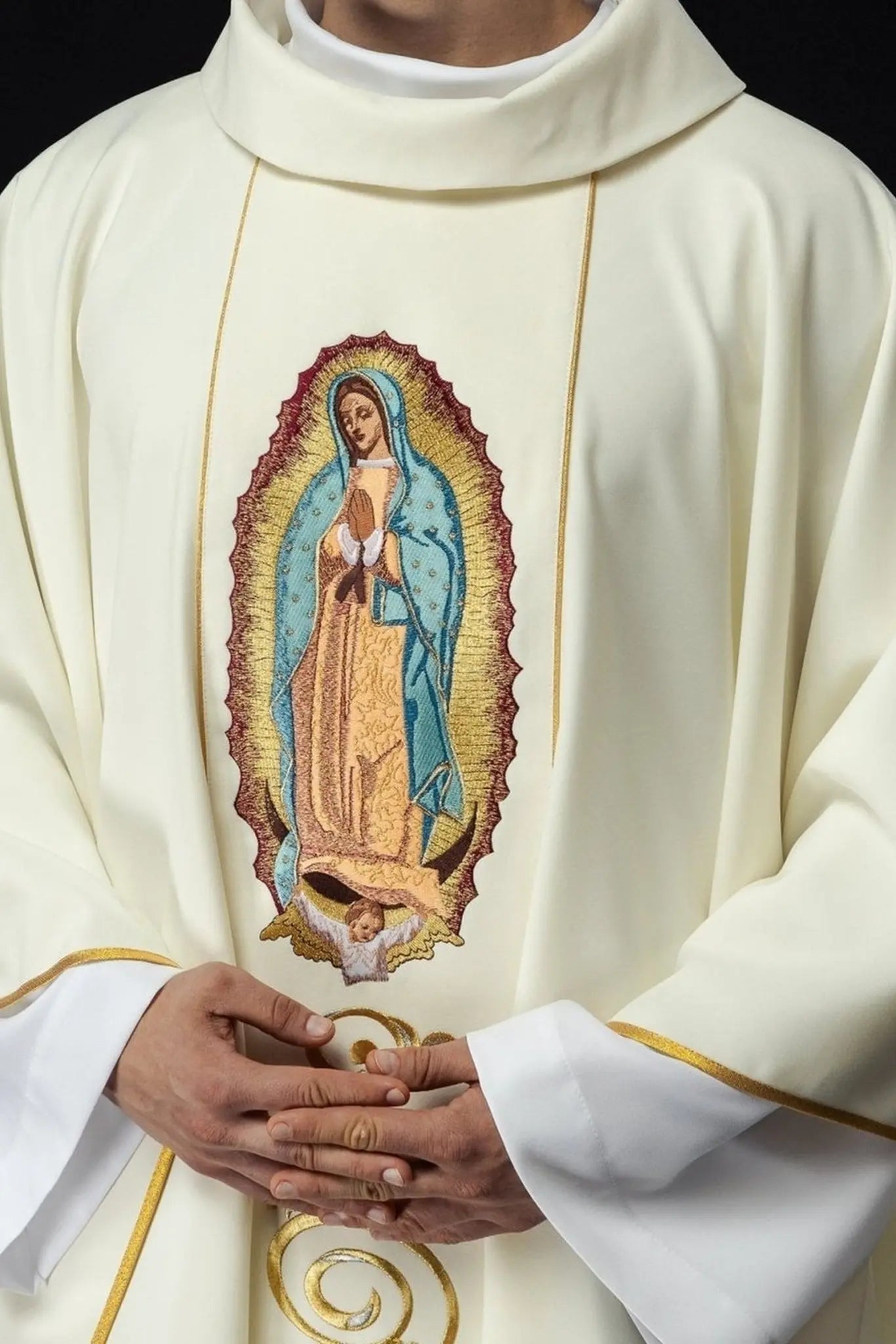
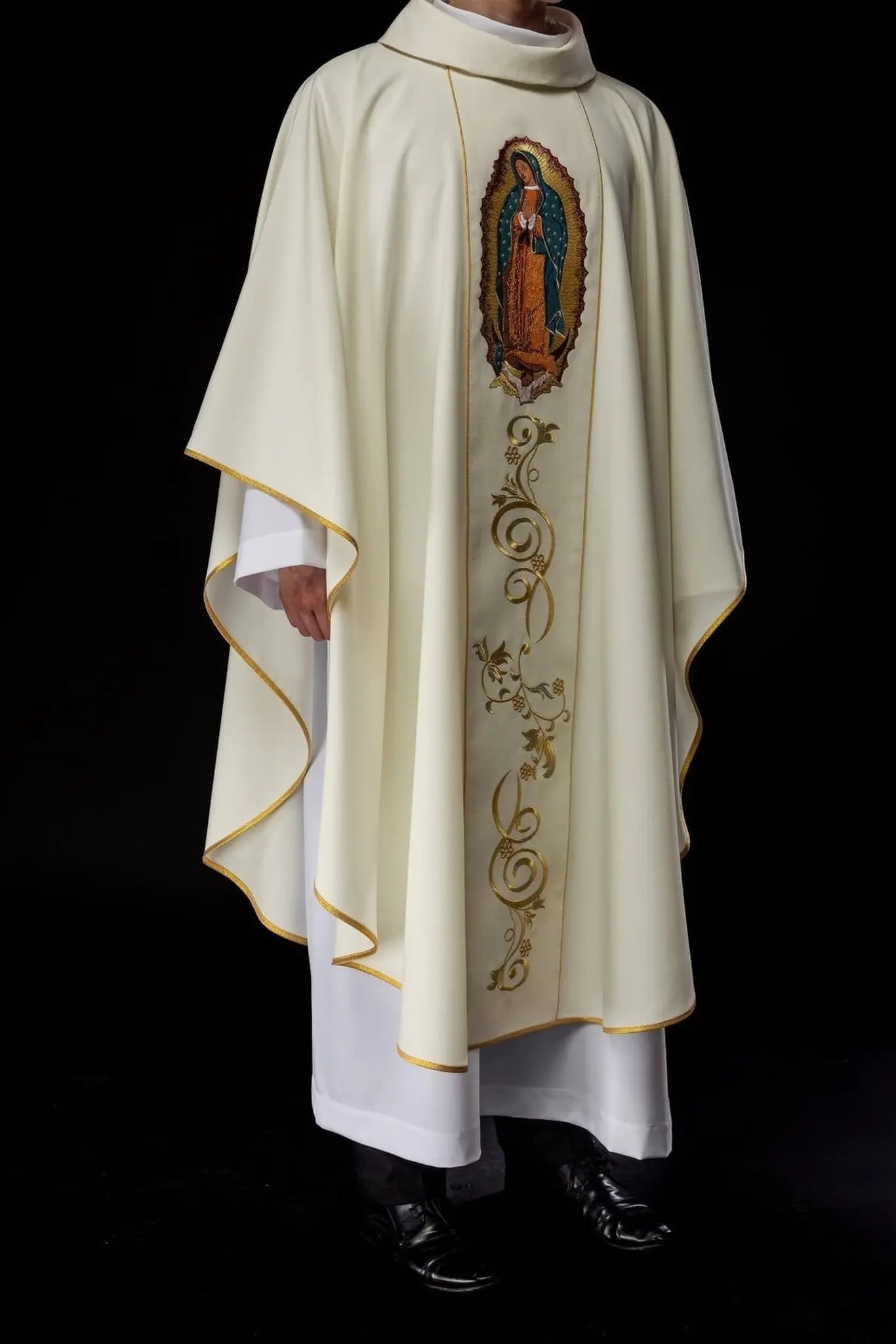
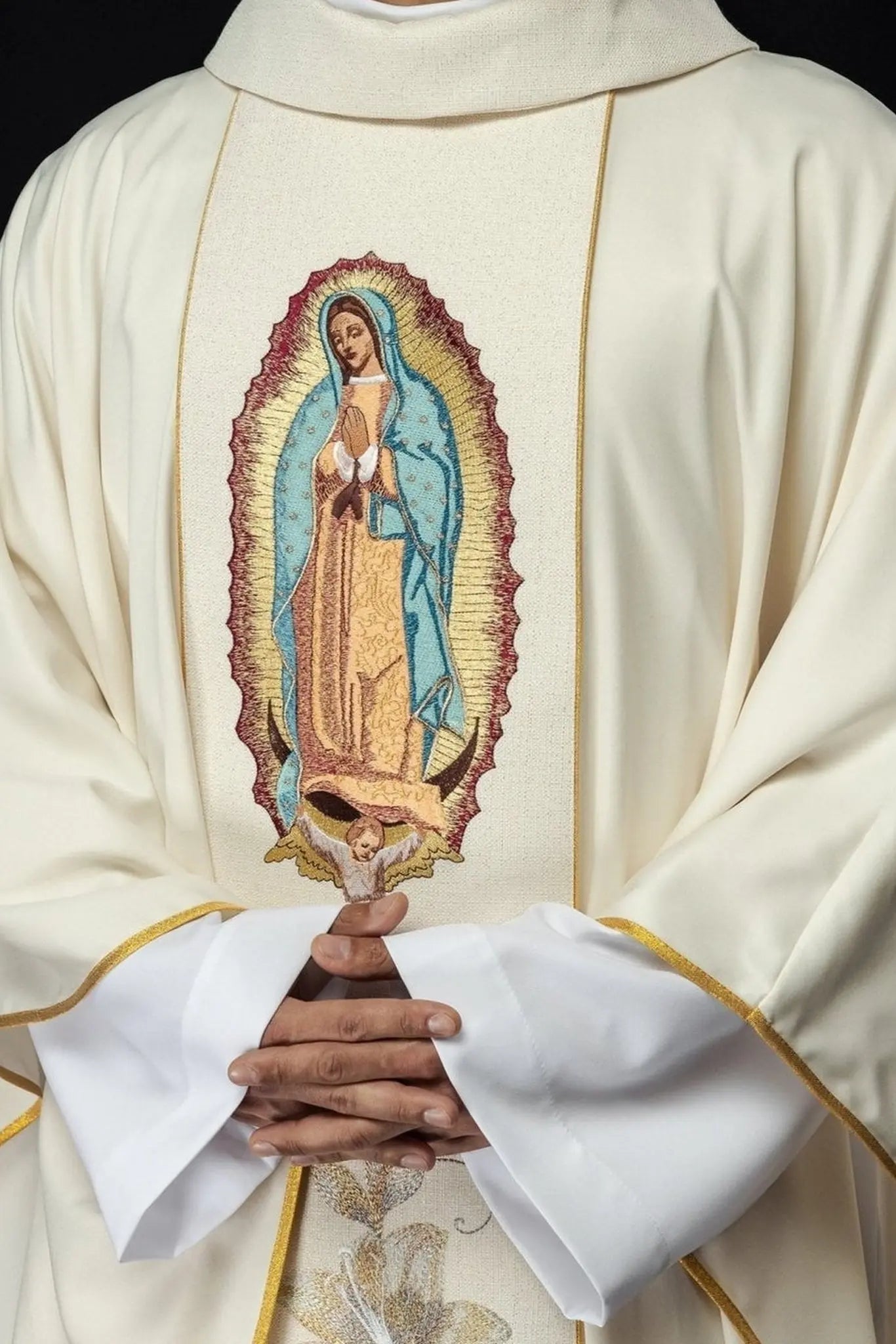
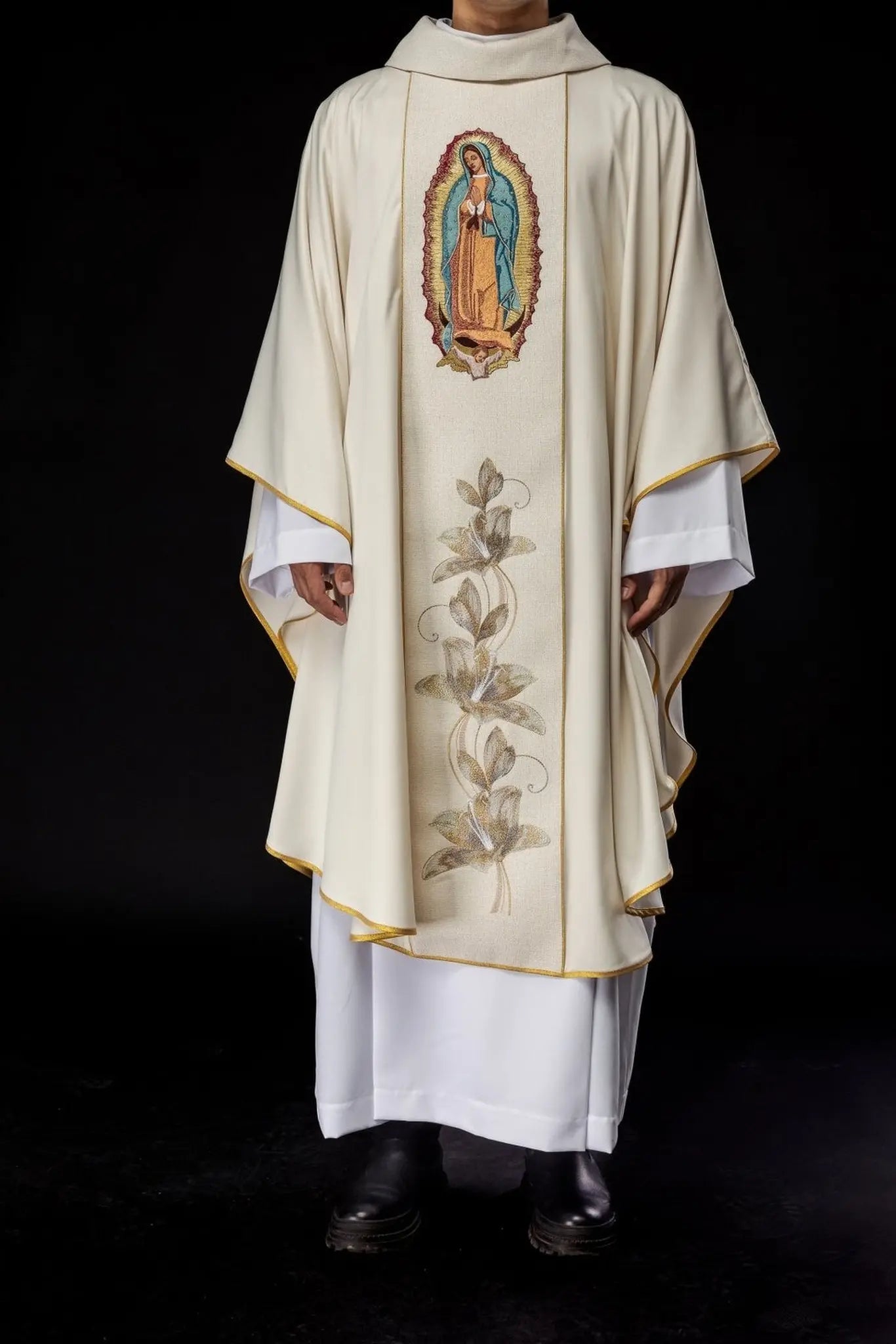
Chasubles with Saints and Sacred Images
Chasubles with sacred images are liturgical vestments designed for priests and bishops who celebrate the Eucharist. This collection gathers chasubles decorated with embroidered Christian imagery, including representations of saints, Christological symbols, Marian themes, biblical scenes and devotional motifs. The image is not only an ornament: in Catholic worship it can help connect the celebration of Mass with the mystery, feast day or patronal devotion being observed.
A chasuble is the outer vestment worn over the alb and stole by the main celebrant at Mass. When the vestment includes a clearly recognizable sacred image, it becomes especially useful for solemn celebrations, parish feast days, votive Masses, pilgrimages, retreats, anniversaries of ordination and communities dedicated to a particular saint or mystery of faith. For a wider overview of available vestment types, see our liturgical vestments, or browse the full chasubles collection.
What belongs in this collection?
This collection focuses on chasubles whose design is built around a visible sacred image rather than color alone. Depending on the model, the central motif may appear on the front, the back, or both sides of the vestment. Common themes include saints, the Sacred Heart of Jesus, the Lamb of God, Marian symbolism, Eucharistic motifs, the Holy Spirit, crosses, Scripture-inspired images and other devotional compositions suited to the Roman Catholic liturgy.
These chasubles are particularly helpful when the image supports the meaning of a celebration. A saint image can be chosen for a patronal feast, a parish anniversary or a community named after that saint. A Christ-centered image may be used for solemnities, Eucharistic celebrations and devotional days. Marian motifs naturally complement Masses and feasts of the Blessed Virgin Mary, while Eucharistic imagery can be appropriate for Corpus Christi, First Holy Communion celebrations or adoration-related events.
How to choose a chasuble with a sacred image
Begin with the liturgical purpose. If the chasuble will be used for a patron saint, choose a recognizable image connected with that devotion. For Marian celebrations, compare this collection with our Marian chasubles, where the design language is centered on the Blessed Virgin Mary. For a celebration of the Sacred Heart, a chasuble with a Christological image can be paired with the spirituality of the Sacred Heart of Jesus collection.
The second choice is color. Sacred imagery does not replace the liturgical color required by the day. Green is used in Ordinary Time, red for Palm Sunday, Good Friday, Pentecost, martyrs and the Holy Spirit, purple for Advent, Lent and penitential services, rose for Gaudete Sunday and Laetare Sunday, and white or ecru for joyful solemnities, feasts of the Lord, Marian feasts, saints who were not martyrs and many sacramental celebrations. When the main factor is the color of the day, related collections such as green chasubles, red chasubles, purple chasubles and gold chasubles can help narrow the choice.
The third choice is style and visibility. A large embroidered figure or icon-like image is suitable for a solemn Mass where the vestment should be clearly legible from a distance. A smaller medallion, symbolic motif or more restrained composition can be better for regular parish use, chapels or communities that prefer a calmer visual style. Consider also whether the image should be traditional, contemporary, highly decorative or more minimal.
Embroidery, fabrics and craftsmanship
The source collection emphasizes embroidery, fabric quality and careful finishing. In a chasuble with an image, these details matter because the central motif must remain clear, balanced and dignified. Embroidery should be readable without overpowering the liturgy, and the fabric should support the weight and placement of the design. Brocade, silk-like fabrics and durable blends can offer different levels of structure, sheen and comfort during longer celebrations.
Good craftsmanship is visible in the alignment of the motif, the smooth fall of the fabric and the way the embroidery works with the cut of the vestment. A well-composed chasuble should not feel like a separate picture attached to fabric; the image, orphrey, color and decorative borders should form one coherent liturgical garment. This is especially important for solemn occasions, when the vestment becomes part of the visual language of the sanctuary.
Liturgical use and adjacent vestments
Chasubles with sacred images are worn by priests and bishops during Mass. They should not be confused with dalmatics, which are the proper vestment for deacons; for that category, see deacon dalmatics. When a complete liturgical set is needed, a matching stole, chalice veil, pulpit cover or altar textile may help create a harmonious sanctuary, but each item has its own function and should be chosen according to the celebration.
For major feasts, the chasuble can be coordinated with a stole in the same liturgical color or devotional theme. If the priest needs a separate stole for confession, blessings or other rites outside Mass, the clergy stoles collection may be a useful complement. For processions, Benediction or other solemn rites outside the celebration of Mass, copes and humeral veils serve different purposes and should not be treated as substitutes for a chasuble.
Care and long-term use
Because embroidered imagery often includes detailed threadwork, appliqué-like surfaces or decorative borders, careful handling is important. Follow the care instructions supplied with the vestment. In general, embroidered chasubles should be stored clean, dry and protected from direct sunlight. A breathable garment bag helps reduce dust while allowing the fabric to rest. Folding directly across the embroidered image should be avoided whenever possible, especially for larger motifs.
Before major feasts, inspect the chasuble for loose threads, pressure marks or signs of wear around the neckline and seams. If the vestment is used frequently, rotate it with other seasonal chasubles so the embroidery and fabric are not placed under unnecessary strain. Good storage and careful vesting help preserve both the appearance and dignity of the garment for many years of parish service.
Frequently Asked Questions (FAQ)
Are chasubles with sacred images suitable for regular Sunday Mass?
Yes, provided the image, color and overall style are appropriate to the day. A restrained image of Christ, a saint or a Eucharistic symbol can be suitable for parish use, while more elaborate designs are often reserved for solemnities, patronal feasts or special celebrations.
Should I choose the image or the liturgical color first?
Choose the liturgical color first, because it corresponds to the calendar and type of celebration. After that, select an image that supports the feast, mystery or devotion. For example, a red chasuble with a martyr saint may suit that saint's feast, while a white or ecru Marian design can suit many celebrations of the Blessed Virgin Mary.
Can a chasuble with a saint be used outside that saint's feast day?
It can be used when the devotion is pastorally appropriate and the liturgical color matches the day. In a parish named after a saint, such a chasuble may be especially meaningful for anniversaries, pilgrimages, school Masses or community celebrations connected with the patron.
What is the difference between this collection and Marian chasubles?
This collection includes a wider range of sacred imagery, including saints, Christological symbols and Eucharistic motifs. Marian chasubles focus specifically on the Blessed Virgin Mary and are usually chosen for Marian feasts, shrines, parish devotions and communities with a strong Marian identity.
Are these chasubles intended for deacons?
No. A chasuble is the proper Mass vestment for a priest or bishop. Deacons wear dalmatics at Mass, and their stoles are worn differently from priest stoles. If you are preparing vestments for a deacon, choose the deacon dalmatic category instead.