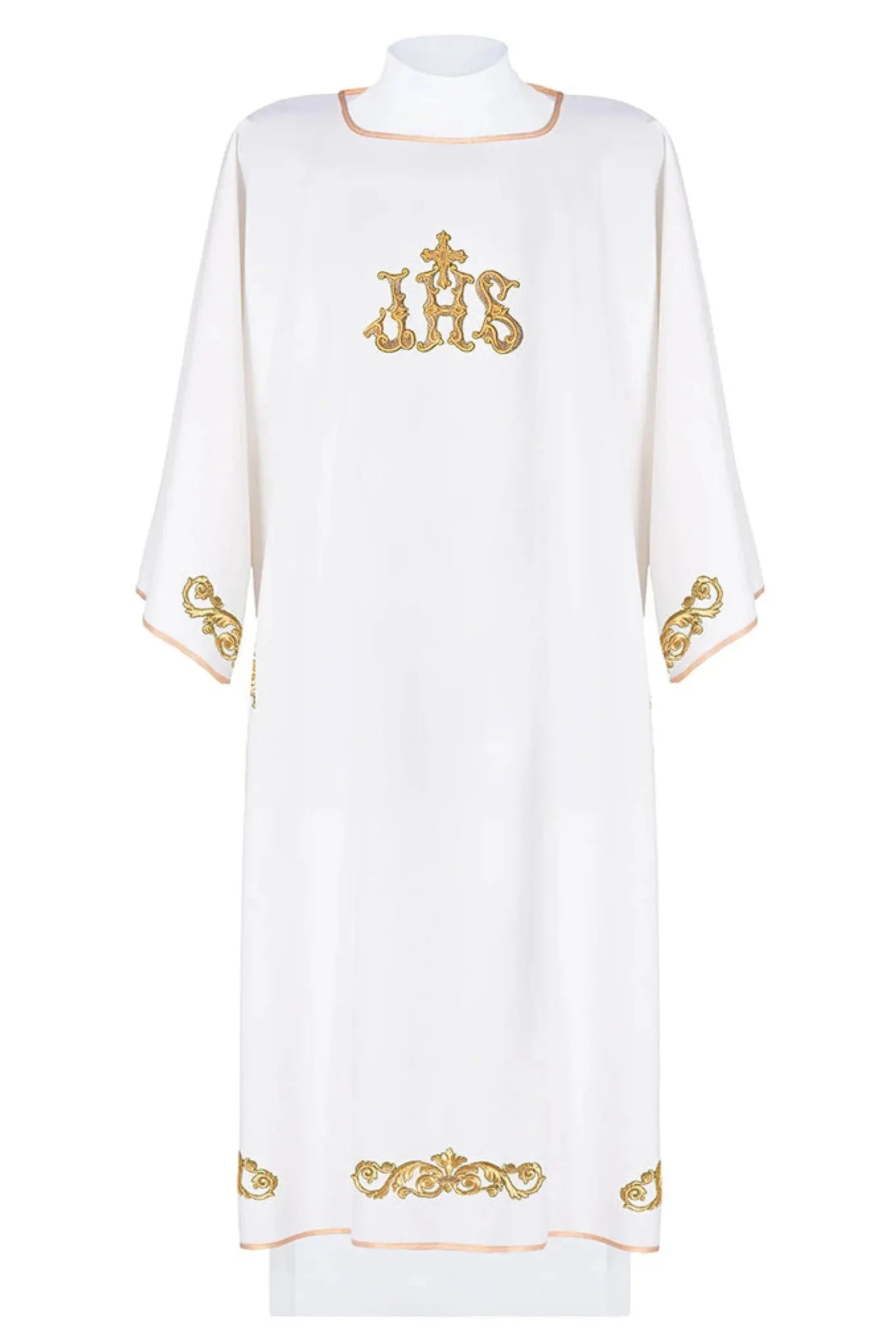
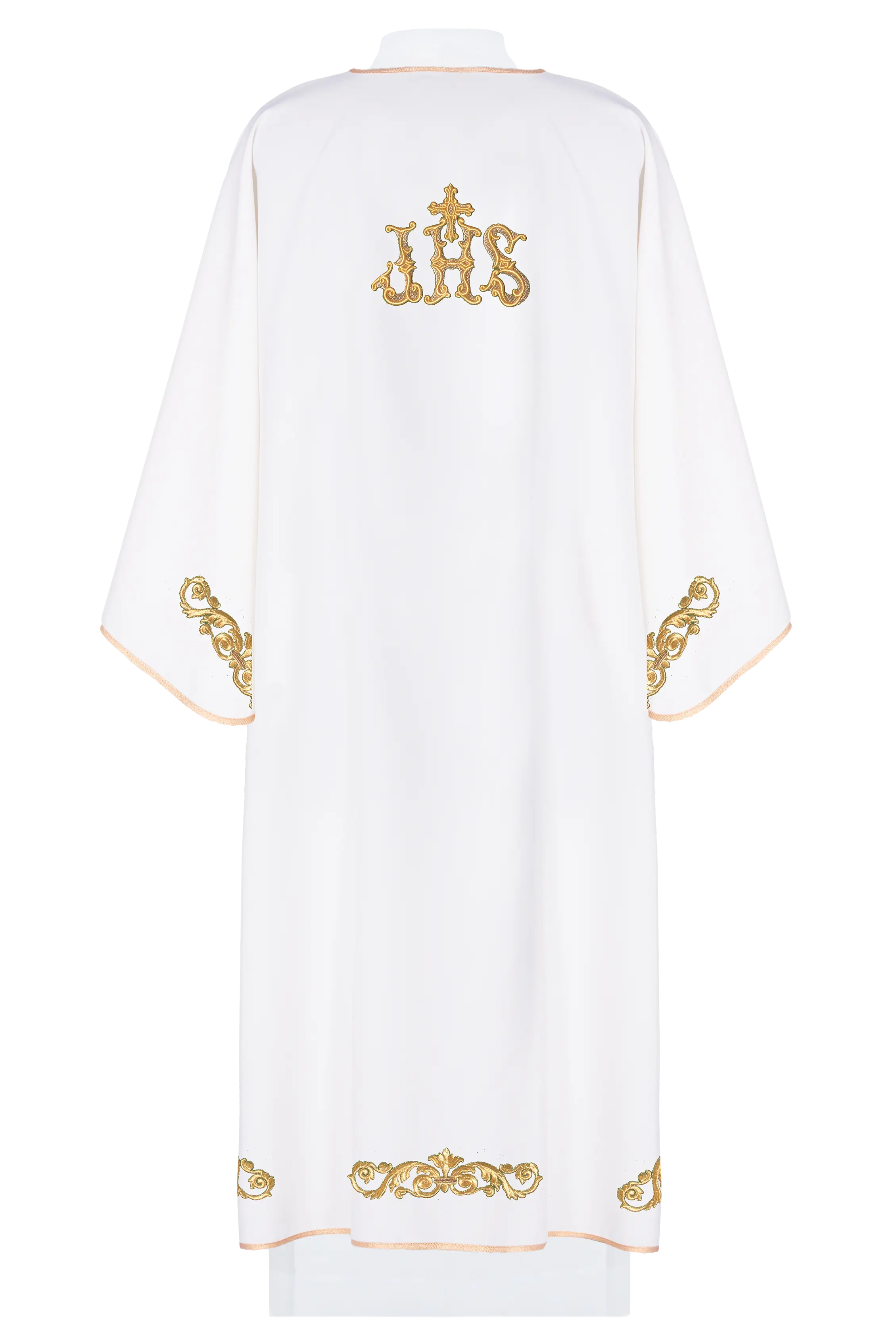
Deacon Dalmatics for Catholic Liturgy
A deacon dalmatic is the proper outer vestment of the deacon when he serves at Mass and at solemn liturgical celebrations. This collection is dedicated to dalmatics for the diaconate: vestments shaped for reverent service at the altar, for the proclamation of the Gospel, for assisting the priest or bishop, and for visible participation in the sacred action of the Church. A dalmatic is not a chasuble. A chasuble is worn by a priest or bishop as the principal celebrant of Mass, while the dalmatic belongs to the deacon and expresses his ministry of service within the liturgy.
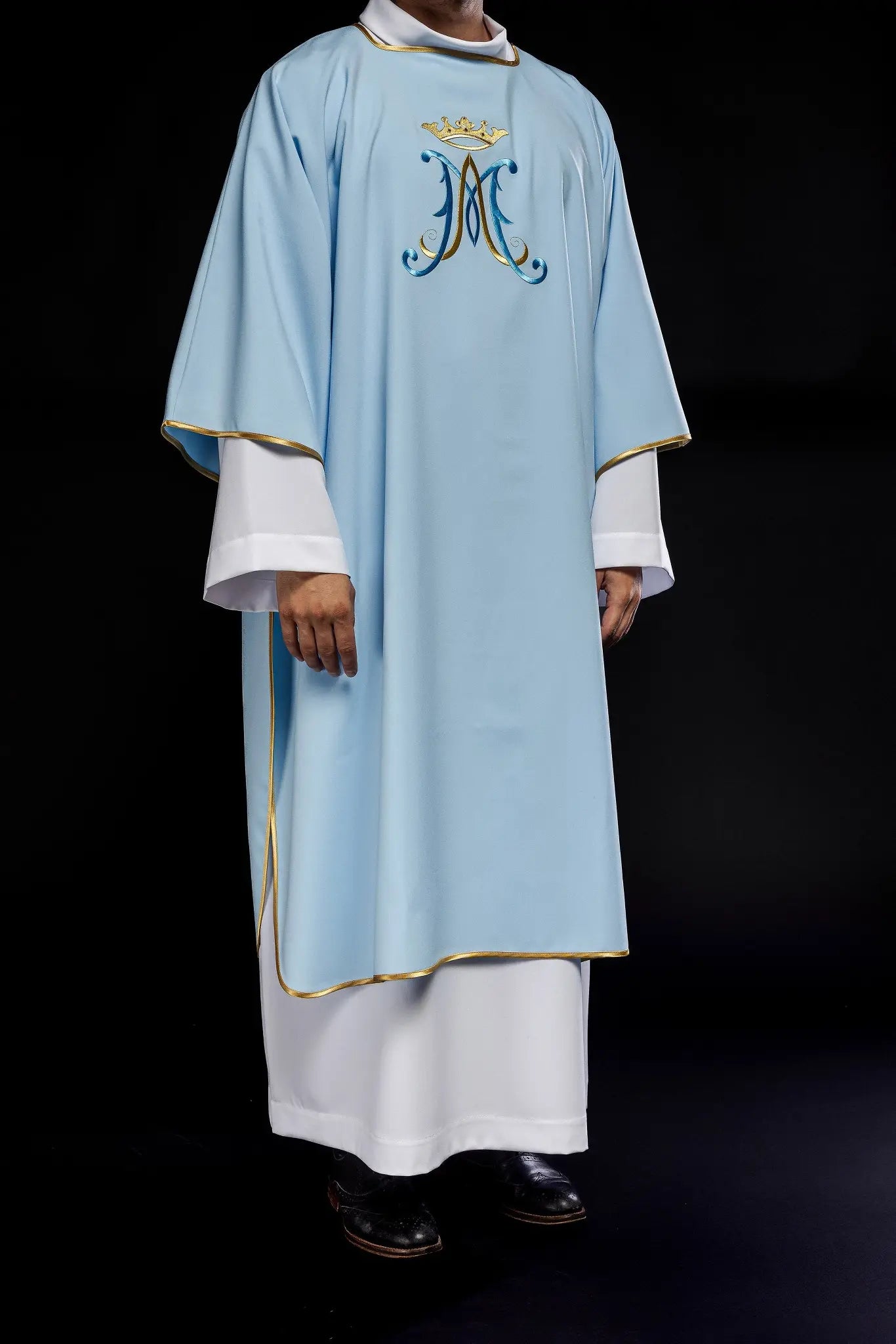
The dalmatic is traditionally recognized by its ample cut, wide sleeves and dignified vertical or orphrey decoration. Its form gives the deacon freedom of movement while maintaining a solemn appearance at the altar, in procession and beside the celebrant. In many parishes, cathedrals, seminaries and religious houses, dalmatics are chosen to coordinate with priestly vestments, altar textiles and the liturgical colors of the day. For a broader view of coordinated church vesture, see our liturgical vestments collection.
Our deacon dalmatics are selected for communities that need vestments suitable for regular parish Masses, feast days, episcopal celebrations, ordinations, processions and other solemn services. The collection includes designs that may be simple and restrained, as well as more decorative styles with embroidered symbols, crosses, Eucharistic motifs or ornamental bands. The aim is always the same: a dalmatic should support the beauty of worship without distracting from the sacred rites.
The liturgical meaning of the dalmatic
The dalmatic has a long history in the Roman liturgical tradition. Over time it became the distinctive vestment of the deacon, marking the office of one who serves the altar, proclaims the Gospel and assists in the distribution of Holy Communion. Its use communicates order and clarity in the sanctuary. When the priest wears a chasuble and the deacon wears a dalmatic, the vesture itself helps the faithful recognize the different roles within the same celebration.
Because the dalmatic is closely connected with service, it should be dignified, practical and liturgically appropriate. The deacon may move between the chair, ambo, altar and congregation; he may carry the Book of the Gospels, prepare the altar, assist with the chalice, invite the faithful to exchange the sign of peace, or dismiss the people at the end of Mass. The garment therefore needs a cut that allows movement while preserving a formal and prayerful appearance.
For many communities, the dalmatic is used most visibly at Sunday Mass, solemnities, Holy Week, patronal feasts, ordinations and diocesan celebrations. It may also be worn in other rites when the rubrics call for the deacon to serve in full vesture. A well-chosen dalmatic gives visual unity to the sanctuary and reinforces the reverence of the celebration.
What belongs in this collection
This collection focuses on deacon dalmatics, meaning outer vestments intended for deacons. They are usually worn over an alb and stole, and they are often coordinated with the chasuble of the celebrant. If you are preparing a complete vestment set for a parish, it is helpful to choose the dalmatic together with related pieces: an alb for the base garment, a deacon stole for the proper diagonal stole, and matching priestly vestments for concelebrants or the main celebrant.
-
Deacon dalmatics for Mass: suitable for Sunday liturgy, solemn feasts, parish celebrations and diocesan ceremonies.
-
Seasonal dalmatics: chosen according to the liturgical color of the day, such as white or gold, green, red, purple or rose.
-
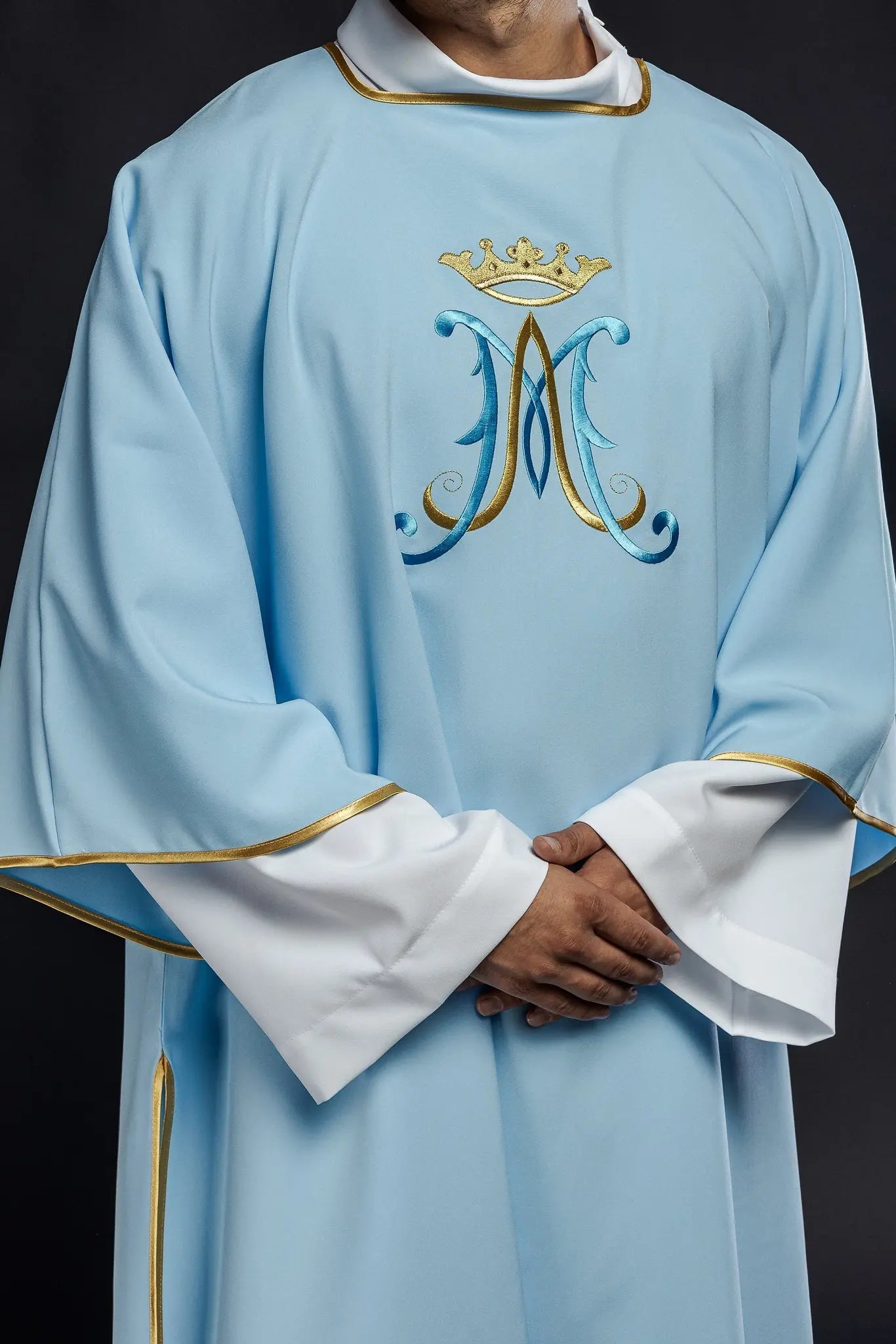
Decorated dalmatics: designs with crosses, Eucharistic symbols, Marian motifs or ornamental embroidery.
-
Coordinated sanctuary vesture: dalmatics selected to match chasubles, stoles, altar linens and other church textiles.
-
Practical vestments for active service: cuts that allow the deacon to move comfortably during processions, Gospel proclamation and altar service.
The base garment worn under the dalmatic is normally an alb. If your sacristy is completing a full set for a deacon, our albs collection is a natural place to compare suitable options. The diagonal stole worn by the deacon should also be selected with care; see deacon stoles when you need the proper stole to accompany a dalmatic.
Choosing the right deacon dalmatic
The first point to consider is liturgical use. A parish that needs a dalmatic for ordinary Sundays may prefer a durable green vestment that can be used often during Ordinary Time. A cathedral or shrine may need white, gold or richly decorated dalmatics for solemnities, Christmas, Easter and major diocesan celebrations. A chapel or religious community may choose a simpler dalmatic for daily or regular use, especially when the celebration is solemn but not highly ceremonial.
The second point is color. The dalmatic should correspond to the liturgical color used by the celebrant and the altar appointments whenever possible. White or gold is commonly used for feasts of the Lord, Easter, Christmas, Marian celebrations and many solemnities. Green is used in Ordinary Time. Red is used for Palm Sunday, Good Friday, Pentecost, the Passion of the Lord, martyrs and the Holy Spirit. Purple is used in Advent and Lent, and may also appear in penitential contexts. Rose is used only on Gaudete Sunday in Advent and Laetare Sunday in Lent where this custom is observed.
The third point is coordination. The dalmatic does not need to be identical to the chasuble, but it should harmonize with it in color, fabric weight and decorative style. When the celebrant wears a richly embroidered chasuble, the dalmatic can echo the same motif or use a calmer design in the same color family. For priestly vestments that may be matched with dalmatics, browse our chasubles collection.
The fourth point is fit. A dalmatic should fall properly over the alb without pulling at the shoulders, restricting the sleeves or bunching around the sides. It should be long enough to look solemn, but not so long that it interferes with movement on the sanctuary steps. The wearer should be able to lift the Book of the Gospels, prepare the altar and move in procession without the garment feeling heavy or awkward.
Liturgical colors and seasonal use
A complete sacristy often needs more than one dalmatic because the Church year moves through different liturgical seasons. Even when a parish begins with only one or two vestments, choosing the most frequently needed colors first can make the investment more practical. Green is often useful for the many weeks of Ordinary Time. White or gold is versatile for solemnities, Christmas, Easter and festive celebrations. Purple is essential for Lent and Advent. Red is needed for specific feasts and liturgies connected with the Passion, the Holy Spirit and martyrs.
For Advent and Lent, communities often prefer restrained decoration, deeper tones and symbols that reflect preparation, conversion and hope. For Christmas, Easter and great feasts, more luminous fabrics and richer embroidery may be appropriate. When selecting rose for Gaudete or Laetare, it is important to use the correct liturgical term rose rather than treating it simply as pink. The goal is not fashion color matching, but faithful use of the Churchs liturgical language and visual tradition.
Dalmatics may also be chosen for solemn processions and Eucharistic celebrations where other vestments are used together. For example, a deacon serving during a Eucharistic procession may wear vesture coordinated with a cope or humeral veil used by the priest. For related solemn vesture, see copes and humeral veils.
Fabrics, embroidery and construction
A deacon dalmatic must balance beauty with practical use. The fabric should drape well over the alb, hold its shape during movement and remain suitable for repeated liturgical service. Lightweight fabrics may be comfortable in warm churches or during long ceremonies. More structured fabrics can give a formal appearance and support richer embroidery. The best choice depends on the climate of the church, the frequency of use and the level of solemnity for which the vestment is intended.
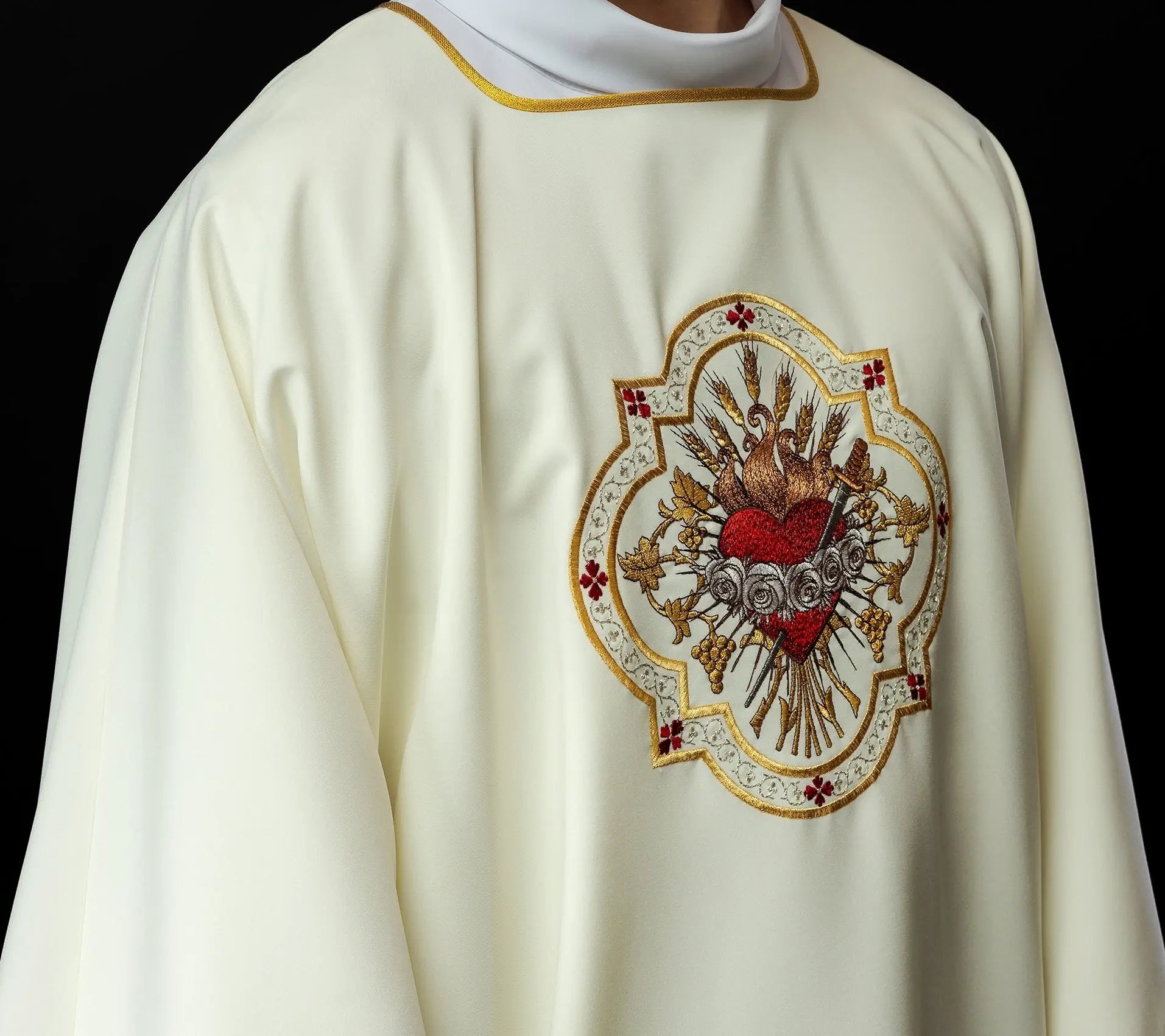
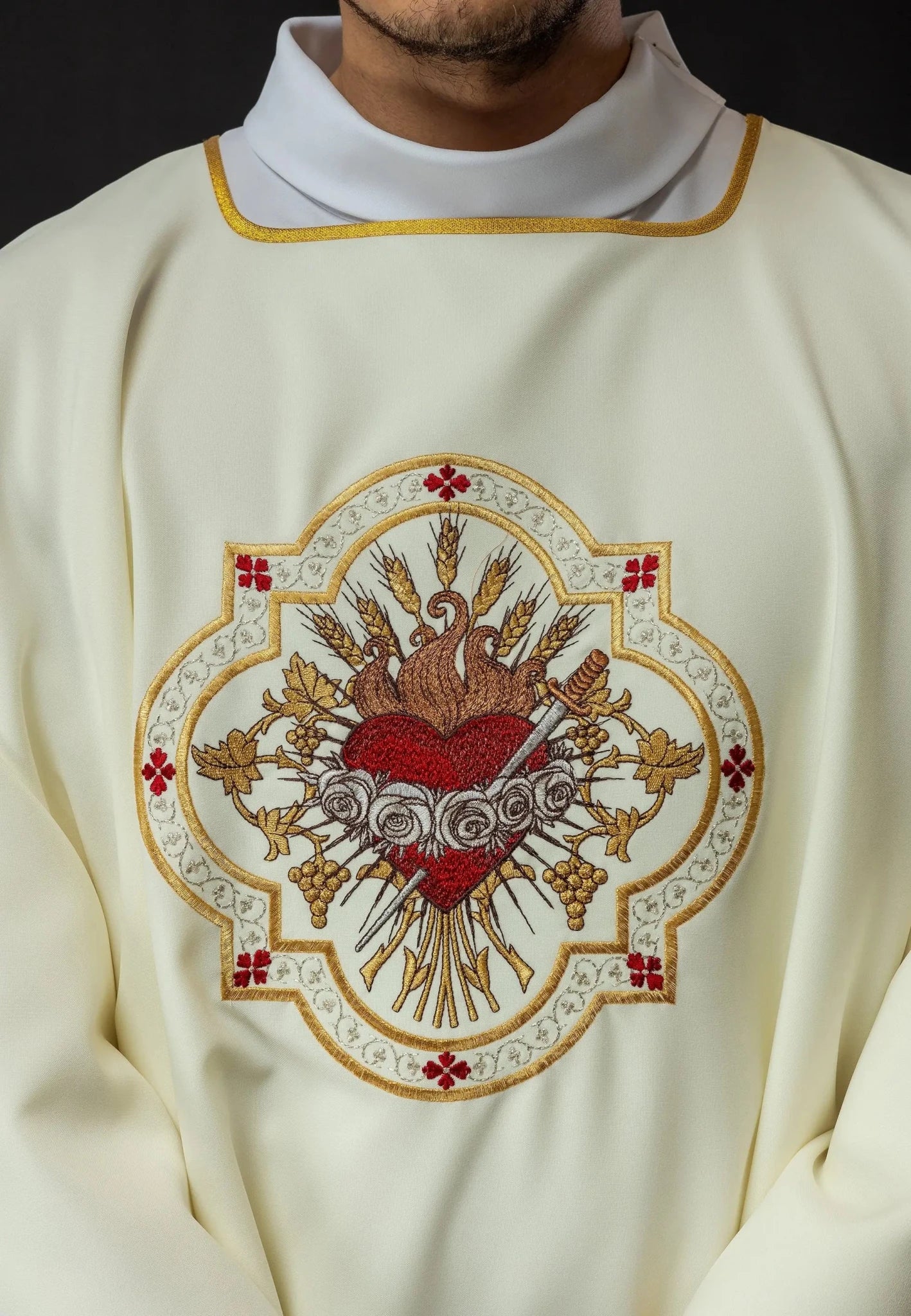
Embroidery should be meaningful and proportionate. Crosses, IHS symbols, Eucharistic wheat and grapes, Marian emblems and ornamental bands can all be suitable when they are chosen with restraint and placed with care. Decoration should help the faithful perceive the dignity of worship. It should not overpower the vestment or make the deacon visually compete with the celebrant. A dalmatic can be ornate and still remain balanced when the design respects the purpose of the garment.
Construction also matters. Seams, lining, sleeve shape and neckline influence how the dalmatic wears in real service. A deacon may stand, kneel, walk in procession, bow, elevate the Book of the Gospels, prepare the chalice and assist at the altar. These movements require a vestment that is not merely decorative but liturgically functional. A well-made dalmatic should look ordered from the front, the back and the side, especially during processions and at the ambo.
How dalmatics relate to other vestments and altar textiles
When purchasing for a parish or chapel, the dalmatic should be considered as part of the whole sanctuary setting. The priests chasuble, the deacons stole, the alb, the altar linens and the color of the season all contribute to a unified appearance. This does not mean every item must be from the same design series, but the elements should not clash in tone, scale or symbolism.
If the celebration includes a deacon and priest together, the dalmatic and chasuble should make their distinct roles clear while still appearing harmonious. For solemn Eucharistic services, the sanctuary may also include a chalice veil, corporal, purificator and pall. These textiles are not substitutes for vestments, but they complete the visual order of the altar. For related altar pieces, visit chalice veils and altar linens.
In larger celebrations, a bishop, concelebrating priests, deacons and servers may all be vested at the same time. In that setting, consistent color and proportion become especially important. A dalmatic that is too casual beside formal chasubles may look out of place, while a dalmatic that is overly heavy or ornate may distract from the unity of the rite. The right choice depends on the role of the deacon, the character of the celebration and the existing vestments in the sacristy.
Practical guidance for parishes, deacons and sacristans
Before choosing a dalmatic, identify the most common occasions for which it will be used. A newly ordained deacon may need a versatile vestment that serves many parish celebrations. A parish with several deacons may require multiple dalmatics in the same color. A cathedral may need sets that coordinate with solemn chasubles and processional vesture. A religious community may prefer simpler, durable dalmatics for frequent use.
It is also helpful to check the existing sacristy inventory. If the parish already has white and green dalmatics, purple or red may be the next practical purchase. If the church has several chasubles but no matching deacon vesture, choosing dalmatics that coordinate with the most frequently used chasubles can improve the visual harmony of Sunday and feast-day liturgy. If a parish is planning a major celebration, ordering the deacon dalmatic along with related vestments and altar textiles may help maintain consistency.
Care should be considered at the time of purchase. Embroidered dalmatics and delicate fabrics normally require careful handling and appropriate cleaning. After use, the vestment should be allowed to dry fully before storage, especially after long ceremonies or warm conditions. Hanging the dalmatic properly helps protect the shape of the sleeves and shoulders. A breathable garment cover can protect it from dust while allowing the fabric to rest.
When comparing designs, look beyond the first impression. Consider whether the color is liturgically correct, whether the embroidery is appropriate to the season, whether the cut allows movement, and whether the dalmatic will coordinate with the deacon stole and alb. A vestment that is chosen with these points in mind can serve faithfully for many years and remain suitable across many celebrations.
Frequently Asked Questions (FAQ)
What is the difference between a dalmatic and a chasuble?
A dalmatic is the proper outer vestment of a deacon, while a chasuble is worn by a priest or bishop celebrating Mass. The dalmatic usually has wide sleeves and a shape suited to the deacons service at the altar, at the ambo and in procession. The two vestments may coordinate in color and design, but they express different liturgical roles.
Does a deacon wear a stole under the dalmatic?
Yes. The deacon normally wears a stole diagonally from the left shoulder across the body, and the dalmatic is worn over it. For this reason, the deacon stole should be selected together with the dalmatic whenever possible, especially if the parish wants a coordinated set for solemn Masses.
Which color dalmatic should a parish buy first?
The most practical first choices are usually green for Ordinary Time and white or gold for solemnities, Christmas, Easter and many feast days. Parishes that already have those colors may then add purple for Advent and Lent, red for Pentecost, martyrs and Passiontide, and rose for Gaudete and Laetare where rose vestments are used.
Can a dalmatic match the priests chasuble?
Yes, and in many celebrations this is the most visually coherent option. The dalmatic should remain distinct as a deacons vestment, but it can share the same color, fabric family, embroidery theme or ornamental style as the chasuble worn by the celebrant.
What should be worn under a deacon dalmatic?
The dalmatic is normally worn over an alb, with the deacon stole placed beneath the dalmatic. The alb should be long enough and properly fitted so that the dalmatic falls cleanly. A cincture may also be used depending on the alb and local practice.
How should a deacon dalmatic be cared for after use?
After liturgy, the dalmatic should be checked for moisture, incense residue or small marks before storage. Embroidered vestments should be hung carefully rather than folded for long periods. Cleaning should follow the fabric and embroidery requirements, because harsh washing or heat can damage decorative details.