
Sort by
64 products
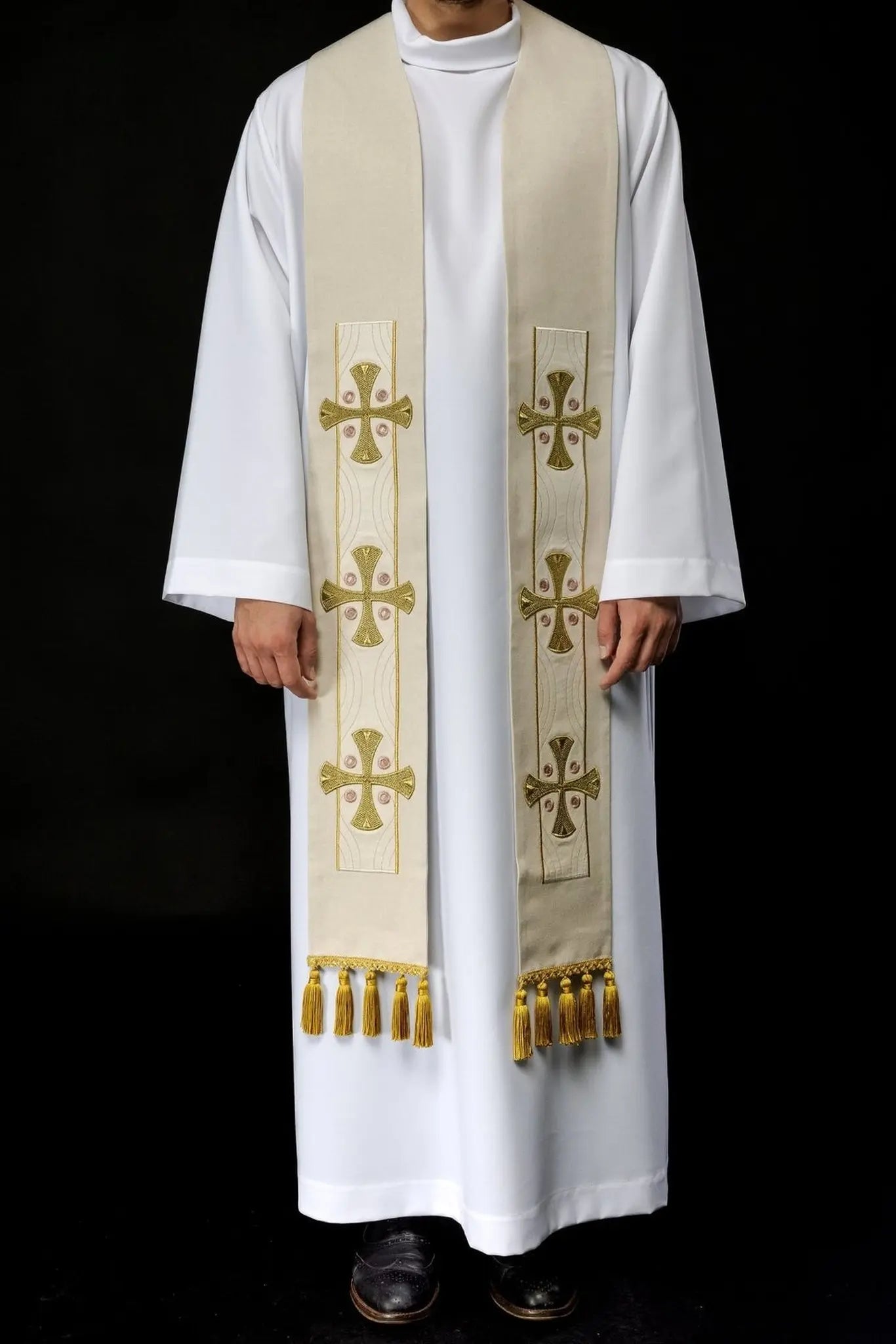
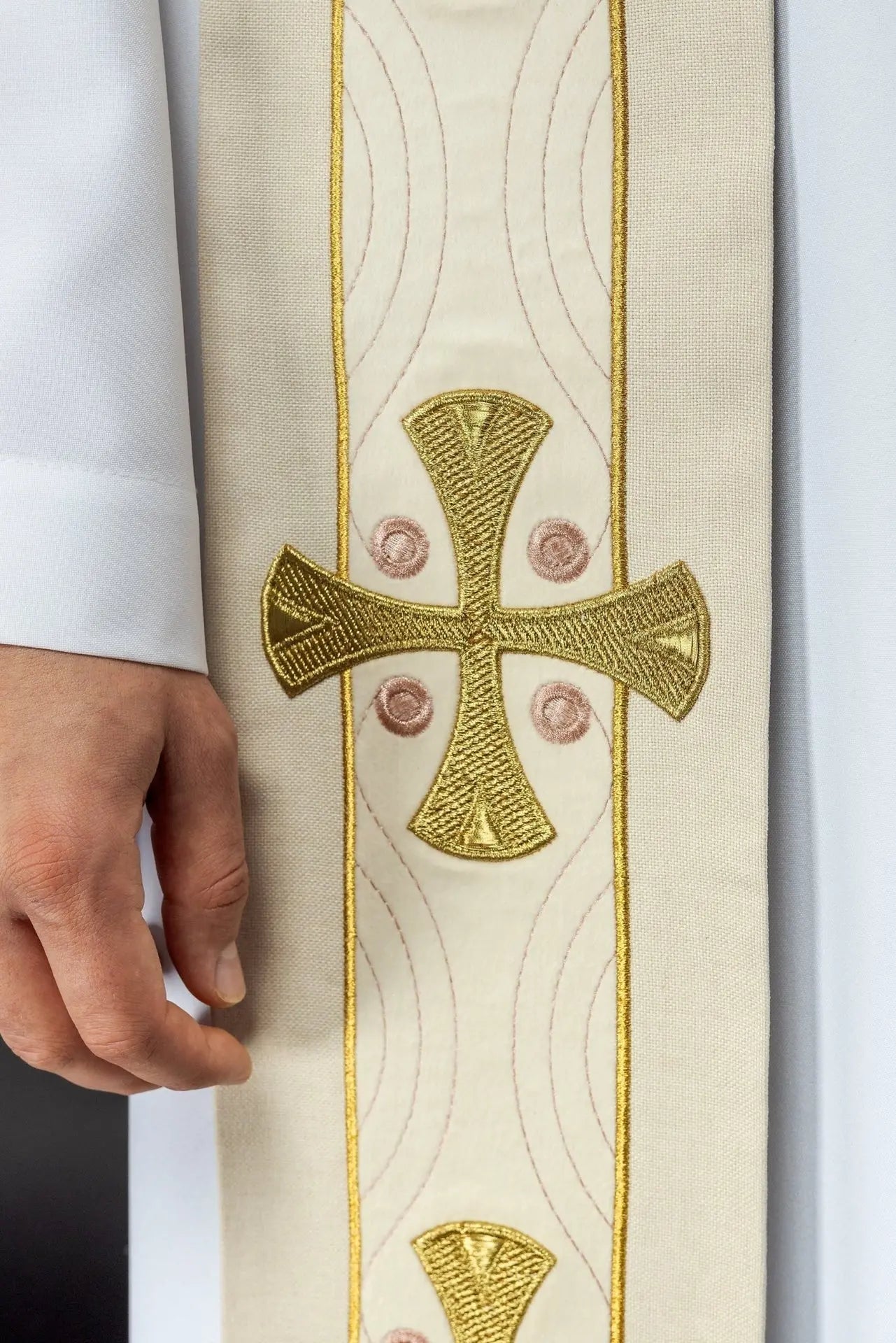
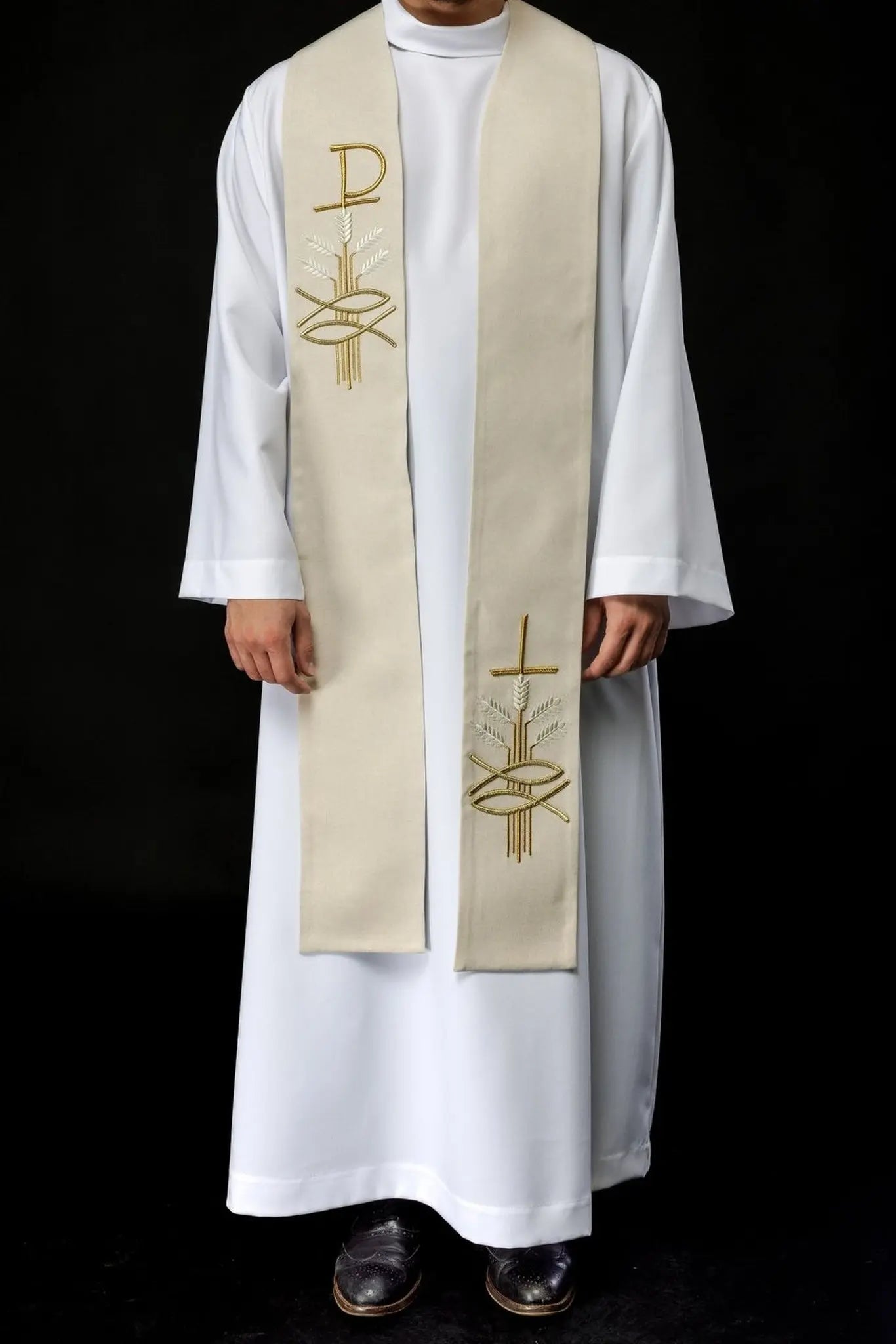
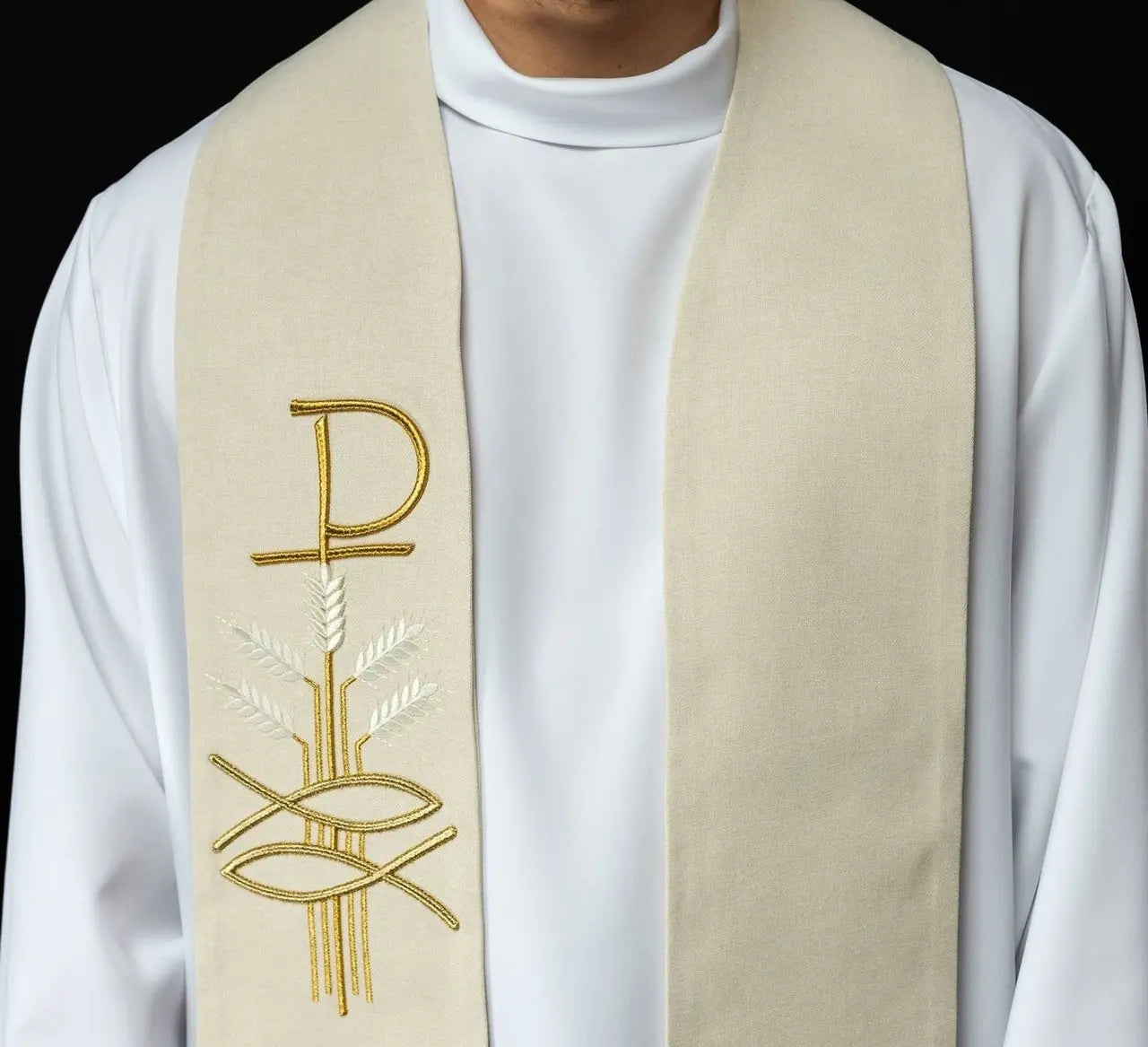
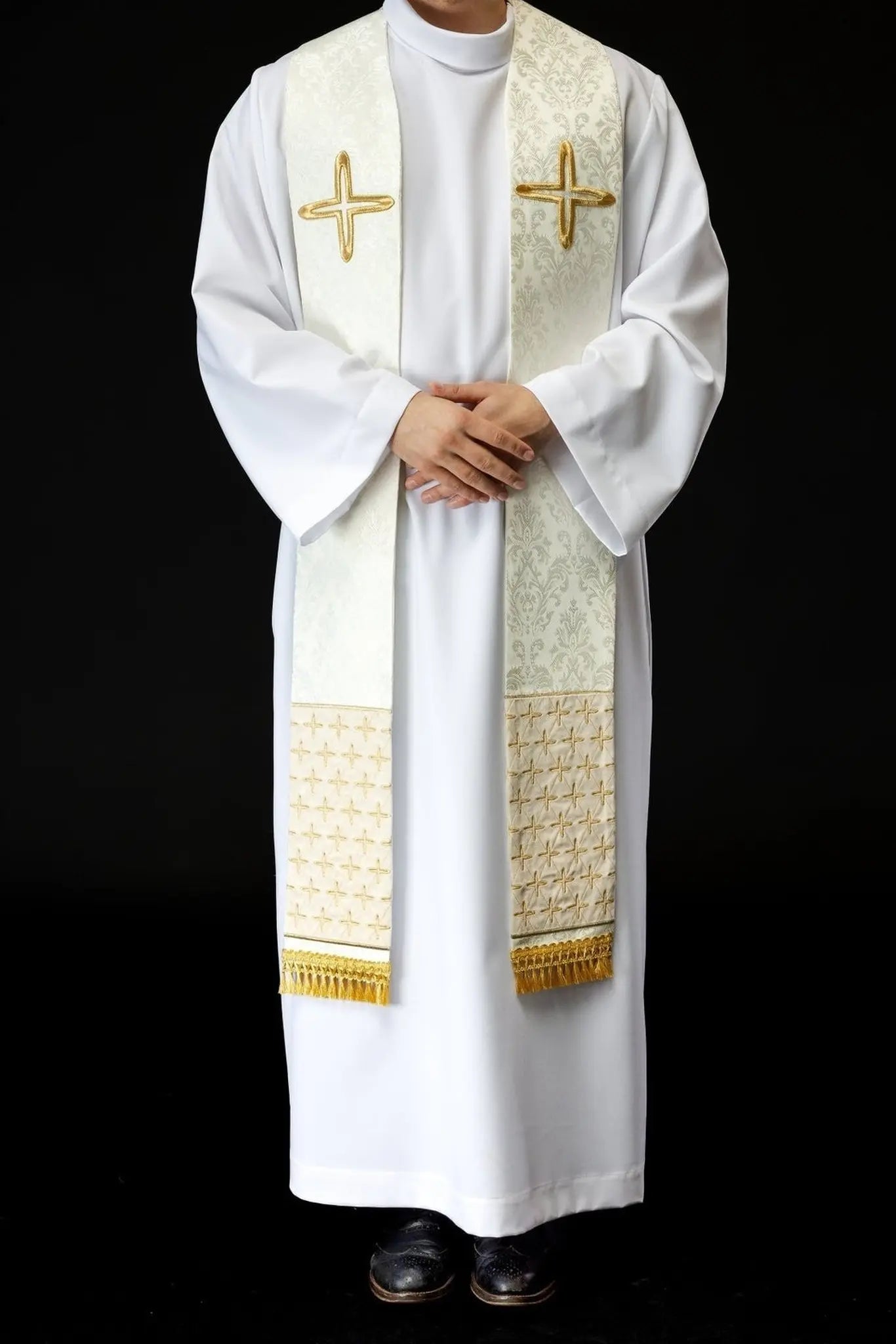
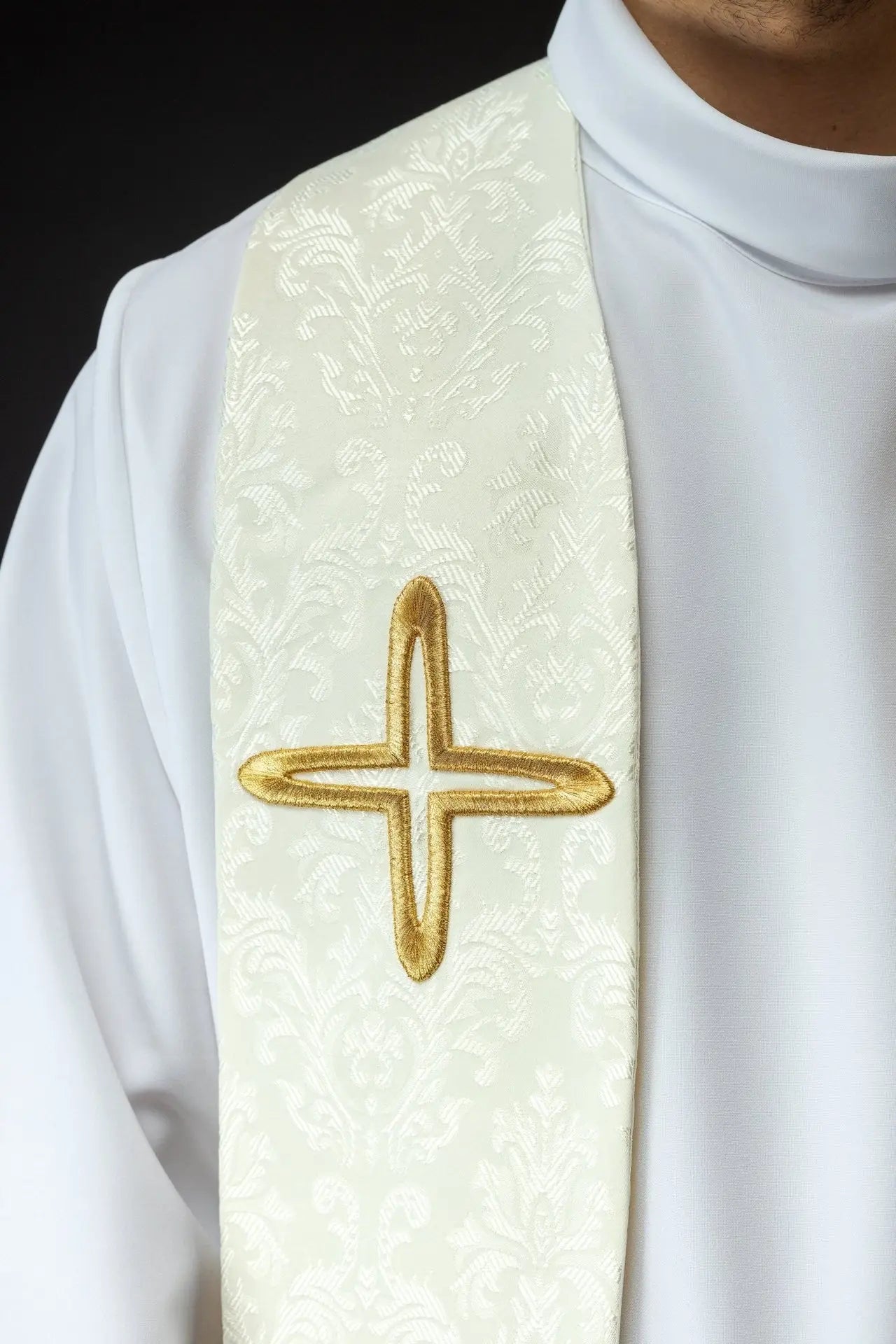
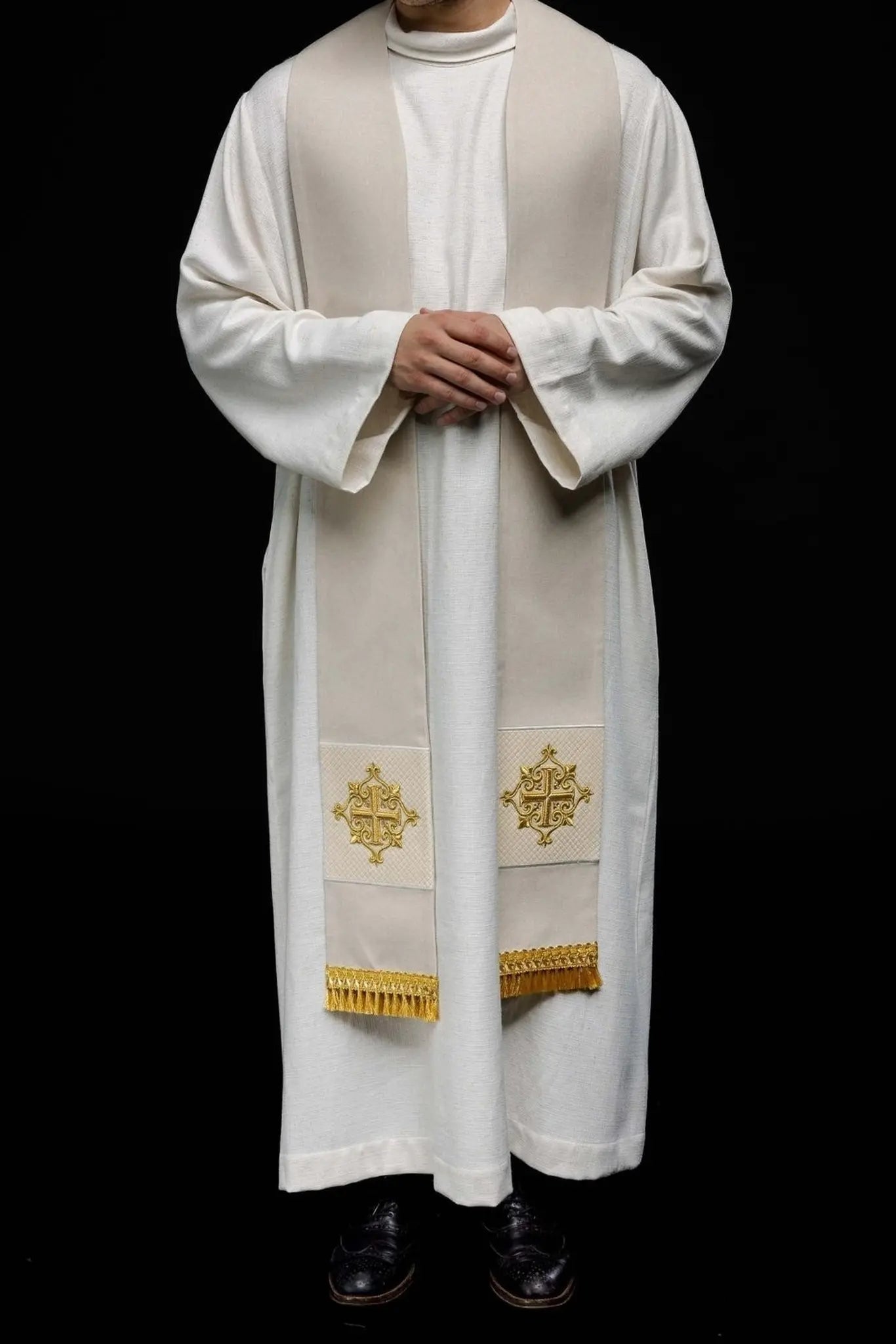
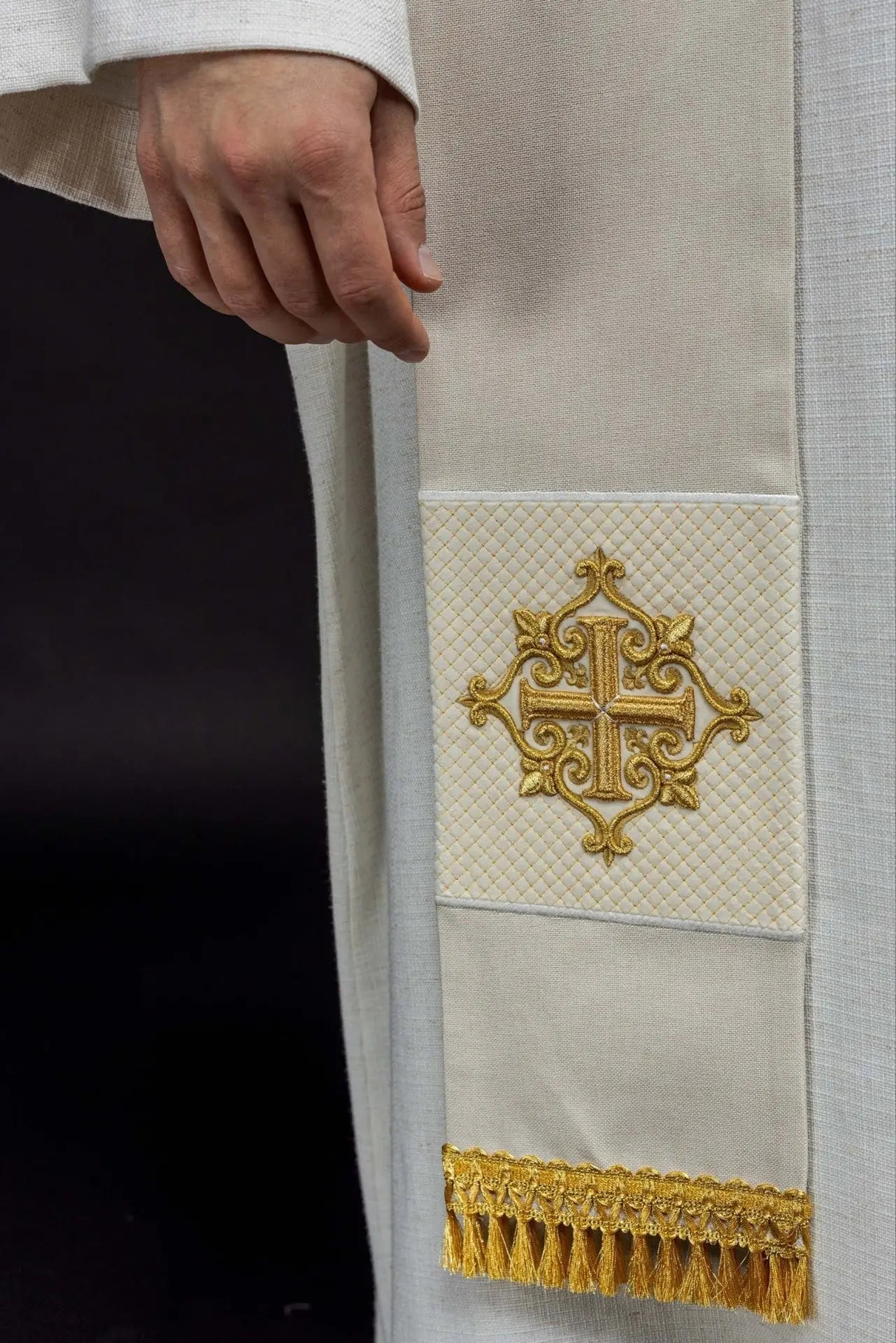
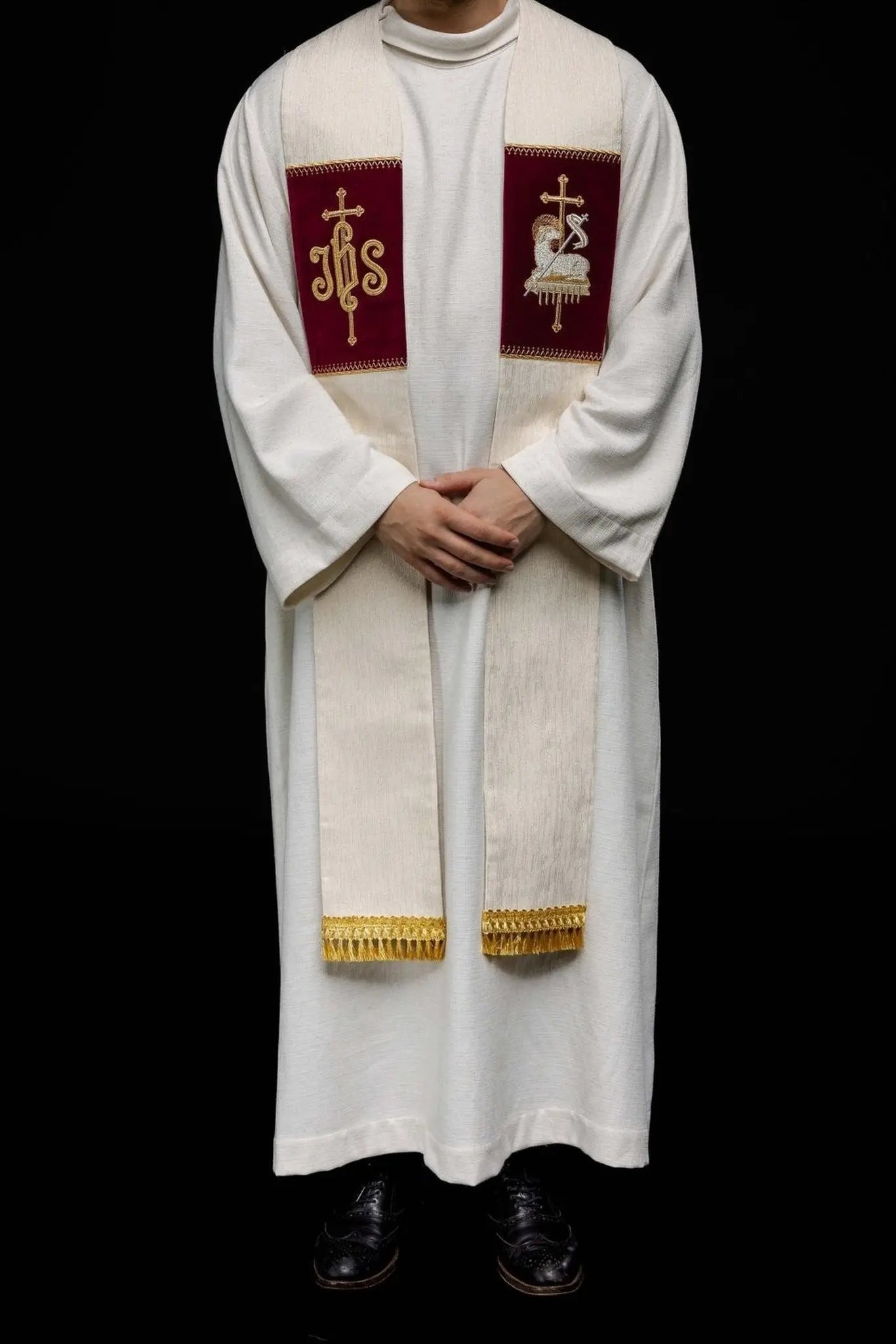
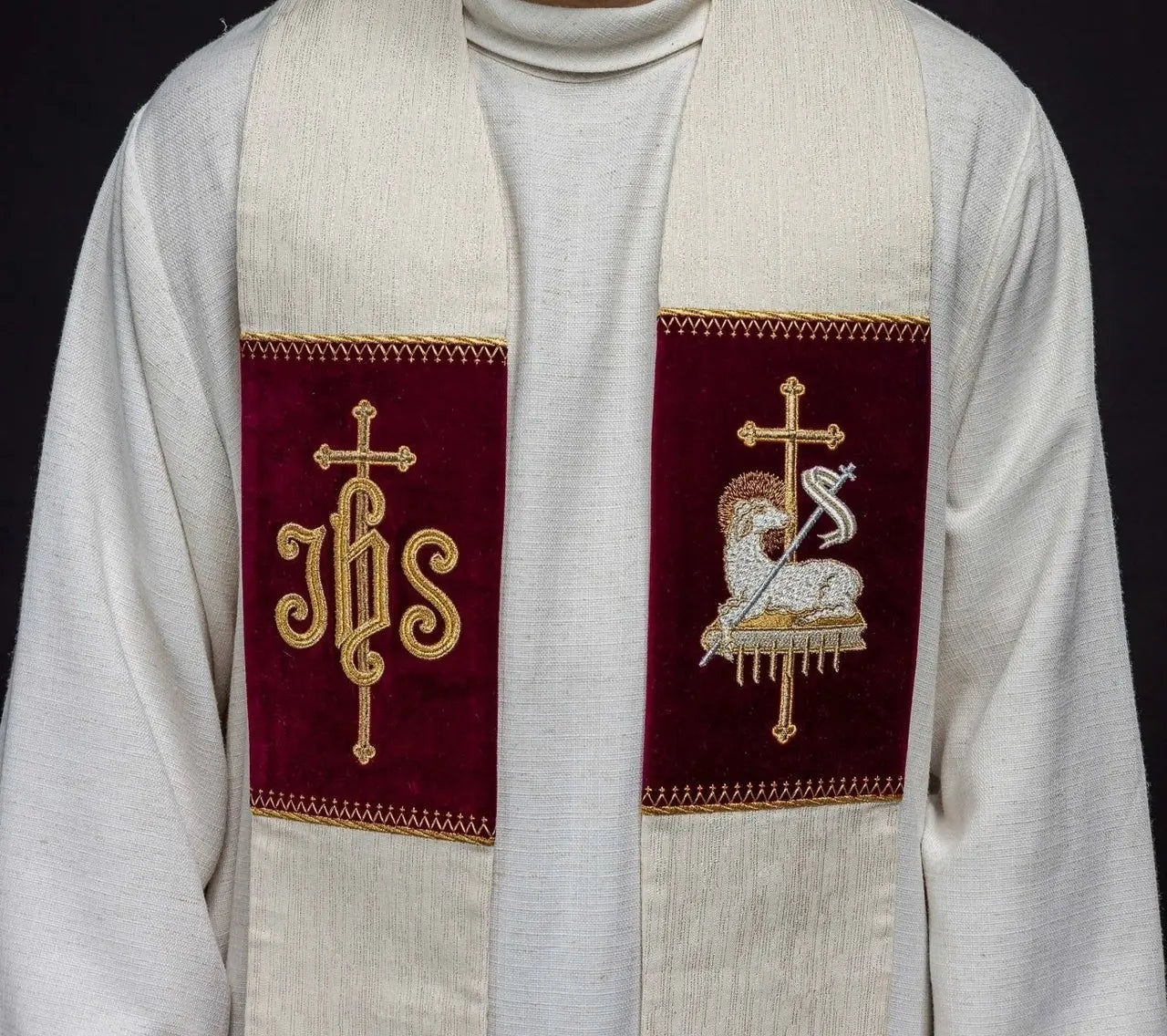
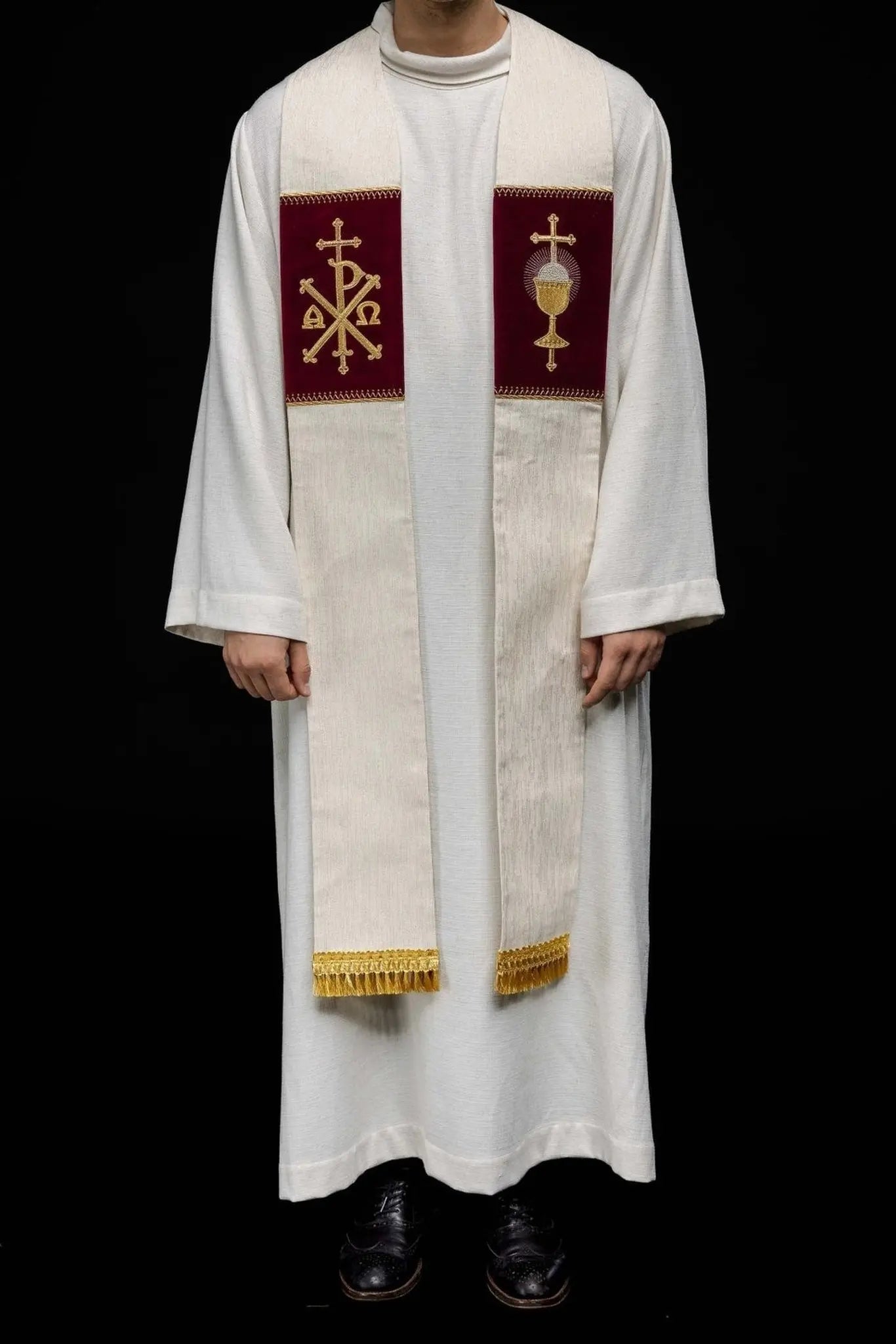
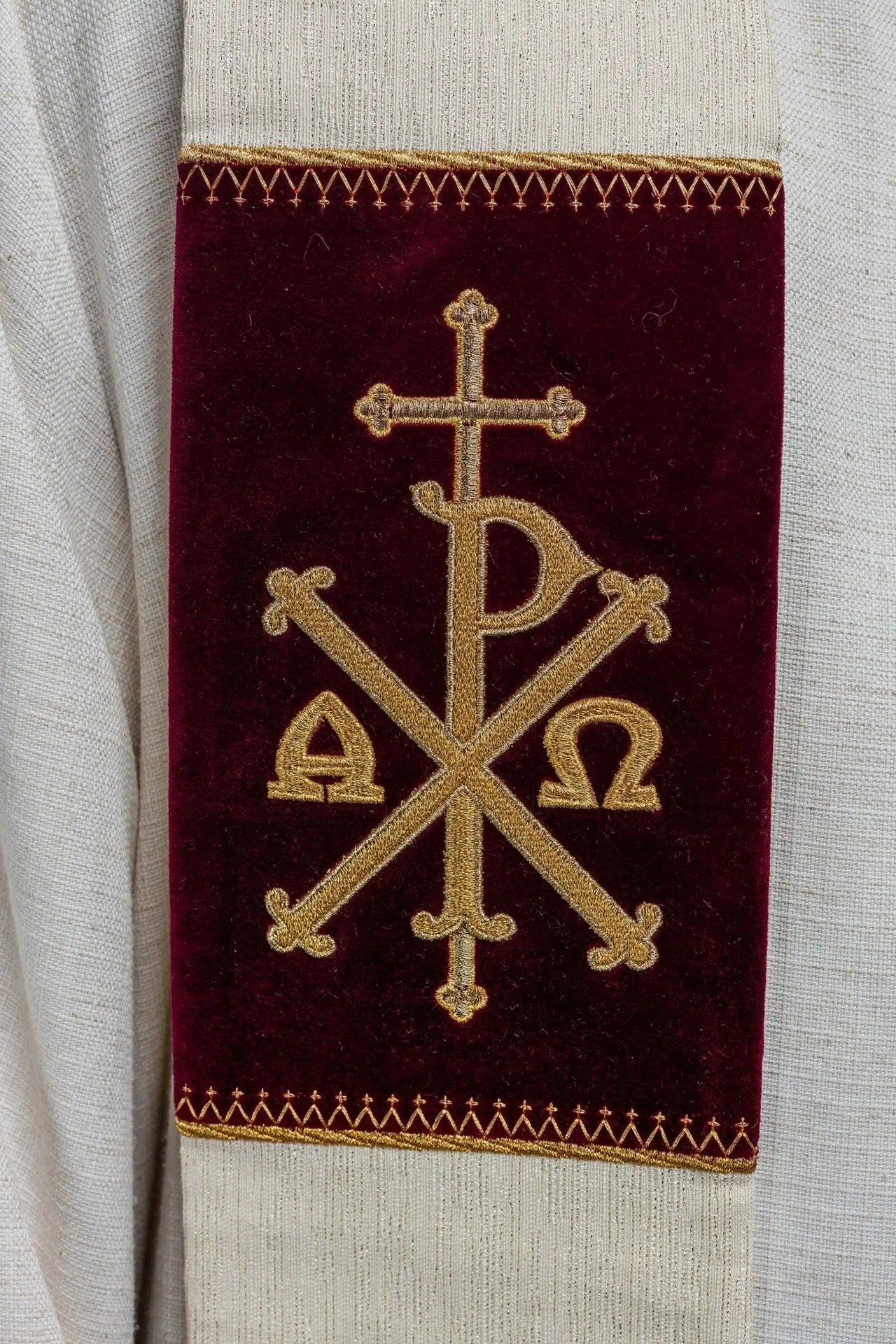
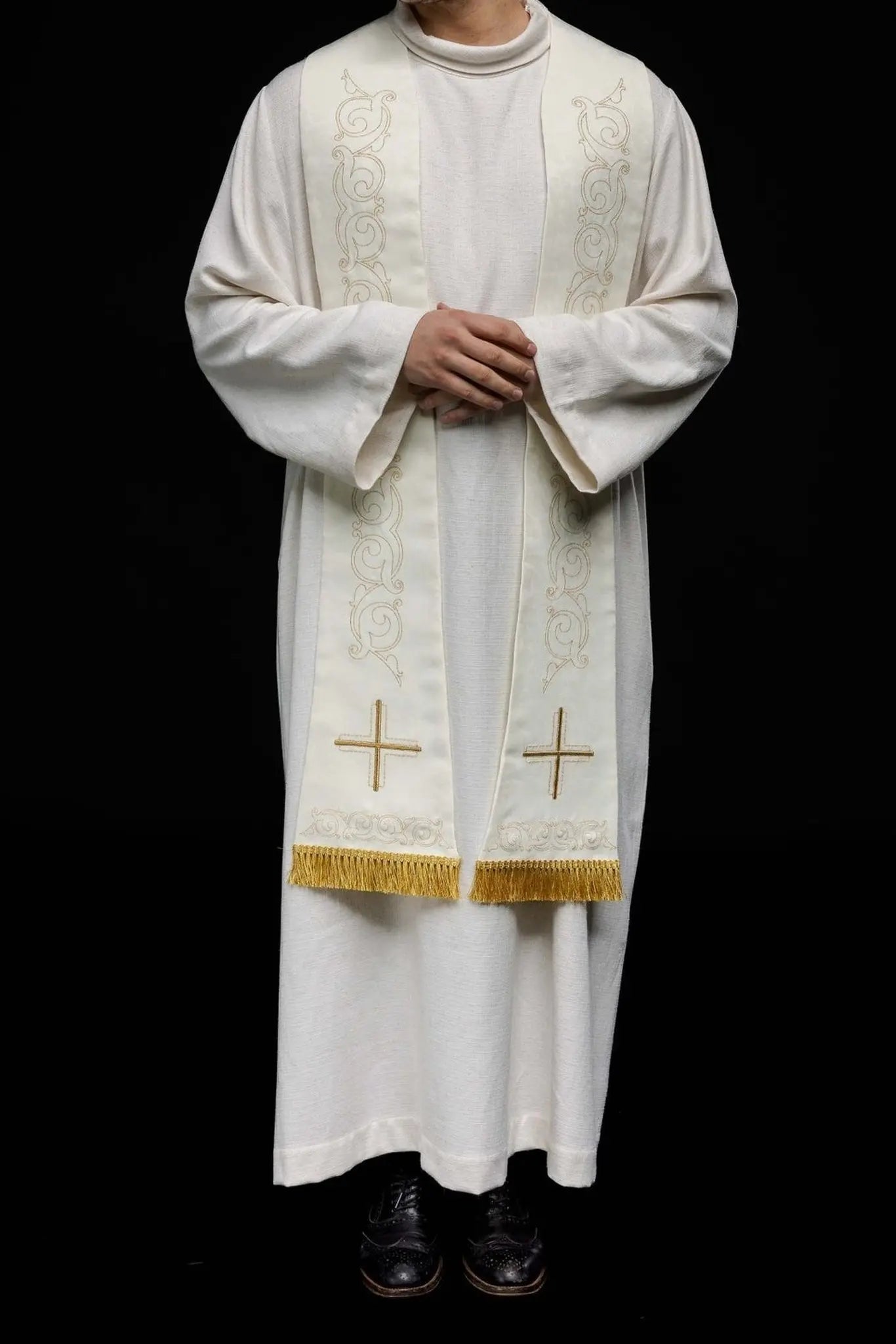
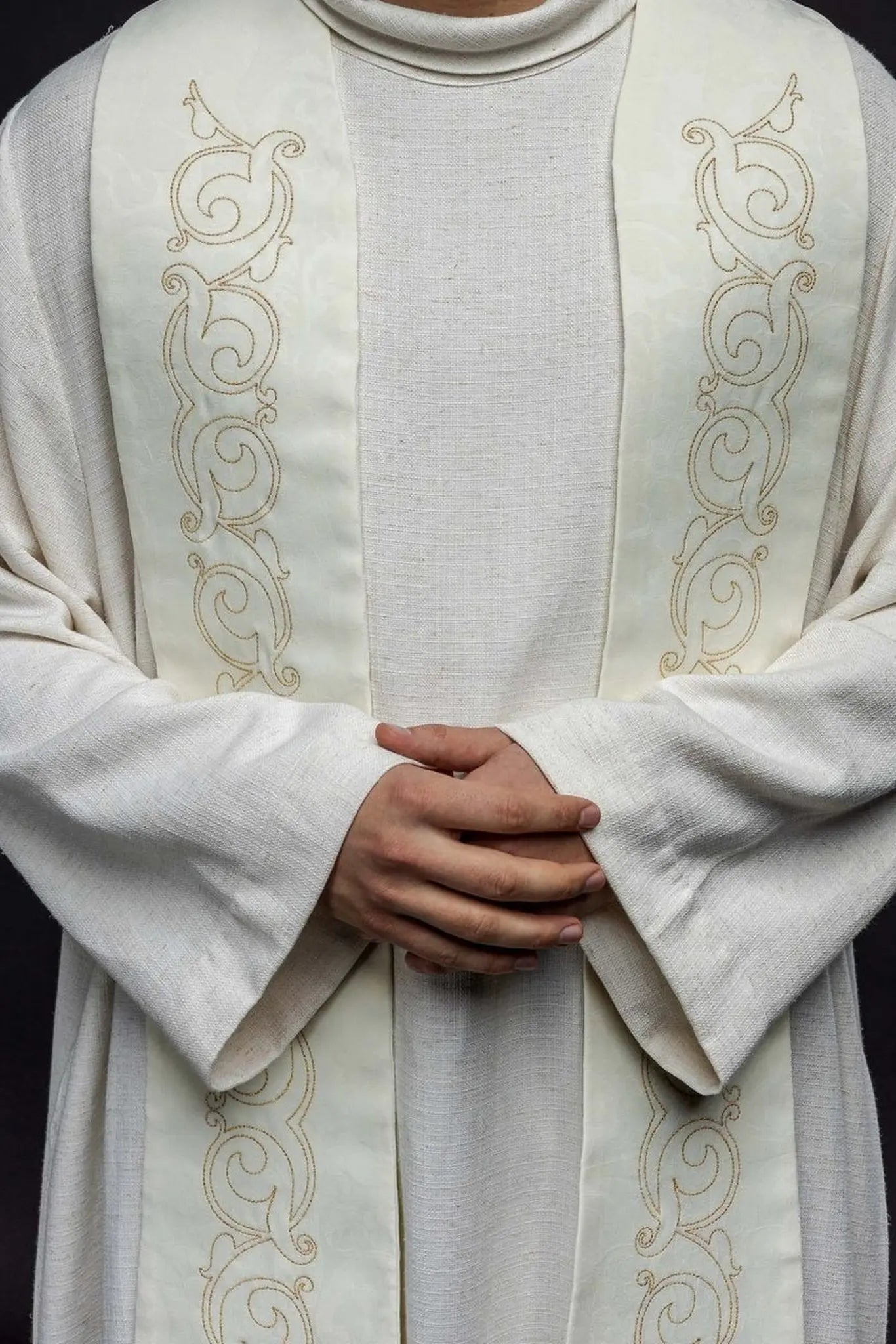
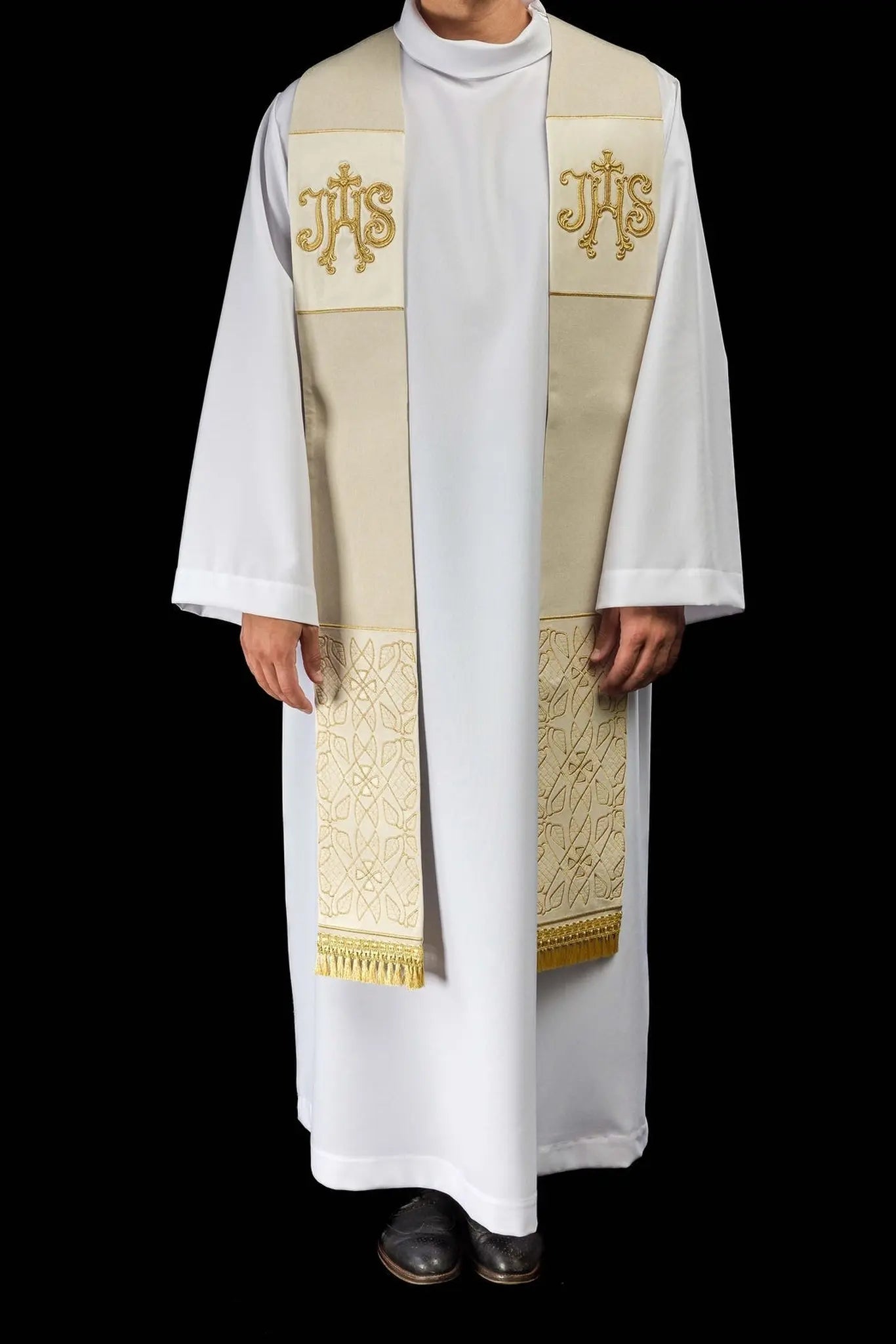
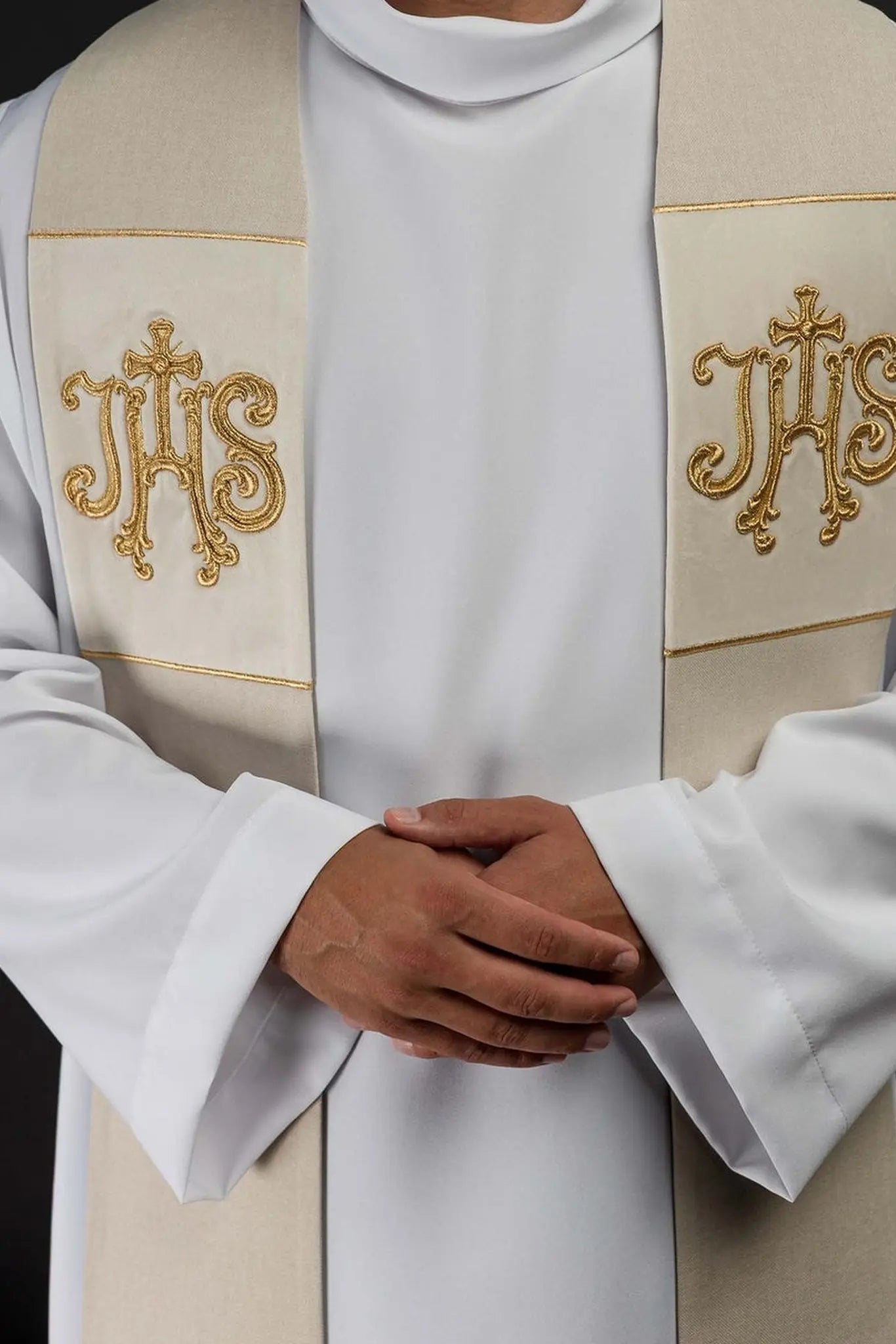
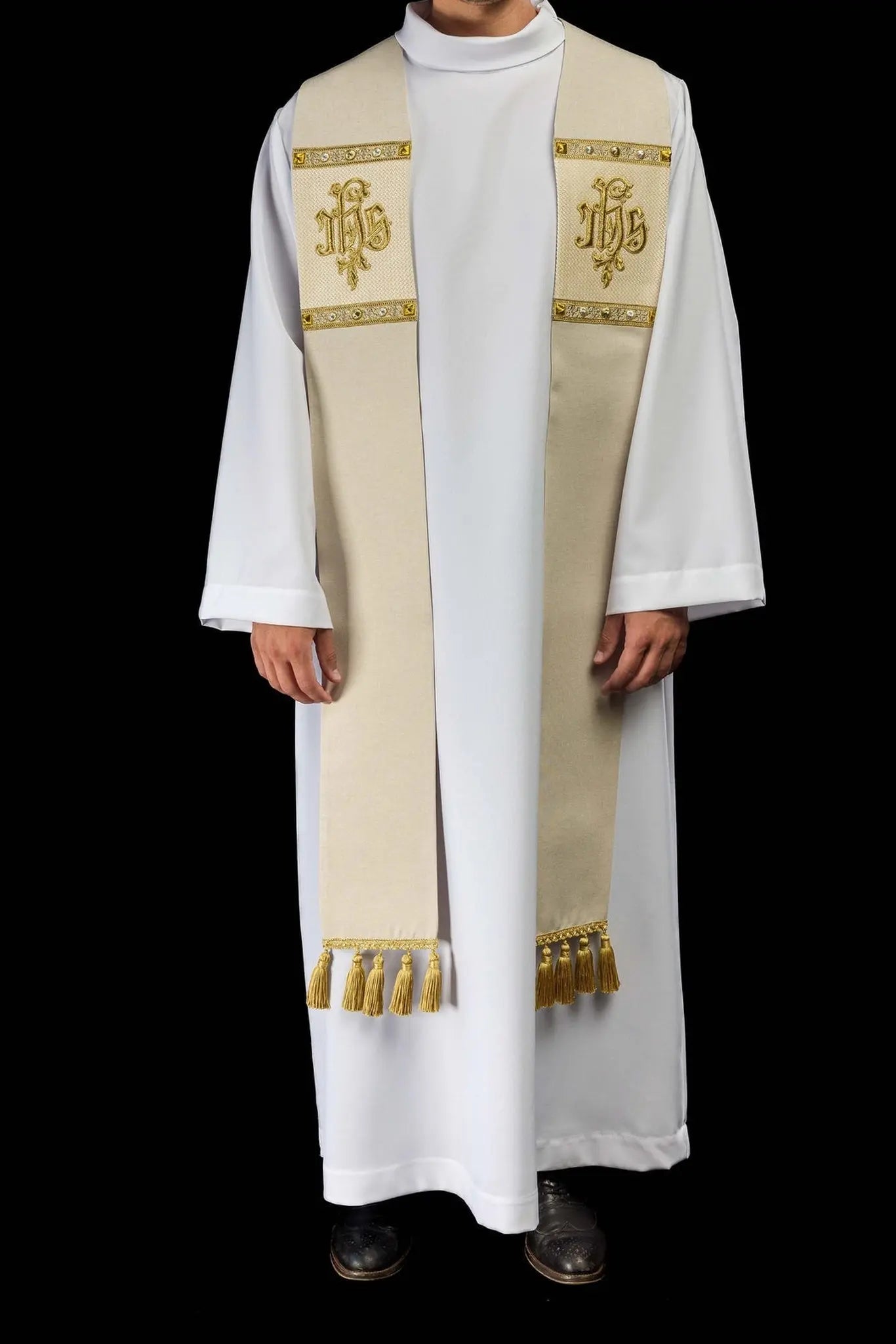
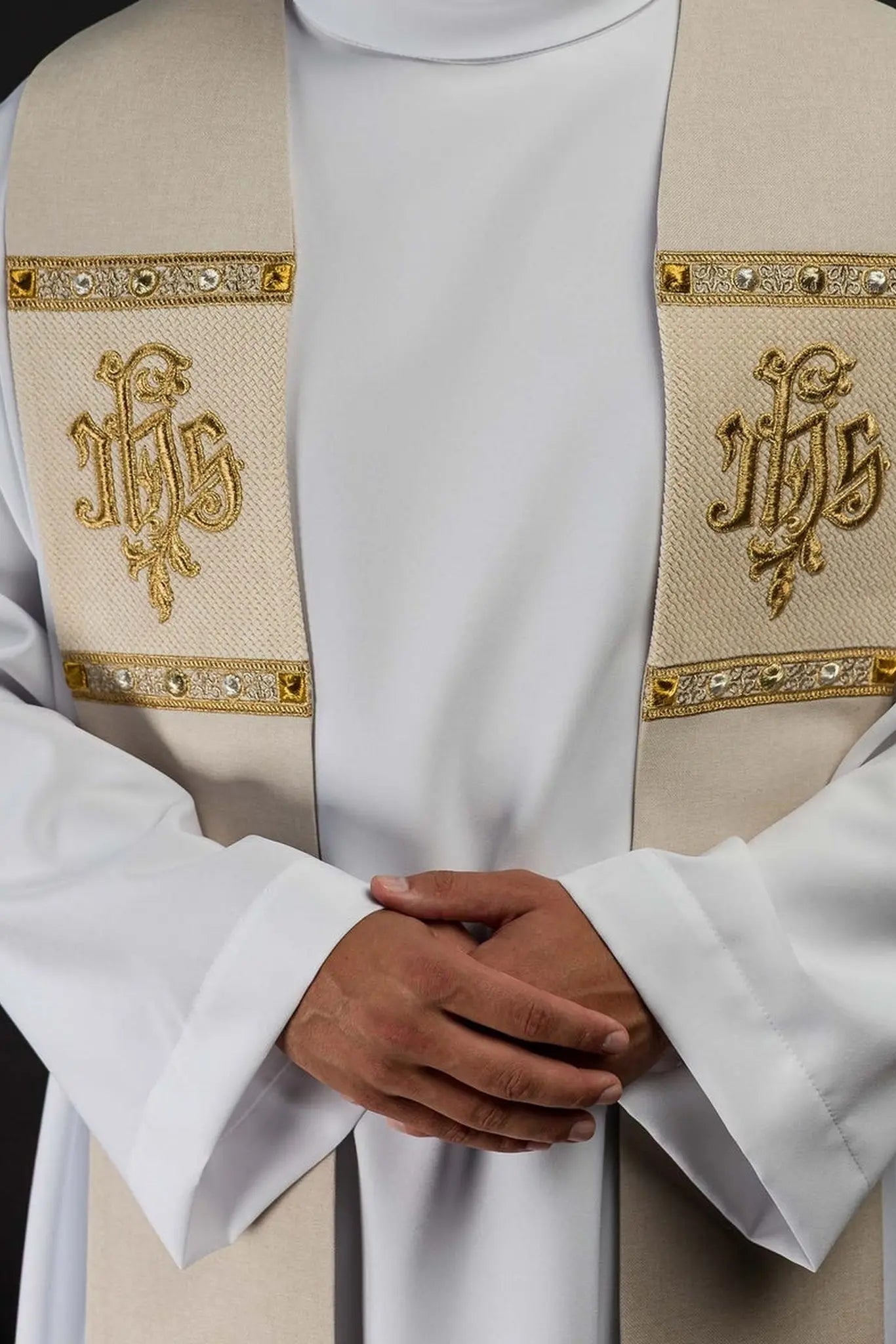
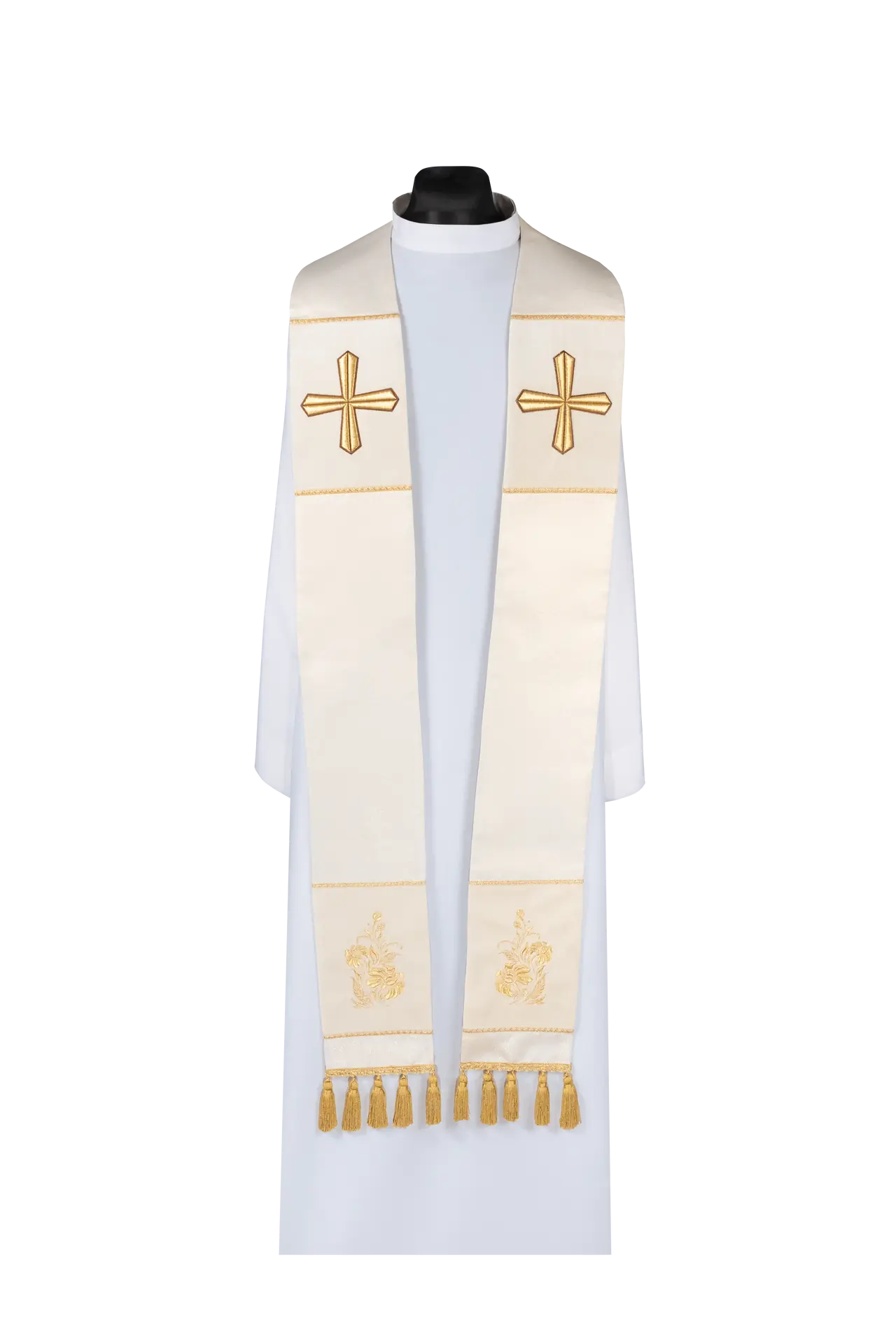
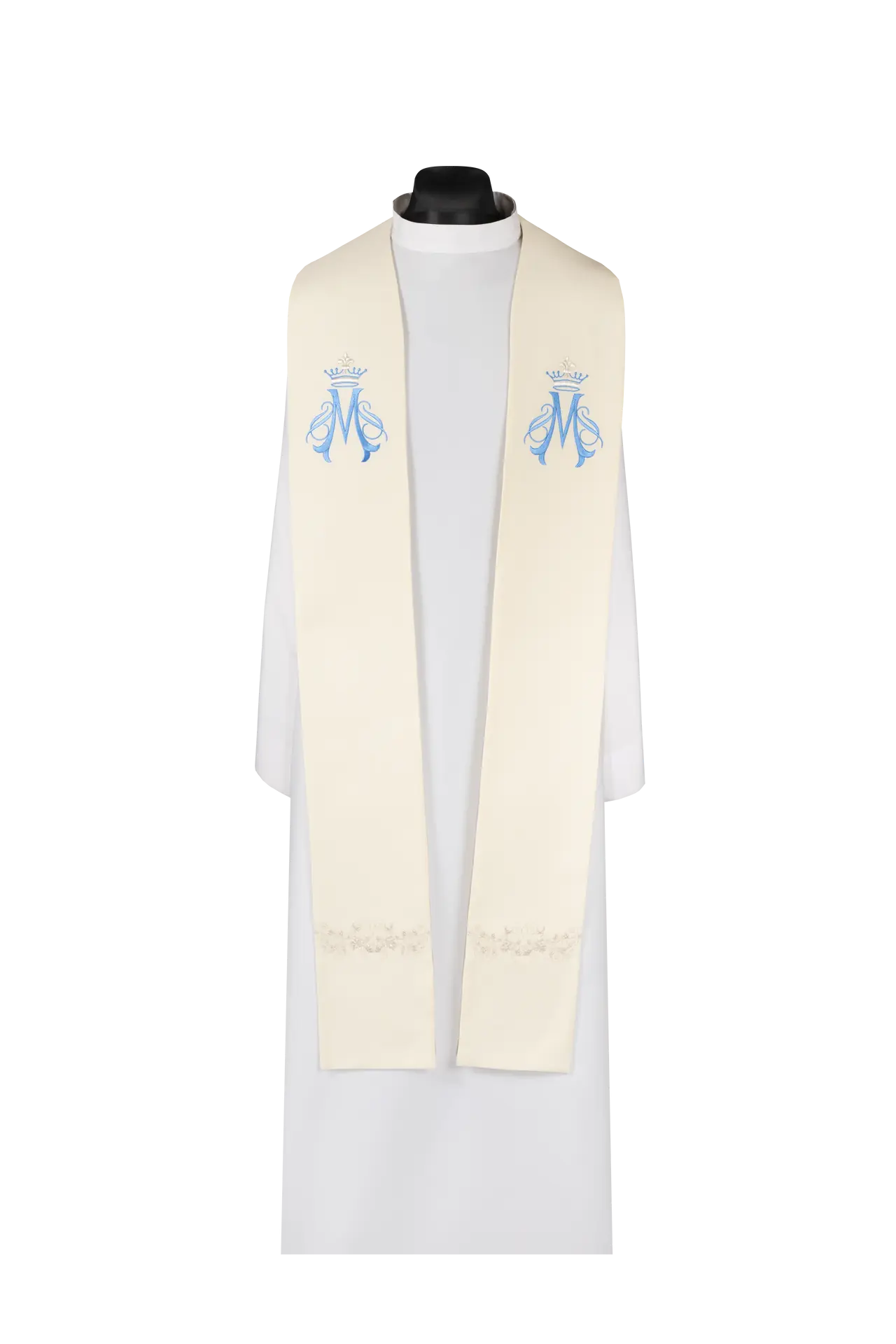
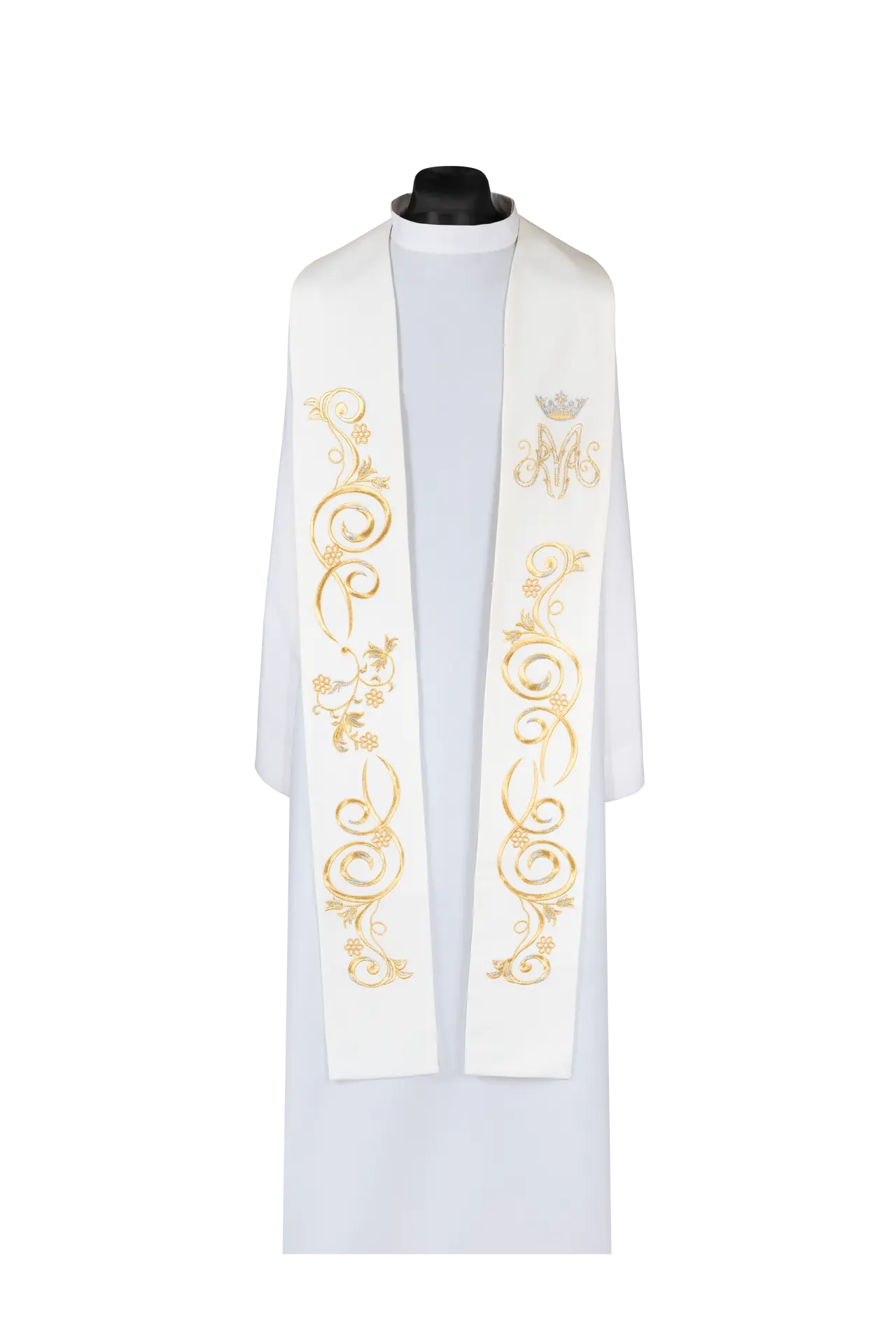
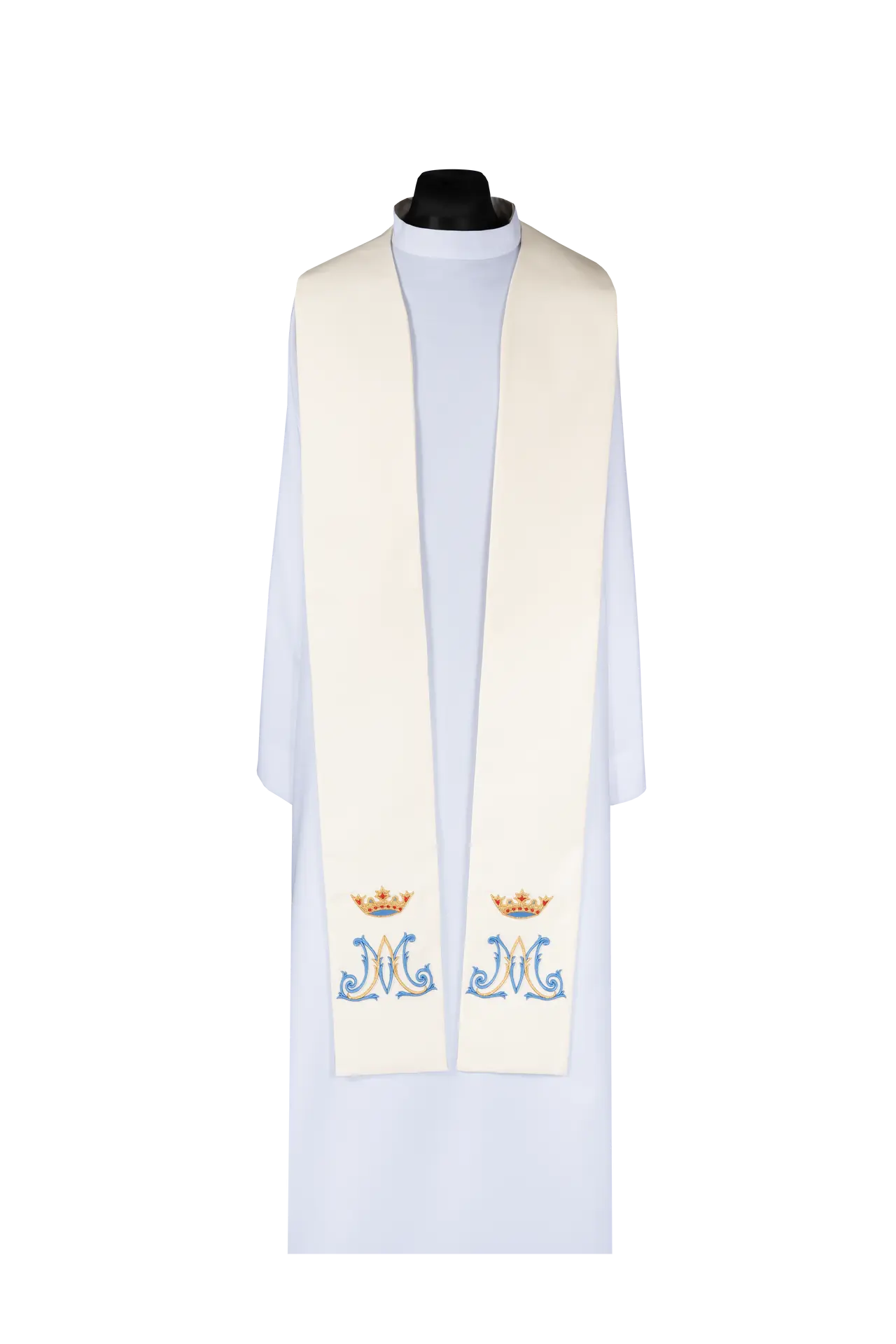
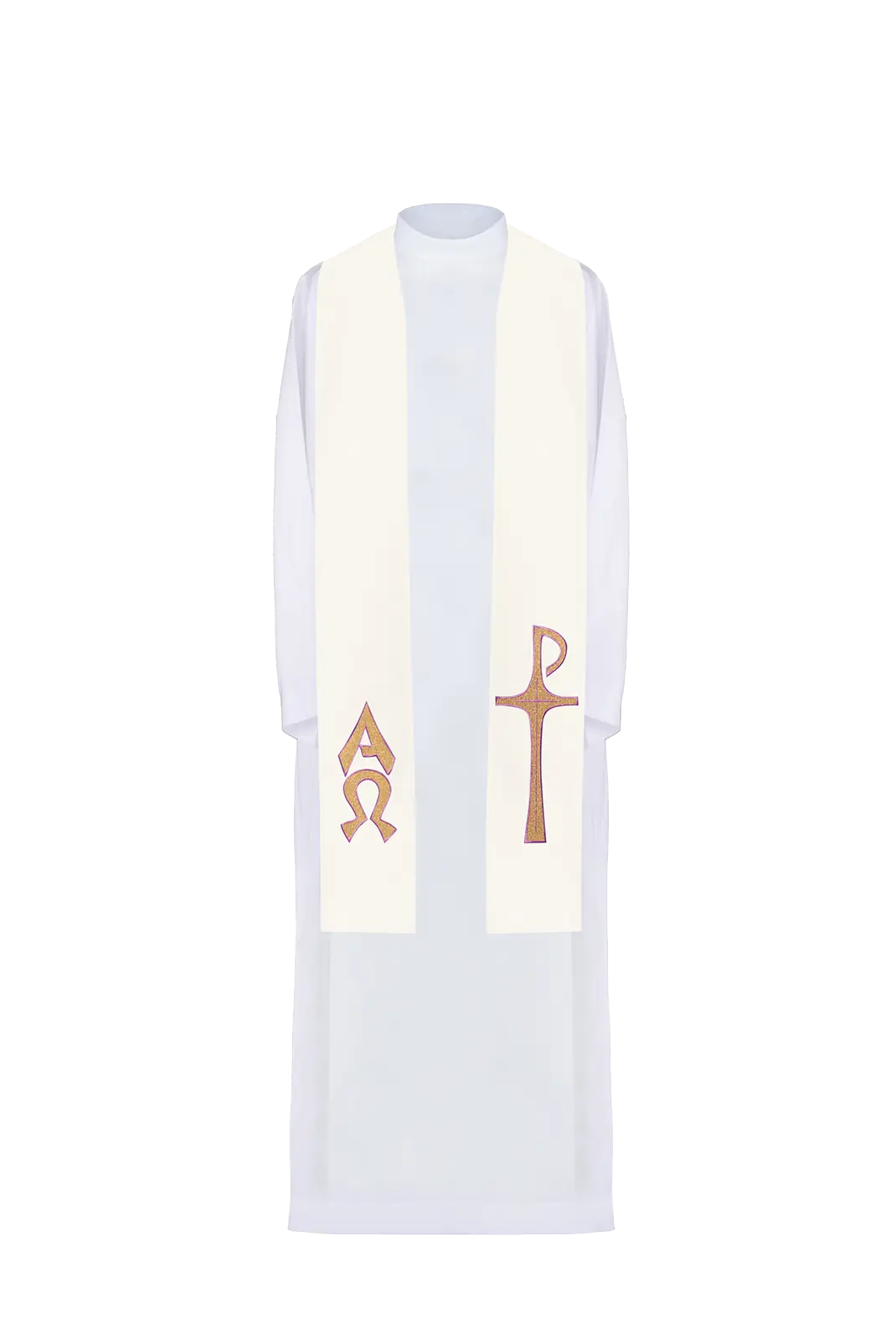
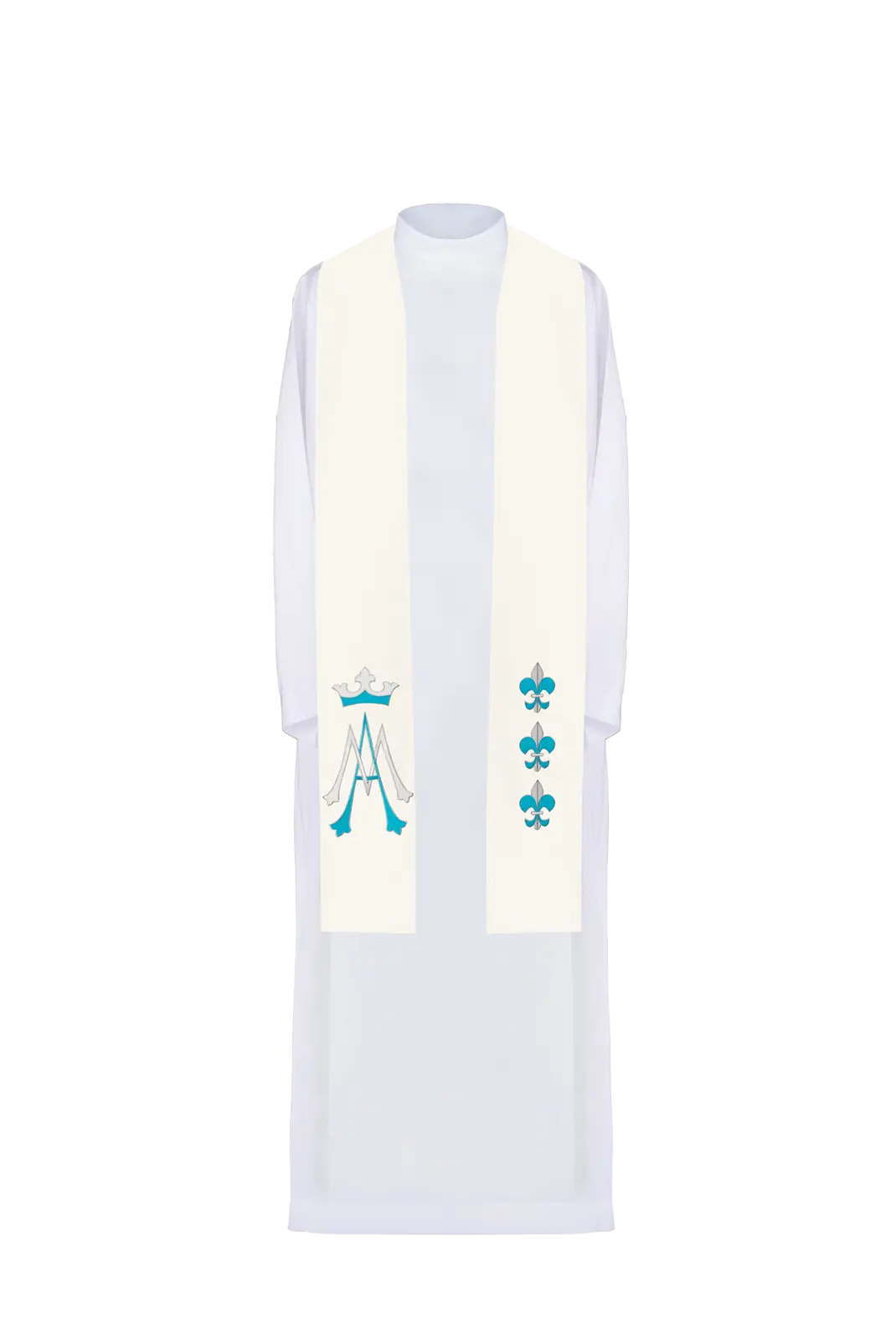
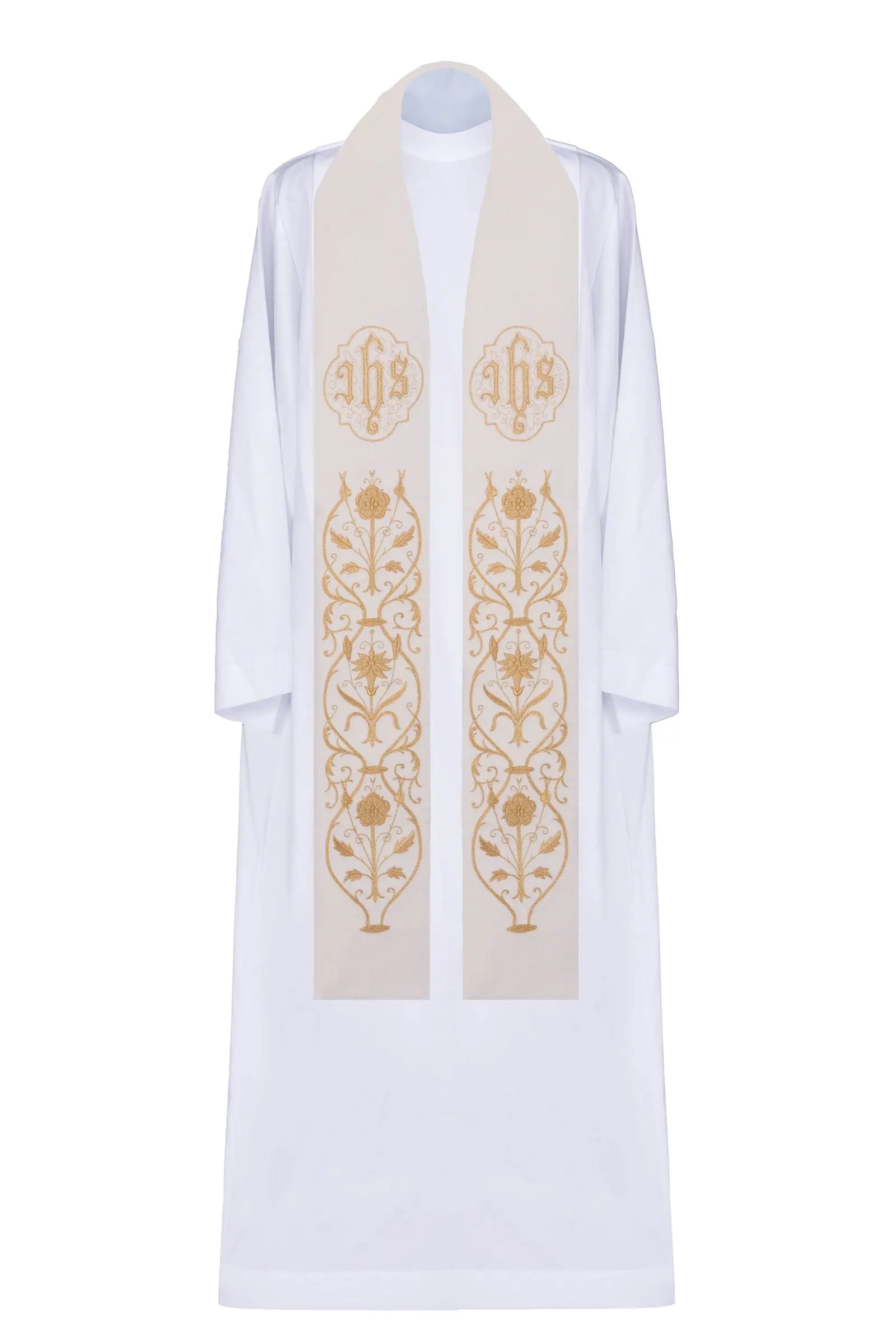
Ecru Clergy Stoles for Priests and Deacons
Ecru clergy stoles bring a calm, dignified and naturally light tone to the ministry of the priest, bishop or deacon. This collection gathers stoles in a soft ecru shade, chosen for celebrations and pastoral moments where a restrained cream, ivory or natural linen appearance is preferred over stark white. The stole is not simply an accessory. It is a visible sign of ordained ministry, worn when proclaiming, blessing, absolving, baptizing, witnessing marriage, distributing Holy Communion outside Mass and serving at many other sacred rites. In this collection, the ecru color gives the vestment a gentle background for crosses, Eucharistic symbols, Marian details, floral ornament and other embroidered motifs.
Within the wider range of clergy stoles, ecru stoles are especially useful when the church interior, altar linens or principal vestments are based on warm white, ivory, gold or natural fabric tones. They can harmonize with solemn vestments without drawing attention away from the rite itself. For priests, an ecru stole may be used with a matching alb and chasuble, or for sacramental ministry outside Mass when a full chasuble is not required. For deacons, an ecru stole in the correct diagonal form can support service at baptisms, weddings, Eucharistic celebrations and blessings, while maintaining the distinct sign of the diaconal office.
What belongs in this collection
This collection is focused on ecru clergy stoles: liturgical stoles in a warm light tone, often close to ivory, cream or natural linen. The range may include simpler stoles with a single cross, richly embroidered designs for solemn celebrations, Eucharistic motifs with wheat, grapes or chalice imagery, and designs that coordinate with other ecru or gold vestments. The intention is to provide a collection that is easy to match with existing church vesture while still offering enough detail for feast days, sacraments and formal pastoral occasions.
Ecru should be understood as a refined neutral or warm white tone rather than as a separate major liturgical color in every calendar. In Roman Catholic use, the required liturgical color depends on the day, rite and local norms. Ecru is most naturally chosen where white, ivory or gold-toned vestments are appropriate, especially for celebrations of the Lord outside Passiontide, saints who are not martyrs, Marian occasions, weddings, baptisms, First Communion, ordinations and festive parish celebrations. When a specific color is prescribed, such as purple for Advent or Lent, red for martyrdom or Pentecost, green for Ordinary Time, or rose for Gaudete and Laetare, that color should guide the choice. Ecru stoles are therefore best selected with attention to the calendar, the principal vestments and the custom of the community.
Liturgical meaning and use of the stole
The stole is one of the clearest signs of ordained ministry. A priest or bishop normally wears the stole around the neck with the two ends hanging down in front. At Mass it is worn under the chasuble, while in other rites it may be visible over the alb or cassock and surplice according to local practice. A deacon wears the stole diagonally, from the shoulder across the body and fastened at the side. This difference matters, because the stole should express the correct ministry of the wearer rather than simply match a color scheme.
For priests, an ecru stole is often selected for sacramental celebrations that call for a gentle and joyful tone. It may accompany baptismal rites, blessings, wedding liturgies, Eucharistic adoration, processions, First Communion celebrations and other moments where white or festive vesture is suitable. If the stole will be worn regularly at Mass, it is worth coordinating it with ecru chasubles or with chasubles in gold and white tones so that the whole vestment set appears intentional. The stole does not need to be overly ornate to be beautiful. A clear cross, balanced proportions and careful embroidery often communicate more reverence than excessive decoration.
For deacons, the same attention to form is essential. A diagonal stole is not merely a priest stole worn in a different direction; it should be cut and finished for the body line of the deacon. Customers looking specifically for diagonal options should also compare this collection with deacon stoles, especially when the stole is intended for regular parish service, baptisms or wedding liturgies. If the deacon serves beside a priest wearing an ecru or gold set, a coordinated ecru stole can make the celebration visually unified while still preserving the deacon’s distinct vesture.
Why choose an ecru stole
Ecru has a different character from bright white. It appears warmer, softer and often more traditional, especially in churches with wood, stone, gilded details, embroidered altar linens or natural fabrics. This makes it a practical choice for parishes that prefer vestments with a calm and timeless appearance. Ecru also allows embroidery to stand out clearly. Gold thread, light beige ornament, Marian blue accents, red Eucharistic symbols or discreet green botanical motifs can all be legible without becoming harsh against the fabric.
An ecru stole can also be a useful bridge between different vestment sets. It may pair with white albs, cream chasubles, gold copes, embroidered altar cloths and solemn linens. When the principal garment is richly decorated, a simpler stole may provide balance. When the priest or deacon wears only an alb and stole for a sacramental rite, a more expressive embroidered stole can provide the necessary visual focus. This flexibility is one of the reasons ecru remains popular for clergy wardrobes, sacristies and parish vestment sets.
Embroidery, symbols and design choices
Embroidery is especially important on ecru fabric because the background is quiet enough to let the motif carry the meaning. Common designs include the cross, Chi Rho, Alpha and Omega, Eucharistic wheat and grapes, chalice motifs, Marian symbols, lilies, vines and ornamental borders. A single vertical or end-panel design gives a clean and formal appearance, while fuller embroidery can make the stole appropriate for solemn feasts, jubilees, ordinations or parish anniversaries.
When choosing a design, begin with the main use of the stole. A priest who needs one versatile ecru stole for blessings, baptisms and weddings may prefer a balanced design with a cross and modest ornament. A stole for Eucharistic adoration or Corpus Christi celebrations may benefit from chalice, host, grapes or wheat imagery. A Marian design may be appropriate when the stole will accompany celebrations dedicated to Our Lady or coordinate with Marian stoles and Marian vestments. For a more festive tone, compare ecru designs with gold clergy stoles, which can be more visibly solemn while still harmonizing with warm white vestments.
Stoles with images of saints can be meaningful when the vestment is connected to a patron saint, parish dedication, religious community or anniversary. Customers seeking a more iconographic or devotional focus may also review stoles with saint images. The important point is that the symbol should serve the liturgy and the ministry of the wearer. On an ecru stole, even a relatively detailed image can remain graceful if the colors and proportions are well chosen.
How to choose the right ecru clergy stole
First, decide who will wear the stole. A priest or bishop needs a straight stole, while a deacon needs a diagonal stole. Next, consider the celebrations for which it will be used most often. For weddings, baptisms and First Communion, a warm and joyful design with light or gold embroidery is often suitable. For general sacramental use, a simpler cross motif can be more versatile. For solemn feasts or parish celebrations, richer embroidery may be appropriate.
Second, look at the vestments already used in the sacristy. If the parish has ecru or ivory chasubles, the stole should harmonize in tone and ornament. If the priest often wears gold vestments for solemn days, an ecru stole with gold embroidery may coordinate well with gold stoles and gold chasubles without becoming visually heavy. If the community follows a very clear color system, keep separate stoles for green, red, purple and rose days rather than trying to use one neutral stole for every occasion.
Third, consider scale and comfort. The stole should hang cleanly, sit well over the alb or cassock and surplice, and not twist during movement. A heavily embroidered stole can be beautiful, but the fabric, lining and finishing must support the weight. For regular parish use, durability and easy handling are as important as ornament. For occasional solemn use, more elaborate embroidery may be appropriate if the stole will be stored carefully and matched with formal vestments.
Relation to other stole colors
Ecru stoles are part of a larger liturgical wardrobe. They do not replace the main liturgical colors, but they can complement them. Green is connected with Ordinary Time and the steady life of the Church. Red is used for Pentecost, Passion-related celebrations and martyrs. Purple is used especially in Advent and Lent. Rose is reserved for the joyful relief of Gaudete Sunday and Laetare Sunday where that option is used. Ecru belongs closest to the family of white, ivory and gold tones, so it is most often selected for celebrations with a festive, sacramental or solemn character.
For penitential seasons, it is usually better to choose purple clergy stoles rather than relying on ecru as a neutral substitute. For the Third Sunday of Advent or Fourth Sunday of Lent, where rose vestments are used, rose stoles are the more precise choice. Ecru remains valuable because it supports those many occasions where a light, dignified and non-harsh tone is wanted, especially in coordination with cream or gold vestment sets.
Coordinating ecru stoles with vestments and church textiles
A well-chosen stole should look connected to the entire liturgical setting. In many churches, ecru works beautifully with embroidered altar linens, lace-trimmed cloths, warm white altar frontals and gold decorative details. It can also coordinate with chasubles, copes and humeral veils used for Eucharistic worship. When the stole is purchased for a particular priest, deacon or parish, it is useful to compare the embroidery theme with the church’s existing vestments. Repeating the same cross style, thread tone or border pattern can make separate pieces appear as a coherent set.
Some clergy prefer a single-sided stole dedicated to one color and use. Others need a practical garment for changing pastoral situations. In that case, double-sided stoles may be worth considering, especially for travel, hospital ministry or chaplaincy. A dedicated ecru stole, however, has the advantage of a fully developed design on one fabric ground, often with more refined finishing and a more formal appearance.
Care and storage
Ecru fabric shows care, handling and storage conditions more visibly than darker colors, so proper maintenance matters. The stole should be stored flat or hung in a way that avoids sharp creases. It should be kept away from direct sunlight, damp spaces and contact with colored fabrics that could transfer dye. Embroidery should not be rubbed aggressively. If cleaning is needed, the safest method depends on the fabric, lining and thread, so professional care is often the best choice for heavily embroidered or delicate stoles. Light steaming or careful pressing from the reverse side may help with wrinkles, but direct heat on embroidery should be avoided.
For sacristies, it is helpful to store ecru stoles separately from purple, red or green items and to label them by use. This prevents confusion before liturgies and protects the light fabric from unnecessary handling. A well-kept ecru stole can serve for many years, especially when it is reserved for appropriate celebrations and returned to proper storage after use.
Ecru stoles in the clergy wardrobe
An ecru clergy stole is a practical and dignified addition to a vestment wardrobe. It supports celebrations where the Church’s visual language calls for light, joy, purity, solemnity or sacramental grace, while avoiding the brightness of pure white. It is suitable for clergy who value restrained beauty, careful embroidery and a tone that works well with both traditional and contemporary church interiors. Whether selected for a priest, a deacon, a parish sacristy or a special celebration, the best ecru stole should be liturgically appropriate, comfortable to wear and visually coherent with the rest of the vesture.
Frequently Asked Questions (FAQ)
Is ecru the same as white in liturgical use?
Ecru is not exactly the same as bright white, but it often functions visually as a warm white, ivory or cream tone. Whether it is suitable depends on the rite, local custom and the principal vestments being worn. It is most natural for occasions where white, ivory or gold-toned vesture is appropriate.
Can an ecru stole be used during Lent or Advent?
For Lent and Advent, purple is normally the clearer and more precise choice. Ecru should not be treated as a general substitute for penitential colors. If the celebration specifically calls for another color, choose that color rather than relying on ecru as a neutral option.
What is the difference between an ecru priest stole and an ecru deacon stole?
A priest stole is worn around the neck with both ends hanging down in front. A deacon stole is worn diagonally across the body and should be made for that form. Before ordering, check whether the collection item is intended for priestly or diaconal use.
Which symbols work best on an ecru stole?
Crosses, Eucharistic wheat and grapes, chalice motifs, Marian symbols and delicate floral ornament all work well because the light background keeps the design clear. Gold, beige, blue and restrained colored embroidery can be especially effective on ecru fabric.
Should I choose ecru or gold for solemn celebrations?
Gold is usually more festive and visually strong, while ecru is softer and more restrained. Ecru is a good choice when the vestment set, altar linens or church interior use warm light tones. Gold may be better when the celebration calls for a richer and more visibly solemn appearance.
How should an embroidered ecru stole be stored?
Store it in a dry, breathable place away from sunlight and dark fabrics. Avoid tight folding over embroidered areas. For sacristy use, keeping ecru stoles in a separate cover or drawer helps preserve the light fabric and reduces handling before services.